



In today’s competitive material handling environment, maximizing productivity while ensuring safety in outdoor logistics is paramount in selecting the right equipment to support outdoor activities such as construction, mining and forestry. As operations continue to grow in size and complexity, covering all types of rough terrain, the demand for heavy-duty material handling equipment is increasing at a rapid pace. For applications where conventional forklifts are not suited to support the demands of extreme outdoor environments, the rough terrain forklift provides an ideal solution.
Unlike standard warehouse forklifts, rough terrain forklifts are designed to be used in rugged environments on surfaces such as gravel, mud, sand and slopes. For industrial buyers, contractors and equipment distributors it is very important to know how the machines will be performing in real life scenarios. Factors such as the value of the investment, efficiency in the use of the forklift and the total cost of ownership are of major importance.
The Rough and Tumble World of Rough Terrain Forklifts: Their Many Uses in Construction, Mining and Timber and How You Can Choose the Best to Buy for Your Hard Work in the Field.
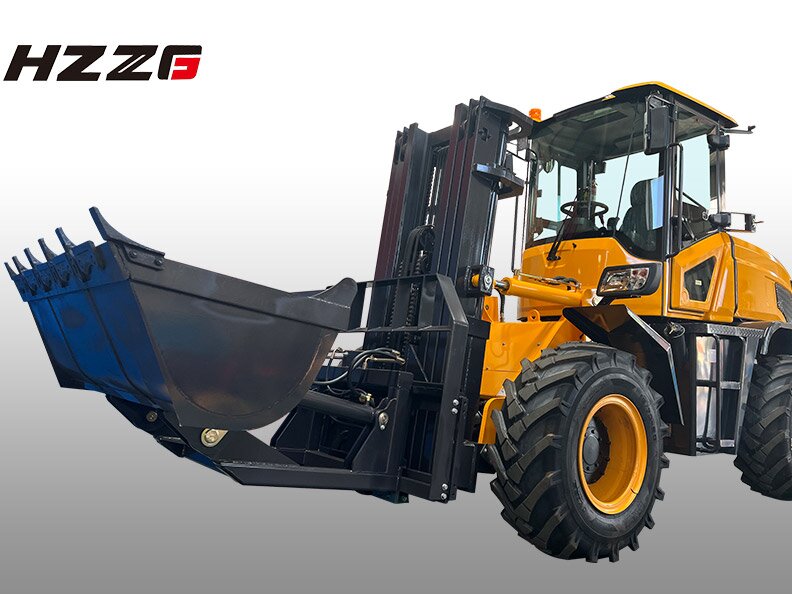
How Do Rough Terrain Forklifts Contribute to Construction Projects?
Rough terrain forklifts are becoming the preferred choice for construction sites where industrial forklifts cannot perform. Capable of traversing mud, gravel and uneven ground, Rough Terrain Forklifts are designed and built for heavy duty work. Powered by a 4-ton capacity diesel Rough Terrain Forklift, the machine can handle any demanding construction or industrial job. The lift capacity and rugged construction of this forklift can handle any job site that requires a heavy-duty material handling solution.
Material Handling on Uneven Ground
Rough terrain forklifts have large pneumatic tires and heavy-duty drive system allowing them to work in muddy, grassy, or uneven terrain, as well as up and down slopes. The ability to lift and move products such as steel beams, pallets of bricks and timber helps to increase productivity in your work place while minimizing time lost due to inaccessibility. All Rough Terrain Forklifts have high load bearing structures to ensure stability and long life. Boltless, one-piece welding 20% increase in strength, increased safety, rugged construction allows Rough Terrain Forklifts to work on uneven ground and long curved roads and withstand the toughest products.
In addition, the engines are very efficient in terms of power. The direct injection engine has been designed to optimise the combustion chamber and has a perfect cold start. Low speed – high torque – high power. A perfect engine for forklift trucks. The engine runs steadily even under full load and on very rough terrain.
Enhancing Efficiency in Multi-Level Construction Sites
With multiple levels of a project, such as scaffolding or elevated building decks, Rough Terrain Forklifts provide the ability to reach across rough terrain to place materials at the required elevation. They save so much time as opposed to manually moving the material and with their advanced hydraulic systems such as a durable multi-way valve for excellent stability and durability they are able to smoothly and accurately move around the jobsite. This enables a continuous workflow between the ground level based logistics teams and the upper level assembly teams.
Additionally, an ergonomic operator cabin facilitates work for long shifts. In the long run, this type of design will prevent fatigue at work of the operator. In addition, there is more operating space, work is more efficient and the driver can work with the forklift more comfortably. In this way, the operator remains focused during his long working hours.
Safety Advantages for Construction Crews
Construction sites with uneven ground surface require great attention to safety of their employees. Rough terrain forklifts, which are used on such construction sites, are equipped with very sophisticated stability systems. With the elevated cabins of these forklifts the operator has a very good view and is able to handle the heavy loads with care and in a safe manner, also in the vicinity of persons. The all glass cockpit door and the wide visual field pavilion are a guarantee for the operator.
The brake system for improved control when carrying a load has been optimized. The length of the brake arm has been increased by 40 mm, thus the needed tread force at brake operation is decreased by 10 % while the braking force is even increased by 20 %. Additionally the operation becomes lighter. Thus the number of accidents caused by mechanical unstability or operator fatigue is even reduced.
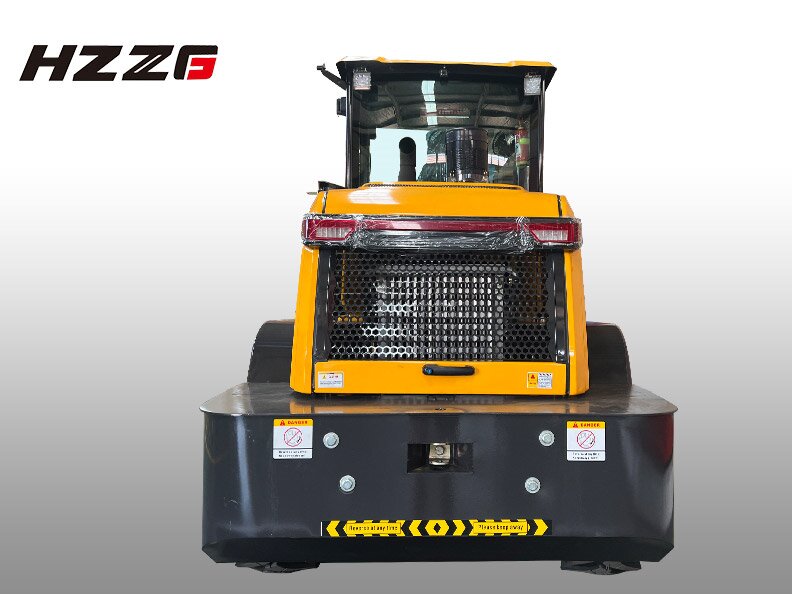
What Makes Rough Terrain Forklifts Essential in Mining Operations?
The mining environment provides a harsh setting for equipment to operate. With dust filled air, debris strewn paths and steep slopes Rough Terrain Forklifts are designed to operate in these types of environments.
Transporting Mining Equipment and Supplies
The forklifts are used in both surface and underground mining environments to move around the drilling tools, pipes, explosives containers and spare parts on mine roads made of uneven surfaces. The forklifts have great traction near excavation pits and are equipped with a reinforced chassis to guarantee stability even when driving on slopes made of gravel or when it is carrying a high amount of weight.
CAT engines are designed for maximum reliability under most demanding applications. They provide low fuel consumption in combination of excellent power and clean working environment. The application in the mining industry in remote areas also is supported by the option to refuel the machine.
Supporting Maintenance and Infrastructure Tasks
Rough terrain forklifts play a critical role in moving maintenance equipment such as belt or crusher components around mining zones. The compact design and maneuverability of rough terrain forklifts enables them to access around corners and through tight spaces to complete tasks efficiently that would be difficult to complete with larger vehicles. Temporary structures like workshops and storage shelters are also commonly used in mining camps and require the use of rough terrain forklifts to move equipment and supplies.
These machines can be supplied with various attachments for specific applications, like handling of pipes or material for stacking – very flexible in all mining processes.
Improving Safety Standards in Harsh Mining Conditions
Safety compliance remains critical in the logistics management of a mine. Operating around active holes in the ground and operating equipment in a number of functions are both high risk functions and require specific safety considerations. Rough terrain forklifts are designed and are manufactured with reinforced steel to absorb impacts whilst traveling over rough rocky ground. Their cabins are designed with adequate filtration systems to keep the clean air that they require for human consumption intake even in the worst of dusty environments to stop respiratory disease and associated symptoms in long term exposures.
The precise hydraulic control of SIBRE wheel loaders minimizes risk when working near other equipment and installations as well as near explosive storing facilities.
Why Are Rough Terrain Forklifts Valuable Assets in Forestry Operations?
Timber transportation in forestry requires versatile equipment that can work outdoors in harsh environment while transporting large amount of timber through uneven terrain.
Efficient Timber Loading and Transport
Rough terrain forklifts are designed for moving logs, lumber and wooden pallets in and around logging sites and sawmills. They offer fast and efficient material movement for smaller scale operations between areas where trees are being felled and where timber is being processed, without the need for specialist loaders.
Their high load-bearing capacity allows for stable operation also in case of heavily loaded wooden materials, on steep paths or in soft soils typical for forestry applications.
Adaptability Across Seasonal Conditions
The forestry terrain is affected by the seasons – often slippery in spring, on snowy tracks in winter – and demands year-round operational capability from the wheeled vehicle. For sealing oil leaks in O-rings used in high temperature as well as in cold working areas, high quality products are imported. Weather-resistant components guarantee low maintenance intervention even in extreme weather.
Soil density or moisture can be taken into account by an adjustable tire pressure system in order to support traction control by the driver. As required for effective use of the fields, the driver can adjust the tire pressure for the individual field sections.
Supporting Sustainable Forestry Logistics
Rough terrain forklifts support responsible and efficient forest management by increasing the efficiency of material movement while reducing environmental impact through efficient use of fuel, in-line with forestry’s sustainability goals.
Their integration with other digital tracking systems, for example GPS, enables exact route planning. This means that the route taken to transport timber will be as short as possible in order to keep the carbon footprint for timber transportation as low as possible.
How Does QINGDAO HEZHONG MACHINERY MANUFACTURING CO., LTD Support Industrial Applications?
Qingdao Hezhong Machinery Manufacturing Co., Ltd. is one of China’s largest Machinery manufacturers and has in the past been involved in many projects of international cooperation, utilizing technologies from around the world since its founding in 2007. The company is based in Pingdu, covering an area of over 50,000 square meters, with several production lines. Hezhong specializes in the research and development of construction machinery.
Qingdao Hezhong Machinery Manufacturing Co., Ltd. has production capacity of over 15,000 units per year for mini wheel loaders and forklifts. The forklifts offered are powered by diesel, electric, gasoline or LPG and are equipped with many different attachments for a wide field of industries like mining, forestry, agriculture and building. They are certified by CCC, ISO 9001, ISO 16949 and CE to be exportable.
Forklift models are designed with Ergonomic Design to enable maximum comfort whilst in operation for extended periods of time. The forklifts also feature low noise levels making them the ideal choice for demanding industrial work environments across the globe.
What Are the Key Takeaways About the Role of Rough Terrain Forklifts Across Industries?
Rough terrain forklifts are the most critical items of equipment in the industry to bridge the gap and meet the demands of most working environments. Whether working on an urban construction site or deep in a mine, or even in remote locations such as forestry operations, Rough Terrain Forklifts are designed and engineered to withstand the toughest working conditions and loads. They are built to last with strong durable structures to provide the operator with excellent performance and stability, even when subjected to extreme working loads that would break other machines.
Latest ergonomic innovations are also combined with sturdy engineering. Examples are one-piece welded frames or a direct-injection engine that has the right amount of torque for industrial applications. This results in long durability and thus the reliability that is so important for today’s industries around the globe.
FAQs About Rough Terrain Forklifts
1. What distinguishes rough terrain forklifts from standard industrial forklifts?
Rough terrain fork lifts are generally categorized by large pneumatic tires for superior traction on outside surfaces as well as greater ground clearance to allow for safe operation over uneven surfaces.
2. Are rough terrain forklifts suitable for indoor warehouse applications?
These are generally for use outdoors due to the number of sizes but can occasionally be used inside a space that allows for the necessary movement.
3. How often should rough terrain forklifts undergo maintenance?
Recommended frequency for routine inspections are every 250 hours of operation depending on workload intensity to ensure highest possible mechanical performance throughout the entire service life.
4. Can attachments be added to rough terrain forklifts for specialized tasks?
Attachments such as side shifters or jib cranes can be mounted easily to increase flexibility of use. Many different tasks are possible on the construction site with one single crane, working efficiently to meet site specific needs.
5. What factors should companies consider when selecting a rough terrain forklift supplier?
When making a purchase, companies should check a supplier’s reliability records on after-sales service, customize options, component availability and global safety certifications before making a final purchase decision.


