



Choosing the ideal capacity for your forklift is of utmost importance for efficient and safe warehouse work. In this article, we will explore in detail the deciding factors for the selection of diesel forklifts and point you in the right direction of choosing the best for your business. Along the way, we will introduce you to Qingdao Hezhong Machinery Manufacturing Co., Ltd. and their line of quality diesel forklifts.
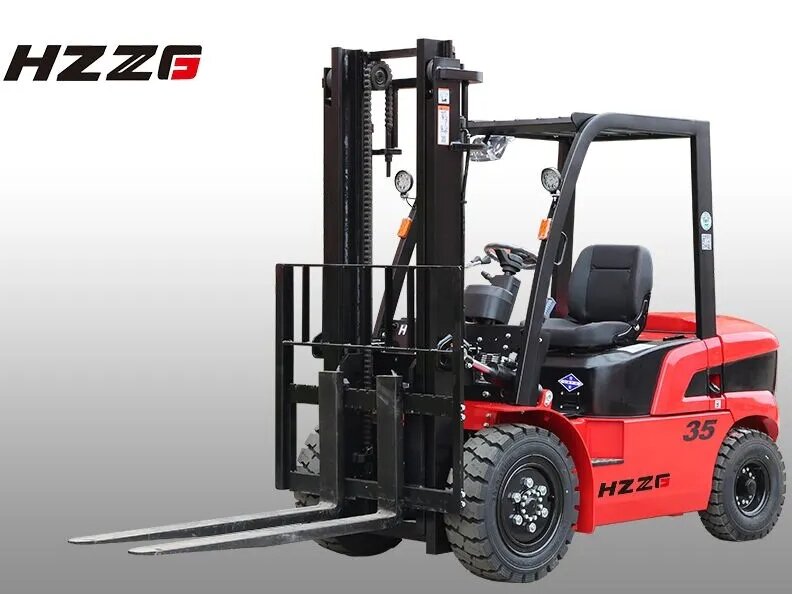
What Factors Should Be Considered When Selecting Diesel Forklift Capacity?
Picking the proper capacity of a diesel forklift is a critical decision. It can affect the safety and productivity in your operation and your expenses in the long run. By knowing how to pick a forklift to handle the varying tasks that need to be done in a warehouse or industrial setting, the forklift can operate safely and productively to meet the demands of the loads that are to be moved at various heights in various environments.
Evaluating Load Weight and Dimensions
Determine the heaviest load typically moved in your facility to safely rate your diesel powered forklift for maximum capacity. The load’s center to the lift’s mast plays a huge part in determining a safe load, as the load’s center of gravity travels away from the mast’s center, the lift’s effective capacity is decreased. To safely use a forklift to move loads, you must determine the load’s weight and its distribution.
Because there are so many irregularly-shaped, oversized articles moved in manufacturing and in the logistics business, it is common to have to add additional lift capacity to what would normally be required for lift of such articles. For example, the weight may be shifted by use of a clamp or a rotator. Optional forklift attachments are: a side shifter, a rotator, a tipping fork, a feeding shovel, a side shift distance adjustment fork, a paper roll clamp, a round tube clamp, soft bag clamp. These attachments are very valuable in allowing increased versatility in the lift of the many different shaped articles that are moved. These attachments must, however, be taken into account when determining the total requirements for lift.
Assessing Lifting Height Requirements
There is an inverse relationship between the lifting height of a forklift and its rated capacity. So, the mast height of the forklift must be matched with the type of racking it will be used in and the method of storage. The operator must also remember the overhead height when moving the forklift up and down, including any doorways and mezzanine levels to avoid damage.
Stability at maximum lift height is determined by the specifications of the manufacturer and the design integrity of the equipment. The wide field of view of the gantry provides the driver with a wider field of vision whilst operating at height. This provides greater safety and improved accuracy whilst stacking pallets at height.
Considering Operational Environment
A number of environmental factors affect forklift performance. While smooth indoor surfaces such as warehouses require forklifts with specific tires and suspension settings for optimal performance on rough outdoor surfaces such as construction sites and ports, extreme temperatures affect a forklift’s engine performance and tire wear. When choosing a diesel forklift, therefore, it is crucial to pick one with the right cooling system and durable tires to optimize performance in extreme weather.
For use of indoor diesel equipment, also consideration needs to be given to the required ventilation of exhaust emissions in order to comply with appropriate workplace safety standards. Here too hybrid vehicles or models powered by LPG could be considered as an alternative in fully enclosed environments, in order to be able to guarantee adequate air quality.
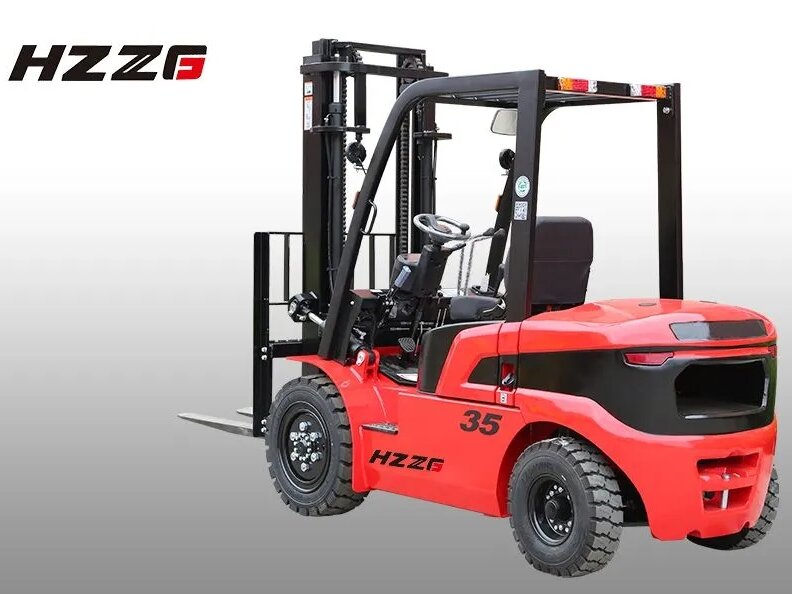
How Does Forklift Capacity Influence Operational Efficiency?
Forklift capacity directly impacts productivity metrics across warehouses and logistics centers. An underpowered forklift can slow workflow due to multiple handling cycles per load, while an overpowered model may incur unnecessary fuel consumption and maintenance costs.
Balancing Performance with Fuel Efficiency
Larger forklifts with increased load capacity will normally require more diesel fuel due to increased engine displacement and greater torque required for increased loads. However, in selecting the correct engine for your demands, large capacity engines are designed for heavy usage at lower RPMs to provide greater efficiency. The engines we design utilize direct injection technology that optimizes the internal combustion chamber for maximum efficiency, and provides superior starting for any application. Our engine’s Low speed, high torque and high power design makes it ideal for applications such as forklifts which are used for long periods of time, and by using this correctly engineered power plant, will enable the user to achieve maximum efficiency while minimizing the amount of fuel required.
Regular servicing of your vehicle will aid in continuing to obtain good fuel economy by ensuring that your vehicles air intake filter and fuel injectors are regularly cleaned and/or calibrated as required. The design of our high-level air intake system for example keeps dust away from your engines critical components, allowing you to obtain optimum performance from your engine as well as increased life.
Reducing Equipment Downtime
Selecting the correct forklift capacity reduces mechanical stress on critical components of the forklift including hydraulic pumps, masts and drive axles. Overloading will increase the wear and tear on these critical components resulting in potential for early wear and subsequent down time due to repairs. The use of advanced manufacturing technologies and high quality parts will provide the highest level of reliability for the entire forklift. Having the correct forklift capacity will extend service intervals and enable the forklift to perform consistently during demanding shifts.
Maintenance schedules for preventive maintenance should be based on workload. For very heavy use, for example, the braking system and the transmission should be inspected more often in order to maintain its reliability in the long run.
Why Is It Important to Match Forklift Capacity with Application Type?
Forklifts are used in a variety of industries, all handling different types of materials, at different frequencies, in a wide array of spaces. Choosing the right forklift to match your specific application will ensure that you are getting the most out of your investment, and more importantly, keeping your employees safe.
Warehouse and Distribution Centers
When space is a priority in a warehouse, more importance can be placed on the maneuverability of the forklift as opposed to raw power. In palletized goods applications operating in narrow aisles a medium capacity diesel powered forklift from 2-5 tons is suitable. Equipping the forklift with side shifters allows for more precise stacking, without having to reposition the load, ideal for busy warehouse environments.
Manufacturing Facilities
Manufacturing in process involves continuous movement of materials from one production department to another. In order to efficiently transfer raw material as well as finished product on a 24 hour a day basis through multiple shifts, the use of Heavy-duty forklifts are common. High load integrated frame body… enables the operator to smoothly move around on uneven terrain as well as long curved lines, while maintaining maximum stability to tackle any kind of heavy material handling. Also, this forklift is highly durable and withstands high repetitive stress to provide long lasting performance.
Outdoor Construction or Port Operations
Outdoor applications require higher capacity forklifts between 5 to 10 tons for large loads such as containers and building materials. On uneven terrain pneumatic tires guarantee best traction on gravel surfaces. Also the outdoor forklift is equipped with weather resistant components to prevent corrosion by moisture. Low noise, low vibration, energy saving and environmental protection – these are the attributes of modern diesel forklifts, which are also suitable for harsh outdoor climate and are enduring in their application.
How Can Businesses Optimize Diesel Forklift Investment?
A strategic approach to fleet investment goes beyond purchase price; it includes evaluating total cost of ownership (TCO) throughout a forklift’s lifecycle—from acquisition through maintenance to eventual resale value.
Calculating Total Cost of Ownership (TCO)
Fuel consumption remains one of the largest ongoing expenses in diesel forklift operation. Maintenance costs—including oil changes, filter replacements, brake servicing—and operator training also contribute significantly to TCO calculations. Comparing lifecycle costs among various capacities helps identify which model delivers optimal ROI based on workload intensity.
A brand’s reputation can also have an effect on resale value. Companies known for durability, for example, can get a higher price for used articles due to their proven reliability which is documented with global certifications like CCC or ISO 9001.
Implementing Fleet Management Strategies
Fleet management can be greatly enhanced by the integration of telematics in order to track usage information including idling time and maintenance requirements in real time. By rotating units in a fleet the wear on all units is evenly distributed resulting in extended service life for all machines.
The data collected from our systems will assist us in making wise decisions regarding future upgrades and/or replacements to ensure we have the right number and proper mix of forklifts to handle our evolving business operations.
Who Is QINGDAO HEZHONG MACHINERY MANUFACTURING CO., LTD?
Qingdao Hezhong Machinery Manufacturing Co., Ltd. is one of the biggest Chinese Machinery manufacturers, who has experience of international cooperation and common technologies since 2007. Qingdao Hezhong Machinery Manufacturing Co., Ltd. is located in Pingdu, Qingdao, covering an area of over 50,000 square meters, and consists of 3 specialized production factories of R&D.
Our suppliers such as Qingdao Hezhong Machinery Manufacturing Co., Ltd. have an annual production capacity exceeding 15,000 units of mini wheel loaders and forklifts. In their range of diesel powered forklift trucks they have developed a number of models equipped with advanced hydraulic steering systems which give the lightest yet most positive feeling of control even in the heaviest of loads. They use full hydraulic steering device. Small turning radius. Light and flexible steering. Safe and reliable.
Each model goes through a lot of precision engineering so that it can provide the best comfort to the operator. The precision engineering mainly focuses on two things, one is the ergonomic design of the cab and the other is low vibration in the forklift. The design helps in minimizing the operator’s long-term work fatigue… enabling the driver to work comfortably with the forklift.
All of their products fulfill all global quality standards such as CE and ISO. The products can also be adjusted to fit your custom needs. From warehouses and ports to logistics hubs, agriculture and construction from all around the world, STF has the right product for you.
What Are Key Takeaways When Choosing Diesel Forklift Capacity?
Selecting the right diesel forklift capacity can be a complex balance of the forklift’s technical specification against real world operating demands such as weight and size of loads lifted, the height that loads need to be placed into storage, the floor conditions that the forklift will be operating in and operating expenses over time such as fuel efficiency and durability of major components.
A well-matched forklift will increase productivity, because it does not create any downtime risks and it has a good safety margin due to the good handling qualities. The best possible operation comfort and top performance and low maintenance costs are provided. Companies that work with the best possible forklifts for their applications are able to realize a sustainable operation of their company in industry.
FAQs About Choosing Diesel Forklift Capacity
How to choose the right forklift capacity for your warehouse.?
Weigh up your heaviest loads, their size, and lifting height, then select a range to suit.
Is a higher-capacity forklift also efficient with small loads?
Yes, it is. However, excessive capacity leads to unnecessary fuel consumption and reduced maneuverability in narrow aisles.
What can happen to your forklift when it is overloaded beyond its rated capacity?
Overloading can cause mechanical failure or result in the forklift tipping over, causing serious damage to your forklift and potentially serious safety hazards.
Is a diesel forklift suitable for use indoors?
Diesel forklifts can be used indoors when equipped with appropriate ventilation systems. However, generally speaking electric forklifts are more suitable for use indoors where emission control within enclosed facilities is strictly regulated.
How often should you perform maintenance on diesel forklifts?
Maintenance should be performed every 250 hours of operation, or as specified by the forklift manufacturer. It is critical to ensure that your diesel forklifts are operating properly and continue to run throughout the service life of the unit in demanding warehouse applications that require continuous operation to keep up with the flow of material. Modern diesel forklifts are designed to meet a variety of applications, and are often configured to meet specific needs of a customer’s operations.


