



Picking an electric forklift battery based solely on its amp-hour rating can lead to extra expenses or sudden downtime. A forklift moving light pallets for a few hours does not require the exact same energy backup as a truck constantly raising heavy goods on inclines. The correct battery capacity relies on shift duration, true working time, load weight, and travel length. Lift frequency, attachments, climate, and available charging pauses also matter. This guide evaluates 205Ah, 280Ah, 350Ah, and 410Ah batteries. It helps buyers pick a sensible setup.
What Does Forklift Battery Capacity Tell You?
Battery capacity serves as a crucial starting point. However, it fails to promise a set amount of working hours. Forklifts sharing the same battery capacity can deliver varying runtimes. This happens because their voltage, motors, loads, paths, and labor intensity can differ.
How Are Ah and kWh Different?
Amp-hours, or Ah, show how much electrical charge a battery can hold. Kilowatt-hours, or kWh, offer a better guess of total stored energy.
The standard formula is:
Battery energy in kWh = Voltage × Ah ÷ 1,000
At a baseline voltage of 76.8V:
-
205Ah delivers roughly 15.7kWh.
-
280Ah delivers roughly 21.5kWh.
-
350Ah delivers roughly 26.9kWh.
-
410Ah delivers roughly 31.5kWh.
These represent standard energy numbers. The battery management system usually holds a portion of the energy in reserve. This protects battery health.
Why Can Runtime Vary With the Same Ah Rating?
A forklift drains more power when it hauls heavier loads or drives long distances. Scaling ramps and lifting frequently also use more energy. Tall masts, hydraulic attachments, bumpy floors, chilly weather, and constant speeding up can boost power use too.
Because of this, battery choice needs to focus on the forklift’s duty cycle. It should not rely on shift duration alone.
Which Battery Capacity Best Matches Your Shift?
The following summaries offer basic selection advice. Real runtime must always be checked against the forklift model and work setting. The charger and approved battery setup also play a role.
When Is a 205Ah Battery Suitable?
A 205Ah battery usually fits mild single-shift tasks and occasional loading. It works well for small warehouses, retail centers, and sites with steady charging chances.
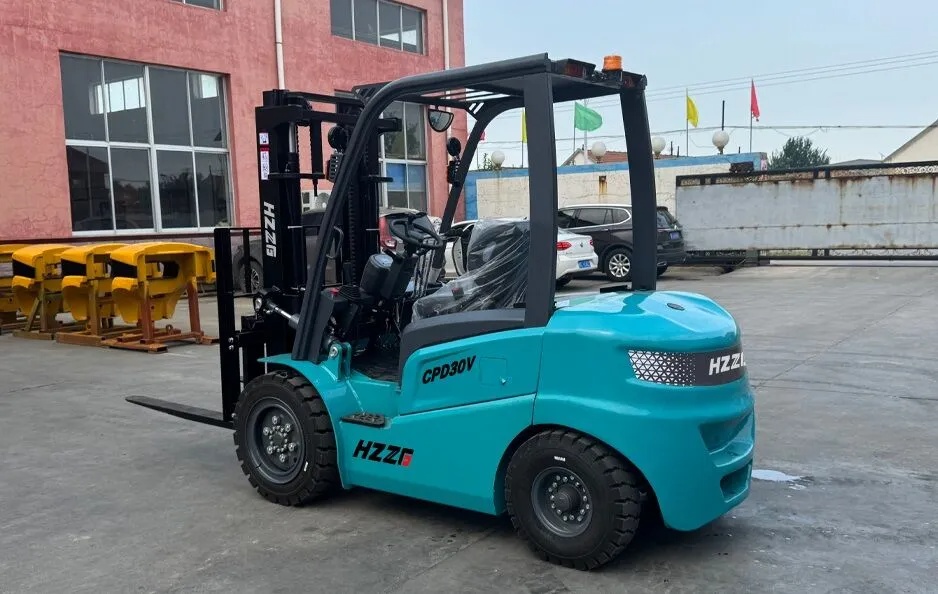
The HZZG CPD-30V runs on a 76.8V/205Ah battery. It features a rated load capacity of 3,000kg. The stated operating time spans 6–8 hours. This setup can serve as a budget-friendly choice when the forklift avoids non-stop heavy work.
When Should You Choose a 280Ah Battery?
A 280Ah battery supplies roughly 37% more standard capacity than a 205Ah battery at the same voltage. It fits active six-hour shifts and extended travel paths better. Frequent lifting, outside material handling, or tasks needing extra backup power also benefit from it.
In one HZZG building-site job, a 3-ton electric forklift with a 76.8V/280Ah battery reached about six hours of use. The noted charging time took roughly two hours. This allowed the driver to power up during a set rest period.
When Does a 350Ah Battery Make Sense?
A 350Ah battery is built for heavier full-shift labor. It fits production factories, busy warehouses, and shipping hubs. Sites where the forklift cannot pause often for charging are ideal.
HZZG notes that a factory-run 3-ton forklift with a 76.8V/350Ah battery ran for at least eight hours without mid-shift charging. Outcomes at another location might vary based on load, path, weather, and driver habits.
Who May Need a 410Ah Battery?
A 410Ah battery fits bigger forklifts, lengthy work shifts, and massive loads better. Long travel routes or jobs needing a huge power reserve also require it.
HZZG mentions that its electric forklift lineup provides various battery capacities. Options go up to 410Ah. One 5-ton forklift case uses an 80V/410Ah battery. It claims up to seven hours of use. Buyers must check compatibility. Battery size, weight, voltage, controller caps, and charger details must fit the chosen forklift.
What Working Conditions Increase Battery Consumption?
Capacity must handle the toughest standard work day, not just a perfect test run. Tracking true site factors stops you from picking a battery that looks great on paper but fails to finish the real job.
How Do Loads and Routes Affect Battery Demand?
Heavy standard loads need more driving and lifting power. Long paths, bumpy terrain, and inclines raise usage. Constant mast moving and frequent braking also add to the drain.
Attachments like side shifters, fork positioners, clamps, and turners can create extra hydraulic pull. A closed cab or cooling system can put an added strain on the electrical setup.
How Do Temperature and Work Patterns Affect Runtime?
Chilly settings can lower useful battery output. Non-stop work also burns energy differently than stop-and-go tasks.
A forklift running for ten minutes every half hour might finish a long shift with a smaller battery. A truck that drives, hoists, and stacks without a break might need a bigger battery or planned quick charging.
How Can You Select the Right Capacity Before Ordering?
A solid vendor should check the full task before suggesting a battery. Buyers can make a basic duty-cycle log to help get a precise suggestion.
What Operating Details Should You Record?
Give the vendor:
-
Shift duration and guessed active working hours;
-
Normal and peak load weight;
-
Daily driving length and pallet shifts;
-
Needed lift height and lifting rate;
-
Incline slope and floor state;
-
Working climate;
-
Attachment and cab needs;
-
Open charging times.
The maximum time the forklift must run without charging stands out as very vital.
How Much Battery Reserve Should You Allow?
Pick enough capacity for daily tasks plus a fair backup. Still, buying the biggest battery rarely proves to be the cheapest choice. Extra capacity raises the buying price and battery weight. It might also demand a different charger.
For two- or three-shift jobs, weigh a bigger battery against quick charging, a spare battery, or an extra forklift. Buyers must also check the local input voltage, electrical phase, and frequency. Plug type, connector, and charging spot need checking before delivery.
Why Is QINGDAO HEZHONG MACHINERY MANUFACTURING CO., LTD. a Reliable Electric Forklift Supplier?
Battery picking gets simpler when one maker can pair the forklift, battery, and charger. Matching the mast, cab, and attachments to the same work profile also helps.
What Electric Forklift Solutions Can HZZG Provide?
QINGDAO HEZHONG MACHINERY MANUFACTURING CO., LTD. delivers electric forklifts with various lithium battery capacities and flexible setups. The CPD-30V acts as a 3-ton model showing a 76.8V/205Ah battery and AC controllers. It offers an optional closed cab and cooling system, plus backing for special attachments.
The firm has joined global trade since 2007. Its plant spans over 50,000 square meters. It hires more than 400 workers, counting 55 engineers. HZZG goods ship to more than 40 nations. They back dealers and final users with making, tweaking, and shipping services.
Conclusion
A 205Ah battery might give the finest mix for stop-and-go or mild single-shift duties. A 280Ah battery supplies more backup for frequent hoisting and lengthy paths. A 350Ah battery fits heavy full-shift jobs with poor charging access better. A 410Ah setup can handle bigger forklifts and high-power tasks, depending on model fit.
The last choice must rest on real duty-cycle facts. Before buying, tell the forklift vendor your load weights, shift style, and lift height. Share the path, climate, attachments, and charging plan too.
FAQs
Can a 205Ah Battery Last an Eight-Hour Shift?
It might run eight hours in mild or stop-and-go jobs. The CPD-30V shows a working time of 6–8 hours. However, non-stop heavy lifting, far travel, inclines, cold weather, and attachments could cut runtime.
Is a 410Ah Battery Always Better Than a 205Ah Battery?
No. A bigger battery costs more and weighs more. It needs fitting battery space, voltage, controls, plugs, and charging gear. The finest pick is the smallest approved battery that finishes the needed job with a fair backup.
Can Forklift Battery Capacity Be Upgraded Later?
A boost might work, but the forklift maker must clear it. The fresh battery has to fit the needed voltage, box size, and weight caps. Controller, battery management system, plug, and charger must match too. Buyers ought to check future boost choices before making an order.


