



Electric wheel loaders are increasingly popular in warehouses, farms, landscaping projects, construction sites, and similar operations. These sites need compact material-handling equipment. Before buying one, customers often wonder if the loader can finish the necessary work without stopping the shift for a recharge. The answer relies on more than just the stated battery runtime. Material weight, travel distance, hydraulic activity, and terrain play major roles. Temperature, attachments, and operator habits also impact energy consumption. HZZG notes that the E06 mini electric wheel loader can deliver roughly six hours of steady operation. This follows an eight-hour charge. This detail gives buyers a helpful starting point for shift planning.
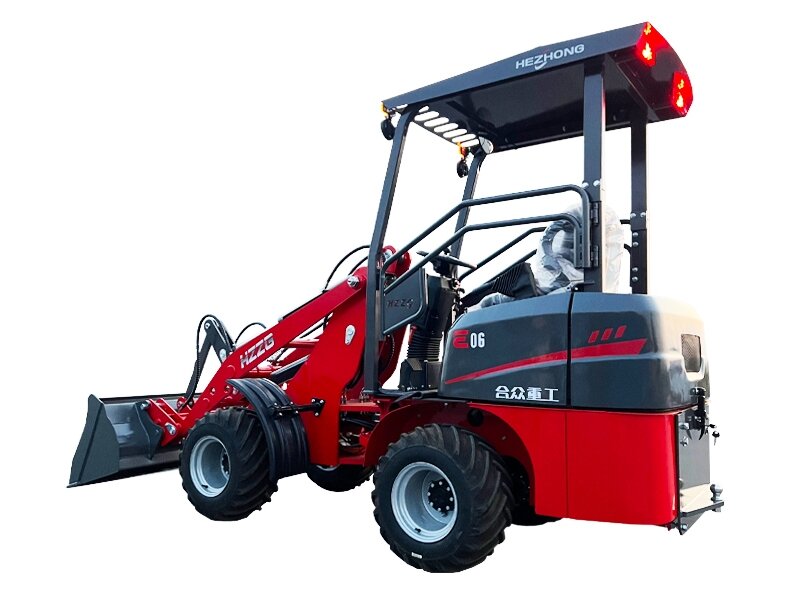
How Long Can the HZZG E06 Work on One Charge?
The stated operating time offers an initial benchmark. However, every worksite remains unique. A loader moving packaged goods across a flat warehouse floor will not drain power the same way. It differs greatly from a machine repeatedly lifting wet soil or navigating sloped ground.
What Does the Six-Hour Runtime Mean?
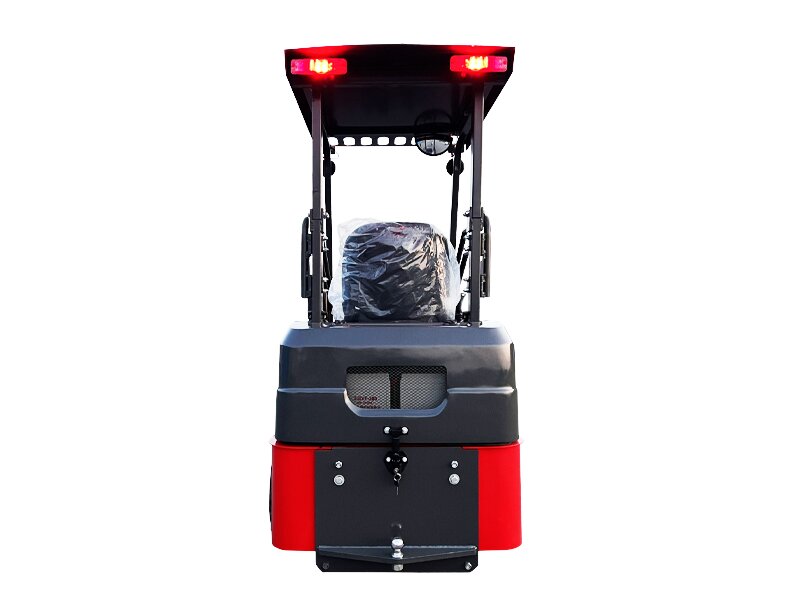
According to HZZG’s product details, the E06 features a lead-acid battery. An eight-hour charge can supply about six hours of continuous work. Furthermore, the machine includes 45-degree left-and-right steering. This helps with maneuvering in tight spaces. It also has a standard quick-connect system for swapping attachments.
The six-hour estimate should be viewed as the manufacturer’s operating baseline. It is not a guaranteed outcome for every single task. Buyers should evaluate the loader with their usual material, route, attachment, and operator. They must do this before setting a firm daily production goal.
Why Can the Actual Runtime Change?
An electric loader does not use the exact same amount of energy all day. Light travel and occasional handling generally need less power. In contrast, continuous digging, frequent acceleration, slope travel, or repeated lifting demand more energy.
Runtime may also be altered by:
- Load weight and material density
- Travel distance between loading and unloading points
- Frequency of bucket lifting and tipping
- Ground resistance and slope
- Attachment type and weight
- Outdoor temperature
- Operator driving habits
Because of these factors, the most helpful question is not just “How many hours can it run?” Instead, buyers should ask, “How much of my regular workload can it finish on a single charge?”
Which Tasks Are Suitable for a Single-Charge Work Period?
A practical estimate begins with the specific job rather than the clock. Managers need to separate active loader use from waiting time. Inspections, breaks, loading coordination, and other site duties should be considered separately.
Which Light and Medium-Duty Jobs Can Fit Well?
The E06 is built for indoor and outdoor uses. These include warehouses, urban construction, landscaping, and farming operations.
Possible applications include:
- Moving packaged goods inside a warehouse
- Transporting feed or bedding around a farm
- Handling mulch, compost, or light landscaping materials
- Clearing light debris
- Moving pallets with compatible forks
- Repositioning materials over short distances
These tasks frequently involve intermittent operation. The loader might work hard for a few minutes. Then, it waits while materials are prepped before starting another cycle. Consequently, a staffed shift might last longer than the machine’s actual active running time.
Which Tasks May Consume Power More Quickly?
Continuous bucket loading, heavy materials, and soft ground can drain power fast. Long transport routes and constant hydraulic movement also decrease the available working time.
The chosen attachment also impacts the operating pattern. A standard bucket, pallet fork, grapple, or other tool alters the machine’s weight, balance, and hydraulic needs. Buyers planning tough applications should test the exact attachment they plan to use.
How Can You Plan a Shift Around the Available Runtime?
Proper shift planning places the most crucial tasks within the loader’s available work window. It should also include a sensible reserve. This is better than scheduling the machine until the very last moment of battery life.
How Should You Map the Daily Workload?
Begin by recording:
- Required number of loading cycles
- Typical material and load weight
- Distance traveled per cycle
- Ground or floor condition
- Number of slopes or ramps
- Required attachment
- Frequency of lifting and tipping
Next, divide the work into essential and flexible tasks.
Essential work might involve unloading an early delivery, feeding livestock, or moving production materials at set times. Flexible work could include yard cleanup, stock organization, or shifting non-urgent materials. Finishing essential work first lowers the risk of incomplete priority tasks later in the shift.
Why Is a Worksite Test Important?
A hands-on trial offers buyers more valuable data than relying solely on a general runtime number. During the test, record:
- Starting battery level
- Active operating time
- Number of completed cycles
- Material handled
- Attachment used
- Travel distance
- Remaining battery level
Repeat the test over several normal working days. Doing this provides a site-specific benchmark. It is useful for operators, farm owners, warehouse managers, rental firms, and equipment dealers.
When Should the E06 Be Charged?
Since HZZG lists an approximate eight-hour charging period, overnight charging makes sense. It is a practical starting setup for a standard daytime schedule.
The charging area should be ready before the machine is delivered. Buyers need to confirm the required electrical supply, charger specifications, and access conditions. They should also check the time available for a full charge. Operators must follow the manufacturer’s charging rules instead of creating an unapproved charging routine.
What Should Operators Check Before Each Shift?
Battery readiness is just one aspect of machine preparation. A brief inspection can limit interruptions. It also stops energy from being wasted due to poor setup.
Which Items Should Be Inspected?
Operators must check the battery indicator, charging connection, tires, and hydraulic hoses. Lights, controls, fasteners, and the quick-connect mechanism also need attention. The chosen attachment must be securely locked and proper for the material.
The working path should also be examined. Look for unnecessary travel, tight turns, soft surfaces, steep slopes, and overhead limits. A shorter, more direct route can boost both productivity and operating time.
What Information Should Be Recorded?
A basic daily log can track charging duration, active operating time, and task type. It should also note the attachment, approximate load, temperature, and remaining battery level.
After a few weeks, these records will reveal important trends. They show if one E06 can handle the normal workload. They also indicate if tasks should be split into separate sessions, or if another machine is needed during busy times.
Why Choose Qingdao Hezhong Machinery Manufacturing Co., Ltd.?
Buying an electric wheel loader requires trust in the manufacturer. Confidence in production capacity, attachment supply, and after-sales support is vital. The supplier should study the customer’s working conditions. They should not just recommend a machine based solely on a model name.
What Makes HZZG a Reliable Wheel Loader Supplier?
Qingdao Hezhong Machinery Manufacturing Co., Ltd. builds wheel loaders, forklifts, and attachments. The company states that it runs three factories spanning over 50,000 square meters. It employs over 400 people and has 55 engineers. Furthermore, it maintains an annual production capacity of over 15,000 mini wheel loaders and forklifts.
For E06 buyers, HZZG can assess the intended material and daily operating hours. They can also review the working route, charging conditions, doorway sizes, and attachment needs before an order is finalized.
What Is the Practical Conclusion?
The HZZG E06 has a stated operating benchmark of roughly six hours after an eight-hour charge. This can be appropriate for many warehouse, farm, landscaping, and compact material-handling schedules. However, actual performance relies heavily on the specific jobsite.
Use the stated runtime as a basic reference. Test the loader with the actual workload, and prioritize essential tasks. Schedule consistent charging, and keep a daily operating log. This method offers owners and fleet managers a more dependable shift plan than just trusting a single headline number.
FAQs
Can the E06 Complete an Eight-Hour Shift?
HZZG notes that the E06 can deliver about six hours of continuous operation following an eight-hour charge. It might still support an eight-hour staffed shift if the loader is not running continuously. Breaks, inspections, loading preparation, and waiting times can lower the total active machine hours needed.
Does Carrying Heavier Material Reduce Runtime?
Heavier loads, dense materials, and longer routes increase energy demand. Slopes and frequent lifting also drain power faster. Buyers should test the E06 with their usual material and attachment before setting a daily cycle target.
What Information Should I Send the Supplier Before Buying?
Share the expected daily operating hours, material type, and typical load. Include travel distance, ground condition, slope, doorway or gate dimensions, local electrical supply, required attachments, and operating temperature range. These facts help the supplier judge if the E06 is appropriate. They can then suggest a practical charging and work schedule.


