



Picking the right forklift involves more than just looking at lifting capacity. For warehouses, logistics centers, factories, and equipment dealers, having fuel choices can strongly impact running costs. It also affects downtime, maintenance schedules, and daily job speed. The CPY38 dual-fuel forklift gives buyers a very handy tool by allowing both LPG and gasoline use. This feature makes it great for companies needing steady power and quick refueling. It also provides easy handling across various work areas. For buyers looking at LPG forklifts, diesel forklifts, and electric forklifts, understanding when to run on LPG and when to switch to gasoline is useful. This knowledge can boost fleet output and cut down on unneeded running risks.
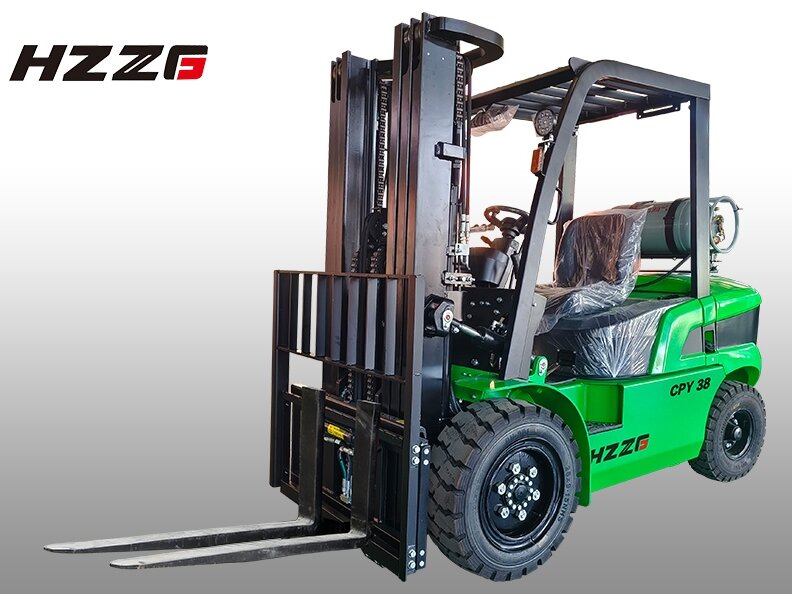
What Is a CPY38 Dual-Fuel Forklift?
The CPY38 is a 3.8-ton dual-fuel forklift built for medium-to-heavy material handling jobs. Its top benefit is that buyers are not stuck with just one fuel type. This freedom makes it highly helpful for workers moving across warehouses, loading zones, workshops, logistics yards, and light industrial spaces.
A 3.8-Ton Capacity for Practical Material Handling
The 3.8-ton capacity puts the CPY38 right between common 3.5-ton and 4-ton forklift models. For many buyers, this middle size is very appealing. It delivers more lifting trust than a 3.5-ton forklift. At the same time, it avoids the need for a bulkier 4-ton model.
This size makes the CPY38 perfect for moving pallets and handling loading duties. It is also good for transferring production materials, managing warehouse flow, and doing short-distance industrial hauls.
A Dual-Fuel System for Flexible Operation
A dual-fuel forklift can run on LPG or gasoline. The choice depends on work settings and fuel access. This setup gives buyers much more freedom than a single-fuel machine.
For instance, a warehouse might run on LPG for normal indoor and partly indoor tasks. Meanwhile, gasoline can step in when LPG cylinder stocks are low. Gasoline is also useful when the machine must work in certain outdoor spots.
A Balanced Choice for Indoor and Outdoor Work
The CPY38 is highly useful for companies that do not work in just one setting. Many warehouses link directly to outdoor loading areas, yards, trucks, containers, or factory floors.
A dual-fuel forklift lets drivers shift between these spaces much more smoothly. All the while, it keeps plenty of power ready for everyday lifting chores.
When Should Buyers Use LPG?
LPG is often the top fuel pick for normal forklift duties. It delivers fast refueling and runs cleaner than standard diesel. It also gives steady power during long work shifts. For most CPY38 users, LPG will serve as the primary fuel choice.
Use LPG for Warehouse and Semi-Indoor Operations
LPG is widely used in warehouses and partly closed industrial buildings. It creates lower emissions than diesel. This feature makes it great for companies needing an internal combustion forklift. They get a cleaner choice for moving items indoors and outdoors.
However, buyers must still set up good airflow. They also need to follow local safety rules when running any internal combustion forklift inside.
Use LPG for Multi-Shift Work
One of the top perks of LPG is the fast cylinder swap. Electric forklifts often need long charging breaks. In contrast, an LPG forklift can get back to work swiftly after a quick cylinder change.
For logistics centers, distribution warehouses, and active production lines, this speed is vital. It can lower downtime and keep goods moving without pause.
Use LPG When Stable Power Matters
LPG forklifts can hold steady output throughout a full shift. For buyers moving pallets, boxed goods, building supplies, or factory parts, steady power means smoother lifting and driving.
This trait makes LPG a solid pick for sites needing trusty daily output without frequent stops for charging.
When Should Buyers Use Gasoline?
Gasoline works very well as a backup or second fuel choice. It might not be the main pick for every warehouse job. Still, it adds real value when getting LPG is hard or when work settings shift.
Use Gasoline When LPG Supply Is Limited
In certain places, LPG cylinders might not arrive on time. If a business works at a distant site, a short-term project zone, or an area with spotty LPG delivery, gasoline helps keep the forklift moving.
This backup ability is a major reason buyers might pick a dual-fuel forklift over a basic LPG model.
Use Gasoline for Outdoor Support Tasks
Gasoline can be quite handy for outdoor material handling. In these spots, airflow is not a big worry. For example, buyers might run on gasoline when shifting items across open yards. It is also good for brief storage areas or building-related logistics zones.
The main goal is to pair the fuel choice with the work setting and safety rules.
Use Gasoline as an Emergency Backup
Downtime can cost a lot of money. If a forklift stops running because fuel runs out, loading plans and factory flows can fall behind. Gasoline adds a helpful layer of running safety.
For fleet managers, having this backup choice is highly prized. It helps during busy seasons, rush orders, or sudden stops in LPG supply.
How Should Buyers Decide Between LPG and Gasoline?
A dual-fuel forklift offers users a choice. However, that choice needs a clear plan. Buyers should look at fuel access, job site traits, airflow, costs, and daily work amounts before picking the main fuel.
Compare Fuel Availability
The first question is basic: which fuel is easier to get nearby? If LPG cylinders are simple to buy, swap, and store safely, LPG might be the better daily fuel. If gasoline is easier to find in the buyer’s area, it can serve as a solid backup.
A smart buying choice should fit local fuel supply facts, rather than just looking at machine specs.
Compare Work Environments
For warehouses and partly indoor spaces, LPG is mostly the better pick. This is true when good airflow is present. For outdoor support tasks, gasoline can be handy if LPG is missing. It also works well when getting gasoline is simply easier.
Buyers should also note if the forklift will cross between indoor and outdoor zones often during a single shift.
Compare Operating Cost and Downtime
The price of fuel is just one part of the total cost. Buyers must also figure out downtime, cylinder storage, and refueling time. They should look at upkeep needs and driver habits too.
If LPG brings faster turnarounds and easier shift plans, it might lower the total running cost. This remains true even if fuel prices shift. If gasoline stops downtime during fuel gaps, it holds real practical worth.
What Applications Are Suitable for the CPY38 Dual-Fuel Forklift?
The CPY38 is great for buyers needing a tough and adaptable forklift for mixed daily jobs. Its 3.8-ton lifting range and dual-fuel setup make it highly useful in real business and factory settings.
Warehouses and Distribution Centers
Warehouses often need forklifts that can drive between racks, loading docks, and holding areas. The CPY38 can easily handle pallet moving, truck loading, item shifting, and stock flow.
For warehouses running long hours, the LPG option helps cut down on lost time caused by long battery charging cycles.
Logistics Yards and Loading Areas
Logistics centers often mix indoor storage with outdoor loading duties. A dual-fuel forklift can easily adjust to changing fuel and yard conditions.
The CPY38 can help buyers handle loading, unloading, pallet stacking, and short-distance item moving with greater speed.
Light Industrial Sites
Factories and light industrial firms often need forklifts to move raw materials. They also handle finished goods and support production lines. A 3.8-ton forklift provides plenty of strength for many of these daily chores.
The power to use LPG or gasoline also helps drivers meet changing shift needs and site settings.
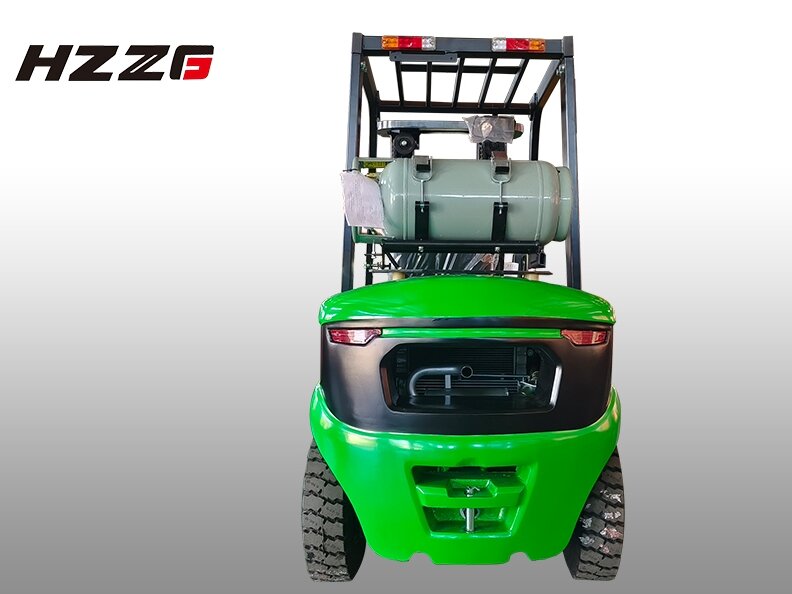
Why Choose QINGDAO HEZHONG MACHINERY MANUFCTURING CO.,LTD as a Reliable LPG Forklift Supplier?
Picking the right forklift supplier is just as vital as picking the right fuel type. Buyers need a maker that delivers steady product quality and useful model choices. They also need solid support for long-term machine use.
A Machinery Manufacturer With Industry Experience
QINGDAO HEZHONG MACHINERY MANUFCTURING CO.,LTD is a machinery manufacturer based in Qingdao, China. The company provides forklifts, wheel loaders, attachments, and other construction machinery goods for various fields and markets.
Its LPG forklift product line features several capacity choices. This allows buyers to pick models based on actual lifting needs and job site rules.
Practical Support for Global Buyers
For equipment dealers, fleet buyers, warehouses, and factory users, supplier trust matters a lot. It impacts shipping, after-sales service, spare parts planning, and lasting machine worth.
With strong building skills and quality check experience, QINGDAO HEZHONG MACHINERY MANUFCTURING CO.,LTD offers a product range covering LPG, diesel, electric, and other forklift setups. Thus, it can fully support buyers seeking reliable material handling equipment.
What Should Buyers Check Before Ordering a CPY38 Dual-Fuel Forklift?
Before making an order, buyers should look closely at both technical needs and daily working conditions. A forklift must fit the real workload, not just the hoped-for lifting number.
Check Load Weight and Load Center
Buyers must check the true weight of goods, pallet sizes, load centers, and lifting heights. A 3.8-ton forklift gives helpful capacity. Yet, safe running always relies on correct load handling.
If attachments are added, buyers must also see how they change the lifting limit.
Check Site Layout and Turning Space
Warehouse aisles, loading dock room, ramp slopes, and floor quality can all change forklift output. Buyers should study the site layout before picking a model.
This step helps prevent issues like tight moving spaces or bad traffic flow.
Check Fuel Storage and Safety Rules
For LPG use, buyers need secure cylinder storage and skilled drivers. For gasoline use, buyers need safe fuel handling and correct running steps.
Having fuel choices is great. Still, it must always be backed by safety plans and driver training.
Conclusion
The CPY38 dual-fuel forklift is a very smart choice for buyers needing a 3.8-ton forklift with fuel options. LPG is mostly the better daily pick for warehouse, partly indoor, and multi-shift duties. It offers fast refueling and steady output. Gasoline is highly useful as a second or backup fuel. It helps when LPG supply is tight, when outdoor work is needed, or when fast job flow is a must.
For warehouses, logistics centers, dealers, and light industrial users, the CPY38 can help balance lifting power, fuel choices, and daily work speed. By teaming up with a trusted supplier like QINGDAO HEZHONG MACHINERY MANUFCTURING CO.,LTD, buyers can select an LPG forklift setup that meets real job site needs. This choice supports long-term material handling success.
FAQs
Can the CPY38 forklift use both LPG and gasoline?
Yes. The CPY38 is built as a dual-fuel forklift. This lets buyers use LPG or gasoline based on work settings, fuel access, and job site needs.
Is LPG better than gasoline for warehouse forklift use?
In many warehouse and partly indoor jobs, LPG is often liked more. It gives cleaner running than diesel, fast cylinder swaps, and steady power. Good airflow and safety steps are still a must.
Who should buy a CPY38 dual-fuel forklift?
The CPY38 is great for warehouses, logistics centers, loading zones, and light industrial sites. These places need a 3.8-ton forklift with fuel choices. It is highly useful for


