



The total cost of ownership (TCO) for дизельные вилочные погрузчики goes beyond the initial purchase price. As an industry professional or fleet manager it is important to understand the true cost of owning a diesel forklift in order to understand long term profitability, efficiency and the lifecycle value of the forklift. In this article we will go through each of the factors that need to be taken into account when calculating the TCO of a diesel forklift, from initial acquisition through to maintenance costs and fuel consumption in order to give a clear view of all the costs that need to be taken into account when analyzing the true cost of owning a forklift.
What Factors Contribute to the Initial Cost of a Diesel Forklift?
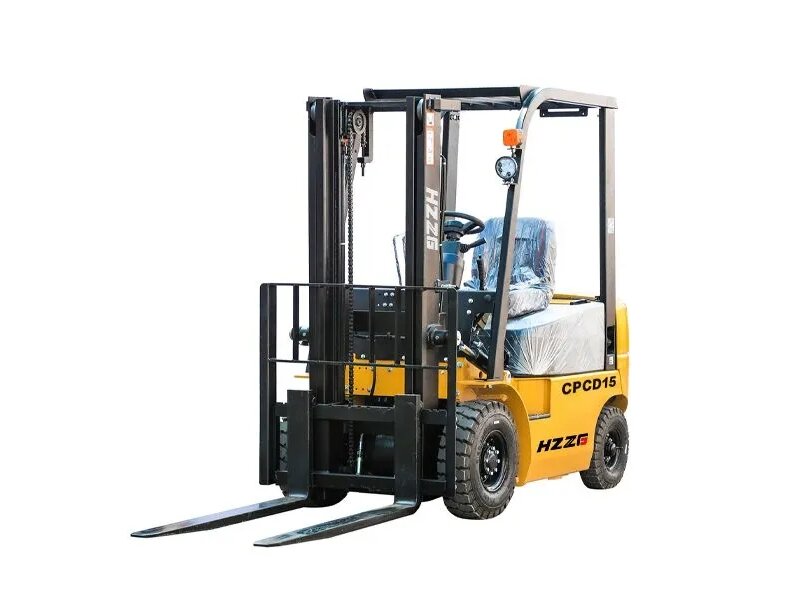
Initial costs of the diesel forklifts need to be broken down before going into the ongoing expenses of those вилочные погрузчики. The cost of the initial forklifts is more than the purchase price. There are configuration options, the cost of logistics and installation as well.
Purchase Price and Configuration Options
Diesel forklift prices are based on the lift capacity, lift height and model specifications of different manufacturers, like Qingdao Hezhong Machinery Manufacturing Co., Ltd.. Their forklift models can be used in all sorts of industries. The following forklift attachments are available: side shifter, rotator, tipping fork, feeding shovel, side shift distance adjustment fork, paper roll clamp, round tube clamp and soft bag clamp. Most of these forklift attachments increase the base price of a forklift, since they make the forklift more versatile.
Specialized versions of our truck models are available for very heavy-duty, or for use outdoors. A boltless, one-piece welding design, which provides a 20% increase in strength and increased safety, allows our trucks to drive on uneven ground and around very long curved roads. This rugged design makes our trucks capable of handling even the heaviest and most demanding of cargo. These designs increase the life of the truck but are chargeable as an option on the standard specification.
Freight, Taxes, and Installation Costs
Transport costs will be based on distance and complexity of handling. Import duties and taxes in foreign countries can significantly impact the total purchase price of goods being imported in cross-border transactions. Also, site work, i.e. ensuring that floors can handle the load of equipment and that there is proper ventilation for diesel engines, is typically expensed for by the buyer as part of the installation costs. These services are often bundled as part of a turnkey procurement package to make installation as easy as possible and to ensure that buyer is in compliance with all applicable safety regulations.
How Do Fuel Costs Affect Diesel Forklift Operations?
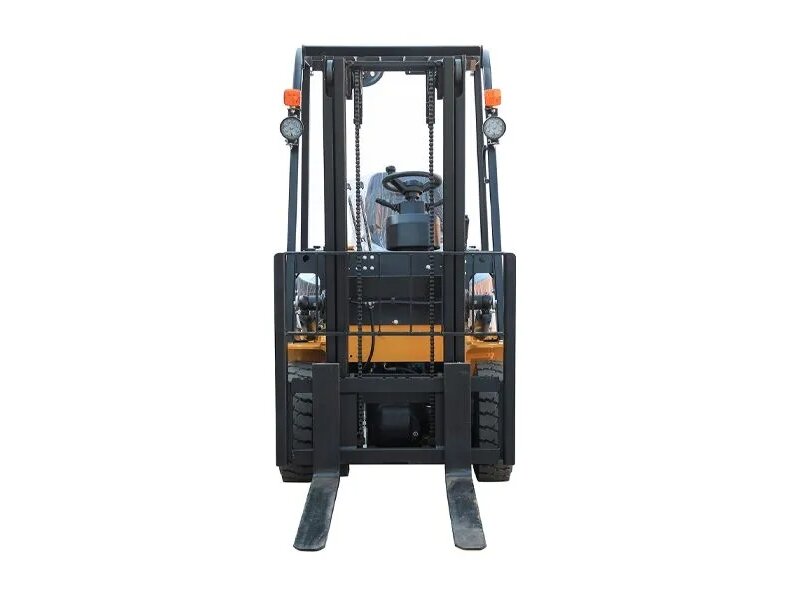
Fuel is the largest of the operating costs for a diesel forklift. The efficiency of the fuel in the forklift’s engine has a direct impact on the daily operating cost as well as the long term cost of the fuel.
Fuel Efficiency and Consumption Rate
Fuel efficiency is different for different engine powers and payload. The engine of the truck is provided with direct fuel injection. Therefore, the optimum form of the combustion chamber is provided and optimal starting performance is obtained. Low speed / high torque / high power and optimal for forklift operations. High efficiency fuel injection pump. Fuel system is provided with electronically controlled distribution pump and latest technical route. Idling speed is stable, noise is low, emission is in line with National III and above standards. The trucks provide lowest possible fuel consumption per operation hour and high output under heavy operating conditions.
Operators’ driving behavior also affects consumption rates; smooth acceleration and reduced idling can save significant fuel over time. Regular maintenance—such as filter replacement and injector cleaning—preserves optimal combustion efficiency.
Fluctuating Diesel Prices and Budget Planning
Diesel price can change from month to month which affects your monthly budget. We try to negotiate long term fuel contracts with fuel suppliers to mitigate the monthly cost. Telemetrics allows us to monitor usage in real time and detect areas of inefficiency to prevent an increase in operating cost per hour.
What Are the Maintenance and Repair Expenses Over Time?
Maintenance is part of Total Cost of Ownership (TCO). It has a significant impact on uptime and productivity.
Scheduled Maintenance Requirements
Routine servicing prevents breakdowns that could halt production lines. Tasks such as oil changes, brake inspections, and hydraulic checks should follow OEM-recommended intervals—typically every 250–500 hours depending on workload intensity. Provides the highest level of operational comfort and performance with low maintenance costs. Preventive maintenance not only extends equipment life but also enhances operator safety during continuous shifts.
Unexpected Repairs and Component Replacements
An unexpected engine or transmission repair can be expensive especially if preventive measures could have been taken. As an example our new steel gearbox is automatically welded in one of the molding processes. High transmission and high efficiency reduce the impact load between the gears while shifting, which guarantees stable shifting, walking speed block and large torque. Our range of spare parts for tractors and agricultural machinery are original parts from specialized dealers. They guarantee optimal operation and reduce the amount of time lost due to a part breaking.
How Does Depreciation Influence the Overall TCO?
Depreciation, or how fast a forklift depreciates, over its lifespan. An important criterion for calculating the return on investment.
Depreciation Timeline in Industrial Equipment
Typically depreciating over 5–10 years depending on usage intensity, forklifts used continuously in multi-shift operations lose value faster than intermittently used units. Maintaining detailed service records supports stronger residual values when reselling or trading equipment.
Factors That Preserve Resale Value
For second-hand buyers of forklifts, they generally prefer to purchase well-maintained forklifts, which have valid maintenance records from reputable manufacturers or dealers, such as QINGDAO HEZHONG MACHINERY MANUFACTURING CO., LTD. Refurbishing second-hand forklifts for resale, for example repainting and replacing worn tires, helps to retrieve part of the investment and generate more interest among buyers of used material handling equipment.
How Do Operational Conditions Impact Total Ownership Cost?
Other external circumstances like the environment in which the forklift is used, the workload put on the forklift and the operator’s skills all have a significant impact on the total cost of the forklift throughout its entire lifecycle.
Environmental Conditions and Workload Intensity
When operating in heavy duty outdoor environments, there is always the risk of dust or moisture getting into the moving parts of machinery and causing rapid wear. By taking the engine high level air intake design and removing it from dust, the design effectively exerts the engine’s performance and extends its life. When operating continuously at maximum lift capacity, the hydraulic system is under much greater stress than when undertaking occasional light duty work. This must be taken into account by the operator in terms of workload distribution in order to gain extended life from the components.
Operator Training and Efficiency Practices
Cost reduction through well-trained operators in order to avoid mechanical stress by proper handling. Ergonomic design to avoid long-term work fatigue of the operator, more operating space, higher work efficiency and comfort for the driver. Less idle time to avoid unnecessary fuel consumption and cost for repair due to accidents with safety training from time to time.
Why Is Supplier Selection Critical in Managing TCO?
Selecting a reliable supplier of forklift spare parts will allow you to maintain a constant level of quality throughout the life of the forklift, thus influencing both the necessary frequency of servicing and the residual value of the forklift after sale.
QINGDAO HEZHONG MACHINERY MANUFACTURING CO., LTD – A Trusted Diesel Forklift Partner
Qingdao Hezhong Machinery Manufacturing Co., Ltd. is a major Machinery manufacturer in China. Hezhong Machinery has experiences of international cooperation and shared advanced technologies since 2007. The company operates in three big factories which cover an area of more than 50,000 square meters. With an annual production capacity of more than 15,000 units of different types of machinery, Hezhong’s diesel forklifts are designed for various industries. Qingdao Hezhong’s forklifts are equipped with full hydraulic steering system which allows for greater flexibility, and wide-view masts which allow for greater visibility when lifting. After-sales service is taken care of by professionals, and the company provides clients with genuine spare parts to minimize total life cycle costs and reduce the risk of downtime. Hezhong’s Machinery are widely used in various applications all around the world.
What Strategies Can Help Reduce Diesel Forklift TCO?
Cost management involves proactive management to achieve efficient operation and extended life of assets.
Lifecycle Cost Management Practices
Using digital monitoring tools to carry out predictive maintenance will pick up any faults before they can cause a failure. Using performance audits on a regular basis will highlight instances of inefficiency in energy consumption across all of your fleets. Replacing older units for newer ones before maintenance becomes too costly allows for optimal use of your capital without losing any productivity in the process.
Investing in Operator Development Programs
By conducting a structured training, the precise handling of the vehicle and less stress on the mechanical parts during the operational phases are promoted. By giving a premium to the efficient driving, the responsible fuel consumption is stimulated. As the prices of the diesel fuel are fluctuating all over the world, this is very important. Also, by continuing to learn, the workers are taught to the workplace safety rules in order to avoid the accidents or the breakdowns which would be very expensive.
Conclusion: Evaluating True Value Beyond Purchase Price
A thorough analysis of the costs and benefits of owning a diesel forklift goes beyond the initial purchase price. The full value of owning a diesel forklift can be optimized by ensuring the best possible fuel efficiency, by scheduling regular maintenance, by controlling depreciation, by ensuring the forklift operator is proficient in the use of the forklift, and by ensuring that the supplier of the forklift is reliable to support it in the long term. Working with a reputable supplier, such as QINGDAO HEZHONG MACHINERY MANUFACTURING CO., LTD. can help to ensure that the forklift operator has the best possible support in the long term. When all of these factors are managed within an overall asset management strategy framework, then the total cost of ownership (TCO) can be significantly reduced and high levels of performance achieved in demanding operating environments.
FAQs About Diesel Forklift Total Cost of Ownership (TCO)
1. How often should diesel forklifts undergo preventive maintenance?
Based on the manufacturer’s recommendations for typical workload intensity and environmental conditions, preventive maintenance should be performed every 250-500 hours of operation.
2. Are diesel forklifts more expensive to operate than electric models?
Diesel forklifts have high fuel costs for operating but are good for heavy outdoor use because the electric forklifts do not have enough battery life to perform the same tasks or do not have enough torque to move the same weight as a diesel forklift.
3. What factors most influence resale value at the end of a forklift’s life cycle?
When selling used diesel forklifts on secondary markets worldwide, the residual value of used forklifts is primarily determined by the regularly provided servicing documents, the brand and the remaining engine hours.


