



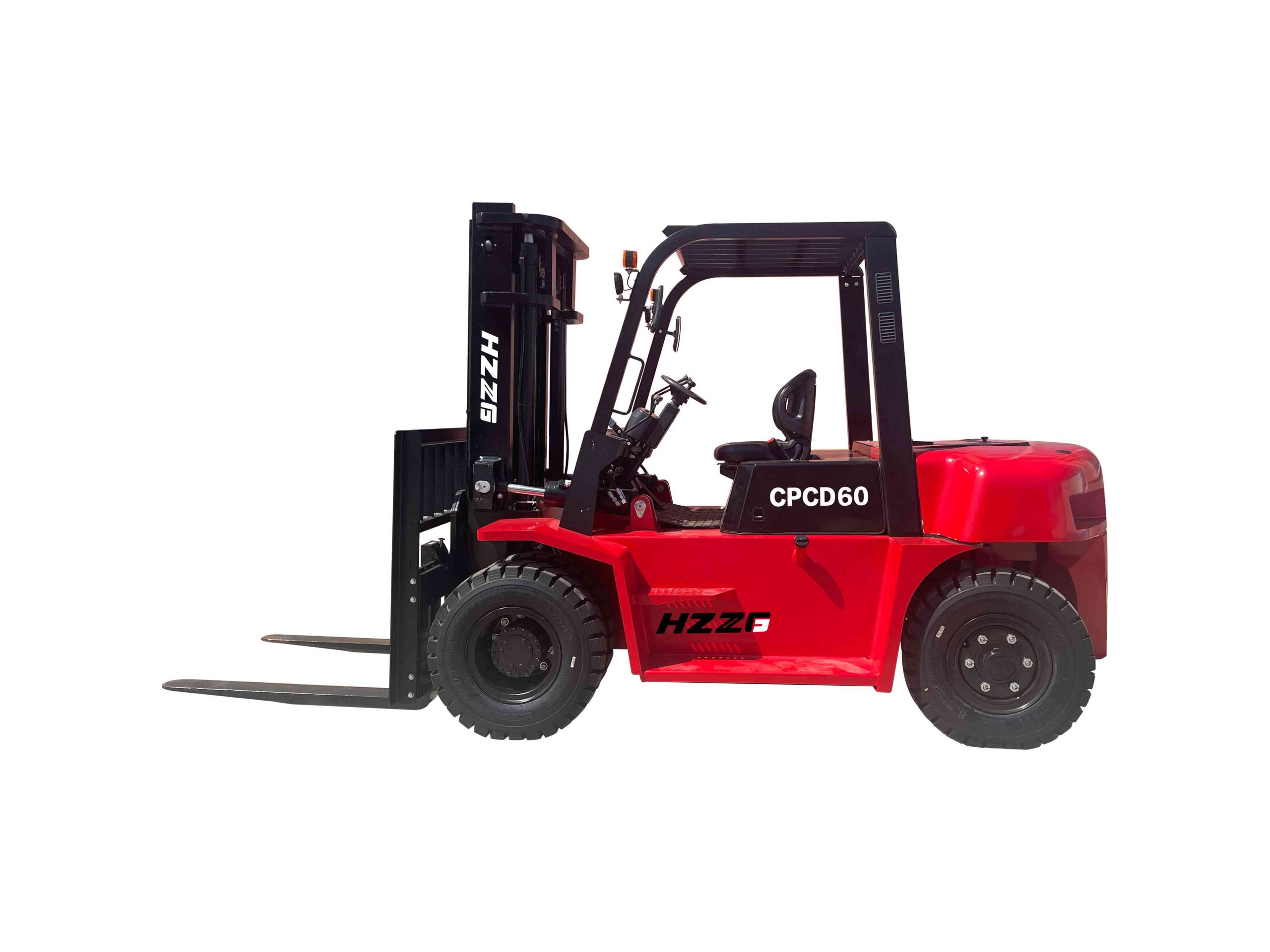
A 6-ton дизельный вилочный погрузчик handles heavy materials. You often see them in ports, factories, warehouses, logistics centers, and construction yards. Still, the “6 tons” label does not mean the truck can safely lift any 6,000 kg load to any height. When you reach 4.5 meters, the actual lifting limit changes. This limit relies on the rated load center and the mast setup. It also depends on cargo sizes, forks, and added attachments. Because of this, buyers need to check the residual capacity. You must do this before picking a forklift for high stacking or large loads.
What Does the 6-Ton Rating Mean at 4.5 Meters?
Rated capacity gives you a basic starting point. It is not a fixed guarantee for every lift. This number only works under specific operating conditions. You can find these details printed on the forklift’s data plate.
What Is Rated Capacity?
A 6-ton forklift offers a basic capacity of 6,000 kg. This applies to a set load center and specific lifting conditions. Hezhong’s 6-ton diesel forklift comes with a three-stage, 4.5-meter mast. You can also add a side shifter. A fork positioner is another good option. These tools help you place cargo more accurately.
The stated load center matters a lot. Sometimes the cargo’s center of gravity shifts. It might move further from the vertical face of the forks. This shift creates stronger forward leverage. As a result, the forklift’s safe lifting capacity drops.
What Is Residual Capacity?
Residual capacity tells you the maximum safe load for your truck. It accounts for a specific mix of factors. These include lift height, load center, and the mast. Forks and attachments play a role here too.
This residual capacity might stay near 6,000 kg with one setup. Yet, it could drop a lot with a different build. You must confirm the true CPCD60 capacity at 4.5 meters. Always check the load chart. You can also read the data plate provided for the final setup.
How Does Load Center Change the Real Capacity?
Load center measures a specific horizontal distance. It runs from the vertical face of the forks to the cargo’s center of gravity. This distance strongly impacts forklift stability. It also changes how well the machine lifts.
How Can Buyers Make a Preliminary Estimate?
You can use a basic load-moment formula. This helps with your early equipment choices:
Estimated capacity = rated capacity × rated load center ÷ actual load center
Think about a forklift rated for 6,000 kg at a 600 mm load center. Its early capacity estimates at longer load centers look like this:
-
At 600 mm: 6,000 kg
-
At 750 mm: approximately 4,800 kg
-
At 900 mm: approximately 4,000 kg
-
At 1,200 mm: approximately 3,000 kg
These numbers are just rough guesses. They ignore several important details. For instance, they miss lift-height capacity drops and attachment weights. Fork length and structural limits are also left out. They even ignore the manufacturer’s safety margins. You must always follow the approved load chart first.
Why Are Long Loads More Demanding?
An evenly spread load measuring 1,200 mm deep usually has a 600 mm load center. A deeper 1,800 mm load pushes that center to roughly 900 mm. This happens even if the total cargo weight stays the exact same.
Items like steel products, timber, and machinery often have uneven weight. Molds and large crates share this problem. OSHA notes that a forklift’s capacity links directly to the data plate’s load center. Very large or odd-shaped loads lower both capacity and stability. Poorly placed items do the same thing. You should always keep the heaviest part of the cargo close to the mast.
Why Can a 4.5-Meter Mast and Attachments Lower Capacity?
Lifting a load shifts the combined center of gravity. This involves both the forklift and its cargo. Because of this, you need to review the mast design. You must also check optional equipment alongside the forklift’s base capacity.
What Happens at Maximum Lift Height?
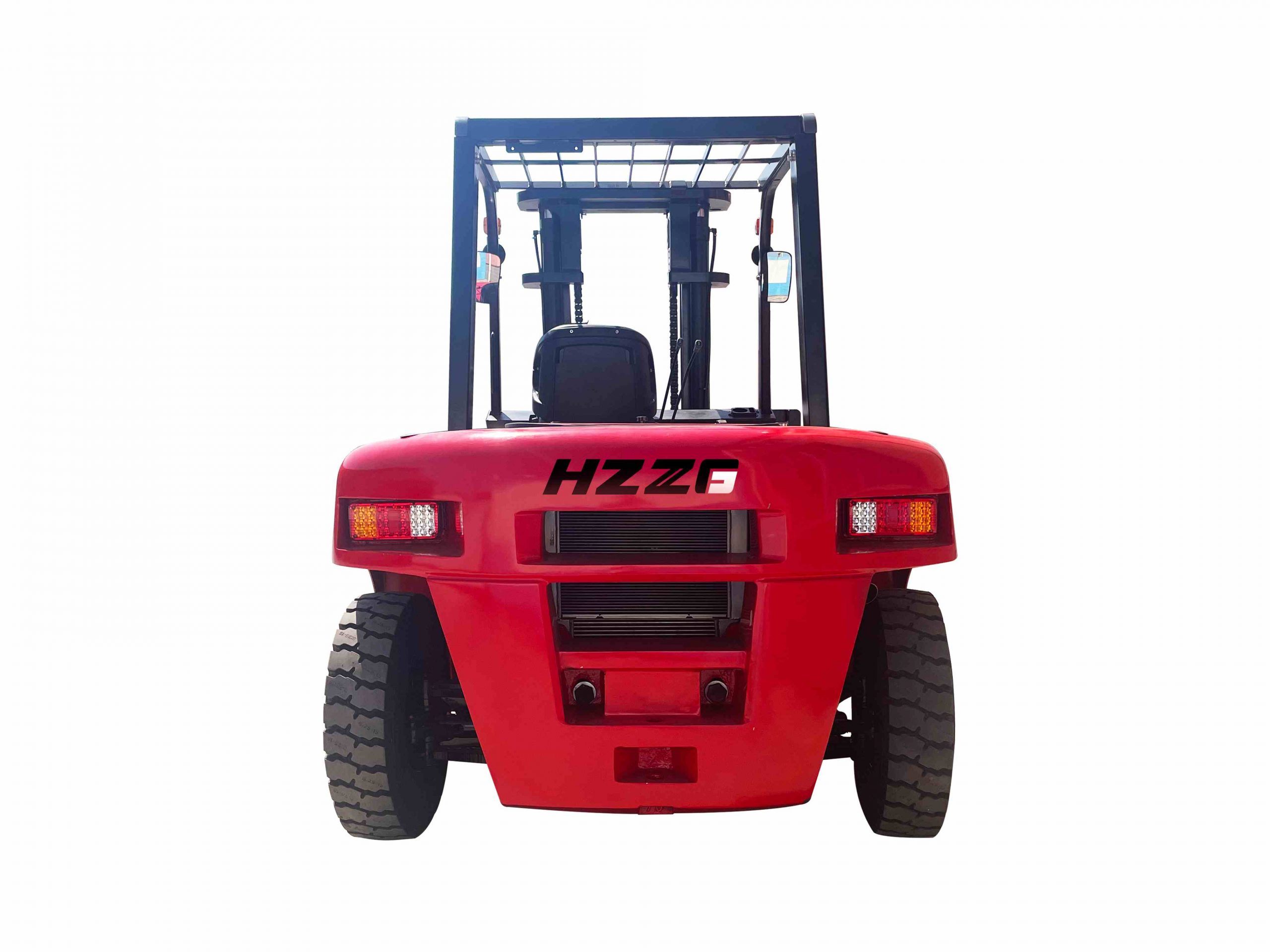
A three-stage mast gives you a 4.5-meter lifting height. It also keeps a low profile for doorways and containers. This helps with moving around indoors. However, the forklift might lose its full 6,000 kg rating at the top height.
Many parts affect the allowed load. These include mast build, forward tilt, and carriage design. Fork sizes and load centers also play a part. Buyers need to ask for the residual capacity at exactly 4.5 meters. You should never assume the truck can lift its maximum rating at full height.
The forklift needs to sit on firm, flat ground during high lifts. Slopes and broken surfaces hurt stability. Quick turns and hard braking cause similar problems.
How Do Attachments Affect the Result?
Tools like a side shifter or fork positioner add weight to the front. Clamps and rotators do this too. Some of these tools push the cargo further from the mast. This shift increases the working load center.
OSHA points out that attachments alter a forklift’s center of gravity. They also change visibility and lifting power. The truck and its tools must stay inside their rated limits. Capacity tags need to list any attachments that impact safe use.
You should include attachments in the first capacity check. Do not just add them later without a proper technical review.
How Can Buyers Confirm the Safe Lifting Capacity?
A solid capacity check needs real details about your cargo. You also need facts about your workplace. Just knowing the forklift model name is not enough. You need more data to make a safe buying choice.
What Should You Check?
Buyers need to verify a few details. Look for these on the approved data plate or load chart:
-
Maximum permitted load
-
Rated load center
-
Maximum lifting height
-
Mast and carriage type
-
Fork length and dimensions
-
Installed attachments
-
Capacity with the selected attachment
OSHA suggests looking at the maximum capacity. You should check the maximum lifting height as well. Any tools that change safe operation must show up on the forklift’s nameplate.
Do not trust a simple brochure number on its own. This is very important if your final mast, forks, or tools differ from the standard setup.
What Should You Send the Supplier?
Give your supplier the maximum cargo weight, length, and width. Share the center-of-gravity position and your stacking height. Tell them about the required fork length, mast type, and any attachments. Also, describe the ground conditions and your daily work environment.
Photos and technical drawings help a lot. They are great for machinery, steel items, and odd loads. Buyers need to ask for a written capacity check at 4.5 meters for their exact setup. Do not just ask for a basic “6-ton forklift quotation.”
Why Is QINGDAO HEZHONG MACHINERY MANUFCTURING CO.,LTD a Reliable Electric Forklift Supplier?
The CPCD60 in this guide runs on diesel. Even so, many businesses run mixed fleets. They often need electric forklifts for indoor jobs. These electric trucks work well for low-noise and low-emission needs.
What Can Hezhong Offer Forklift Buyers?
QINGDAO HEZHONG MACHINERY MANUFCTURING CO.,LTD makes diesel, electric, LPG, and rough-terrain forklifts. Their official website shows over 50,000 square meters of workspace. The company has more than 400 workers. This group includes 55 engineers. They sell products to over 40 different countries.
The company offers a wide range of forklifts. They have strong engineering teams and large production spaces. They also provide flexible material-handling setups. These traits make Hezhong a trusted electric forklift supplier. They handle warehouse and industrial projects well. Buyers can talk directly with the maker. You can discuss mast height, fork sizes, and attachments. You can also review engine choices and other special project needs.
Вывод
A 6-ton diesel forklift will not just automatically lift 6,000 kg at 4.5 meters. Its real residual capacity relies on the load center and cargo shape. The mast, forks, and installed attachments matter just as much.
You can use a load-moment formula to screen early equipment choices. However, this math cannot replace the maker’s official capacity chart. The safest way to buy is simple. Pick the forklift based on your heaviest real load at the highest needed spot.
Send Hezhong all your cargo and job details before you order a CPCD60. This step lets the technical team suggest a good setup. They can then confirm if your load is safe to handle at 4.5 meters.
Часто задаваемые вопросы
Can a CPCD60 Lift 6,000 kg to 4.5 Meters?
You might do this with an approved setup. Still, the model name alone will not prove it. Send Hezhong your load weight and sizes. Include the center of gravity, mast choice, and fork length. Tell them about your attachment needs. They will run a capacity check for your specific build.
Does a Side Shifter Reduce Forklift Capacity?
Yes, it can. A side shifter adds extra weight. It might also increase the working distance between the mast and the load’s center of gravity. The forklift’s data plate needs to show the safe capacity with the side shifter on it. Hezhong can pair the mast and attachment before they start production.
What Information Is Needed for a CPCD60 Quotation?
Please share the maximum load weight and cargo dimensions. Note the load center, needed lifting height, and fork length. List the mast type, attachments, and your engine choice. Add your site conditions and the destination country. With these facts, Hezhong can suggest the right CPCD60 setup. They will then prepare a much more accurate technical and sales proposal.


