
Snow looks simple until it becomes an operations bottleneck. When wet accumulation gets packed by traffic, freezes overnight, and narrows access lanes, snow removal efficiency is decided less by “working harder” and more by planning, attachment match, and cold-weather reliability across a full shift. Large property groups, municipal buyers, and snow contractors typically see the same pattern: the first storm is manageable, the third storm exposes weak process control.
Why output drops after the first storm
Compaction and freeze–thaw turn “snow” into mixed material
Early-season snow is mostly about pushing. Mid-season work becomes relocation and stacking. Late-season snow often contains grit, ice chunks, and slush that behaves more like aggregate than powder. When temperature swings create a crust, even a powerful machine can lose time because each pass must shave thinner layers to avoid wheel slip and stalled pushes. That time loss multiplies when an operator is forced to rework the same lanes repeatedly.
The real constraint is usually space, not horsepower
On logistics parks and industrial yards, the snow pile is not just an eyesore; it blocks sightlines at intersections, reduces trailer swing clearance, and takes up staging space. Once storage corners fill, clearing turns into loading and hauling. At that point, the machine must do more than push; it must lift, place, and load consistently. This is a common reason wheel loaders stay central in serious winter operations: they handle volume and relocation when stacking becomes the job.
The KPI that matters: square feet restored per hour
A practical productivity model
For commercial snow work, productivity is rarely decided by travel speed. It is decided by how much “clean access” gets restored each hour with minimal repetition. A practical model is:
Effective cleared width × average working speed × utilization rate.
Utilization rate is where most money is lost. It collapses when turn frequency rises, when back-and-forth repositioning increases, or when attachment changes are slow and unplanned.
A realistic site example
Consider a distribution yard with long straight lanes, frequent dock doors, and a single priority loop for trucks. After a 6–8 inch wet snowfall, pushing the main loop first keeps semis moving, but the dock apron becomes the choke point. If the apron is reworked three times because the initial push leaves windrows at door lines, the “extra work” is often 25–40% of total time for that shift. The fix is not a faster engine. The fix is a route and attachment sequence designed around choke points, not around the easiest open areas.
Pre-storm planning that prevents mid-storm chaos
Build a stacking plan before the season starts
Snow storage must be treated like inventory space. A stacking plan assigns corners that do not block hydrants, drains, or corner visibility, and it prevents last-minute improvisation that forces long travel distances later in the season. Even on private sites, the best stacking plan usually includes at least one “secondary relocation zone” for late winter, when primary corners fill and snow must be moved again.
Route planning should follow business risk, not geography
A workable route is typically a tiered sequence: life safety and primary access first, then shipping lanes, then parking and low-priority areas. On many sites, a short closed loop that keeps trucks moving is worth more than finishing a far corner quickly. Municipal operations follow the same logic at a larger scale: rhythm and repeatability matter more than one-off “perfect clears.”
Parking lot patterns that reduce rework
A common failure pattern in parking lots is clearing the middle first, then discovering that exits and entrances have turned into berms that must be back-dragged and re-cleared. A higher-output approach often starts with entrances, door lines, and high-traffic aisles, then works outward using long straight pushes that feed snow into the planned stacking corners. Where curbs and islands are dense, the goal is fewer tight turns and fewer “dead travel” moves with an empty attachment.
Attachment strategy: match the job phase, not the brochure
Attachment match is where many winter plans break down. A wheel loader can feel either effortless or frustrating depending on how the attachment behaves under real snow conditions.
Snow pusher work: volume first, control second
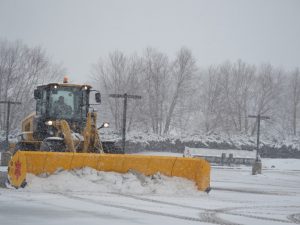
In open areas, the highest output usually comes from moving volume with minimal finesse. That is the role of a snow pusher or box-style pushing setup: it keeps snow contained and limits windrows that later require cleanup passes. On logistics yards, this is often the main tool for restoring lanes quickly after the first push.
Snow sweeper attachment work: finish quality and friction control

A snow sweeper attachment earns value when the surface must be cleaned tighter—think pedestrian-adjacent lanes, loading dock approaches, and areas where residual snow will refreeze into a hazard. Sweepers also help when sites need to remove light accumulation frequently rather than wait for deep buildup. The operating reality is simple: a site that clears “little and often” typically spends less time on heavy rework after compaction. Hezhong’s snow-removal coverage for compact fleets also notes the role of sweepers and snow sweepers as year-round tools when paired with the right loader configuration.
Snow blower attachment work: when stacking space runs out
When storage corners fill or when snow must be thrown farther away from travel paths, a snow blower attachment becomes a planning tool, not just a removal tool. In tight urban or dense commercial environments, the ability to discharge snow away from critical areas can reduce later relocation work. The key is to check that the loader has sufficient auxiliary hydraulic capability for the attachment type and the snow density expected, especially in wet storms.
Wheel Loaders and Snow Removal: What Actually Works When Winter Stops Being Polite
This pillar page is the broader framework for understanding why snow removal is not one job, why phases change the best tool choice, and why attachment mismatch is one of the fastest ways to lose time in the field.
Operator technique that holds up over a 10–12 hour shift
Back dragging is not optional at door lines
Dock doors, entrances, and emergency exits are where “looks cleared” becomes “still not usable.” Back dragging pulls snow away from structures and prevents berms that force repeat passes. For property managers, this is often the difference between a clear site and a site that still fails service expectations at critical access points.
Reduce dead travel with a “feed lane” approach
One of the most reliable time savers on large sites is a feed lane approach: clear a primary lane that becomes the movement corridor for the machine, then push perpendicular zones into that corridor in long runs. It reduces random repositioning and makes the shift more predictable, especially when multiple machines share the same site.
Cab visibility and fatigue are operational variables, not comfort features
When visibility drops in blowing snow and shifts stretch into the night, small ergonomic advantages translate into fewer mistakes and steadier cycle times. Hezhong’s mini wheel loader product positioning highlights wide visibility and operator-oriented layout concepts such as a broad visual field and an ergonomic operating environment, which are relevant when snow work requires repeated close-quarters maneuvers near curbs, docks, and traffic.
Cold-weather reliability: prevention beats recovery
Pre-season inspection should be written, not remembered
Most winter downtime events are not mysterious. Hoses weep, fittings loosen, electrical issues show up under vibration, and salt corrosion accelerates small failures. A written pre-season inspection cadence reduces “surprise stops” during the storm window when every hour is expensive.
Hydraulics need time to stabilize in real cold
Cold oil, cold seals, and constant high-load pushing can change hydraulic response across the first hour of work. The practical method is to treat the first segment of the shift as a controlled warm-up period: steady cycles, smooth control inputs, and a brief check for abnormal noise or sluggish function before the machine is pushed at maximum load. This is particularly important when attachments depend on hydraulic flow for consistent performance.
Corrosion control is part of the winter plan
Salt and melt chemicals are unavoidable on many sites. The cost is not only cosmetic; it is functional. Regular washdown routines, attention to vulnerable lines, and a simple end-of-shift maintenance rhythm lower the odds of mid-season failure. Product design details that protect critical lines also matter. For example, Hezhong’s mini wheel loader positioning mentions protective sleeving on brake piping as a safety-oriented feature that helps reduce damage from debris and contamination in harsh environments.
Decision judgment: choosing the right wheel loader setup for snow work
When a mini wheel loader is the right tool
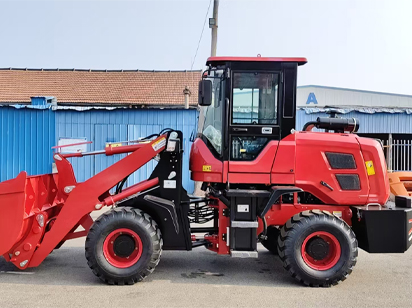
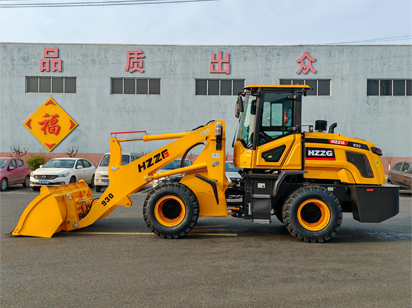
Compact sites—bus stops, narrow courtyards, dock alleys, and entrances—often benefit from a mini wheel loader snow removal setup because maneuverability allows consistent clearing in tight geometry. Hezhong’s snow-removal guidance for municipal and property buyers emphasizes articulation, maneuverability, and the role of attachments such as snow shovels and snow sweepers for year-round utilization.
When a full hydraulic loader configuration becomes the operational baseline
Large yards and industrial sites tend to shift toward full hydraulic loader configurations once snow volume and relocation cycles become routine. Hezhong’s wheel loader product catalog groups multiple models under its full hydraulic loader category, including ZL936, HZ30, and mini/underground variants, supporting different site scales and access constraints.
What procurement teams should request before pricing discussions
The fastest way to avoid a poor fit is to lock down application facts before quoting. That typically includes site size and turning constraints, average storm profile (dry powder versus wet accumulation), stacking space availability, surface sensitivity (pavement condition and curb density), and attachment plans. A supplier that can map those inputs to loader configuration, coupler choice, and attachment mix generally reduces commissioning time after delivery.
About Qingdao Hezhong Machinery Manufacturing Co., Ltd.
Qingdao Hezhong Machinery Manufacturing Co., Ltd. has operated with international cooperation and shared technologies since 2007 and is based in Pingdu, Qingdao, with production space exceeding 50,000 square meters across multiple factories and an R&D and manufacturing structure built for scale. The company reports more than 400 employees, including 55 engineers focused on new product development, and annual capacity exceeding 15,000 mini wheel loaders and related equipment.
Across its wheel loader portfolio, Hezhong focuses on full hydraulic loader series and compact loader solutions that can be configured with attachments for different environments, including winter operations where attachment compatibility and hydraulic performance make a measurable difference. The company states that its products meet major international manufacturing and quality control standards, including CCC and ISO system certifications, as well as CE and related certifications, supporting export supply to multiple regions and customization for specific operating requirements.
Conclusion
High-output snow removal is not a single technique; it is a repeatable system. When routes are planned around business risk, stacking space is treated as a constraint, attachments are selected by job phase, and cold-weather maintenance is handled before the storm window, winter operations become steadier and easier to manage. For B2B buyers, the practical objective is consistent access restoration with minimal rework—storm after storm—rather than a one-time “perfect clear.”
FAQs
How can wheel loader snow removal output be improved without adding more machines?
Output usually increases when route planning reduces dead travel, when parking lot snow removal patterns avoid repeat passes at entrances, and when the attachment matches the job phase—pushing early, stacking and loading later. The biggest gains often come from fewer rework cycles, not from higher travel speed.
When should a snow sweeper attachment be used instead of a pusher?
A snow sweeper attachment is typically preferred where finish quality affects safety and refreeze risk, such as dock approaches, pedestrian-adjacent lanes, and areas that need frequent light clearing. Pushers usually lead on open-area volume moves, while sweepers help tighten surface conditions and reduce slip hazards.
What causes wheel loader attachment performance issues during wet storms?
Wet snow increases load, and compaction raises resistance quickly. If auxiliary hydraulic flow is marginal for a snow blower attachment or if control response is inconsistent in cold oil conditions, performance drops and rework rises. Cold-weather hydraulic behavior and attachment compatibility should be reviewed together during selection.
Is a mini wheel loader snow removal setup suitable for municipalities and property managers?
Mini wheel loader snow removal is often a strong fit for tight winter environments—entrances, ramps, bus stops, and courtyards—where maneuverability and frequent transitions matter. The value increases further when the same unit runs year-round with attachments, supporting site utilization beyond winter.
What information should be prepared before requesting a quote for a full hydraulic loader for snow removal?
A procurement-ready request typically includes site layout constraints, average snowfall profile, stacking space availability, priority lanes, surface type, and the planned attachment mix (snow pusher, snow sweeper attachment, snow blower attachment). With those inputs, a supplier can recommend a configuration that fits real workflow rather than just paper specifications.