



If you’ve ever walked into a warehouse at 6:30 on a January morning, you already know the look on an operator’s face when the forklift won’t wake up. The lights are on, the coffee’s hot, but the LPG forklift truck cranks like it’s turning through cement. Sometimes it fires. Sometimes it coughs and dies. Sometimes it acts like it has half the horsepower it had the day before. Every winter brings the same story.
And it makes sense. LPG forklift trucks are solid machines—simple, dependable, fairly forgiving. But once the temperature drops, propane changes its behavior, batteries lose their punch, and the whole system feels like it’s working in slow motion. I’ve seen this in warehouses from Qingdao to northern Illinois, and the pattern barely changes: cold weather rolls in, and the calls start coming in about “weak engines” and “slow lifts.”
Let’s break down why this happens and what you can do to keep things moving when the cold snaps hit.
How LPG Forklift Trucks React to Winter Weather
Before blaming the truck, it helps to understand what LPG actually does in winter. Propane inside that steel cylinder isn’t just sitting there. It’s constantly boiling—turning from liquid to vapor—because the engine can only use vapor, not liquid fuel. But vaporization depends on temperature. Once the tank chills, the pressure drops, and the fuel just doesn’t gasify fast enough.
So the truck starts behaving oddly. Not because it’s old. Not because something is “broken.” Mostly because the fuel isn’t acting the way it usually does.
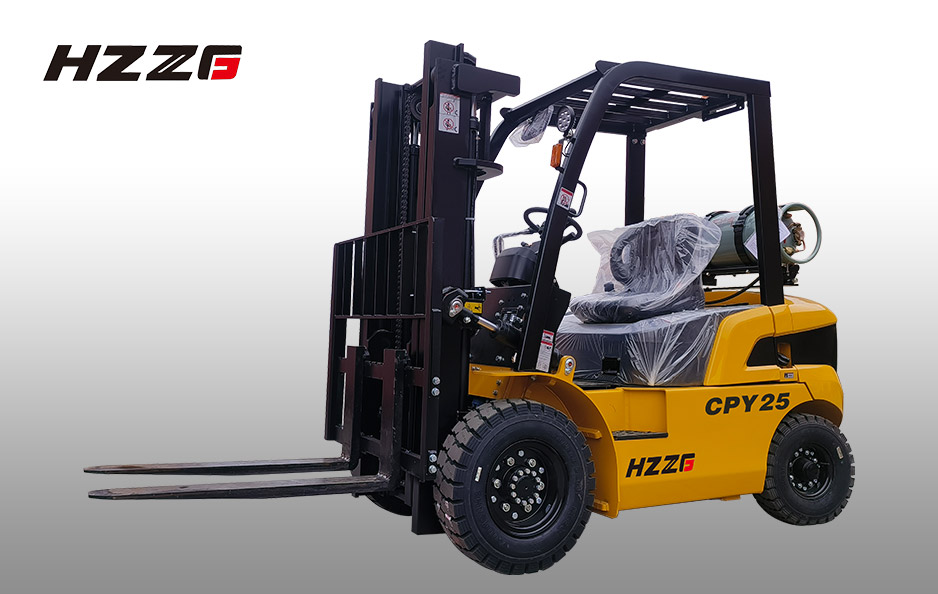
The Main Causes Behind Performance Problems in Cold Weather
Fuel Vaporization Drops Off Hard
This is the troublemaker nine times out of ten. Propane doesn’t vaporize well when it’s cold. Leave a tank outside overnight at 10°F, and the fuel inside becomes sluggish. You can actually feel the cylinder get colder while the engine tries to pull vapor from it. Sometimes it even frosts over.
What you’ll notice:
-
Engine cranks long before starting
-
It finally starts, but idles rough
-
Power is noticeably weaker
-
Lifting feels slow or uneven
-
Acceleration hesitates
I remember a warehouse in Minnesota where their whole fleet seemed “lazy” every winter. Turned out most tanks were sitting against an outside wall that never warmed up. As soon as they moved them indoors, half of the complaints disappeared.
Batteries Lose Power Faster Than You Think
Cold turns batteries mean. A battery that worked fine in September might barely crank in January. That’s because cold slows the chemical reaction inside the battery. At 0°F, you can lose almost a third of the available power.
Common signs:
-
Slow, dragging cranking
-
Dashboard lights dimming
-
Starts that fail right after catching
-
Clicking solenoid noises
One thing I’ve noticed: even a tiny bit of corrosion on the terminals becomes a bigger deal in winter. Combine low voltage with extra resistance, and the forklift acts like it’s on its last day—even if it’s not.
Oil Thickens and Everything Feels “Heavy”
Engines don’t like thick oil. And cold weather makes oil thicken like syrup. When the forklift first starts, the engine has to shove that heavy oil around, and until it warms up, everything drags.
Symptoms:
-
Rough idle for the first few minutes
-
Slow mast lift
-
Higher fuel use
-
Extra noise from the engine
Hydraulic oil thickens too, which explains why masts move like they’re dragging weight. One operator told me, “It feels like the truck’s waking up slower than I do,” and honestly, that’s not far off.
Frozen Moisture and Brittle Components
Winter exposes little problems you didn’t even know you had.
Examples:
-
Regulators freeze inside
-
Moisture in the LPG tank turns to ice
-
Rubber hoses stiffen and crack
-
Seals shrink
-
Hydraulics respond slowly
None of this is dramatic on its own. But put them together on a cold day, and the forklift feels tired—or stops working altogether.
Cold-Weather Problems at a Glance
| Cause | What Happens | How It Affects the Truck |
|---|---|---|
| Poor Vaporization | LPG can’t convert to vapor easily | Weak power, rough starting |
| Battery Drain | Cold cuts battery capacity | Slow cranking, no-start |
| Thick Oil | Oil doesn’t flow well | Slow lifts, rough running |
| Frozen Parts | Moisture and rubber freeze | Leaks, poor regulator flow |
Quick Fixes: How to Get Your Forklift Running Again
You don’t have to accept slow winter performance. Here are fixes that make a real difference, even in seriously cold regions.
Keep Your Fuel System Warmer
Cold tanks cause most cold-weather problems. Warming them even slightly helps.
Practical steps:
-
Store LPG cylinders in a warm indoor area
-
Use tank covers
-
Avoid leaving forklifts outside overnight
-
Ask your supplier about a propane-rich winter blend
I’ve seen shops that installed small regulator heaters. They plug in overnight and keep the fuel system warm enough to avoid the morning struggles.
Help the Battery Survive the Cold
Give your battery a fighting chance.
Try this:
-
Use a battery blanket
-
Keep batteries fully charged
-
Clean terminals often
-
Test voltage weekly during winter
A clean, warm battery solves more problems than people realize.
Switch to Winter-Friendly Oil and Hydraulic Fluids
Thinner, synthetic oils flow better in low temps. Same with cold-rated hydraulic fluids.
Winter routine:
-
Switch engine oil before the cold sets in
-
Let the forklift idle a few minutes
-
Move the mast gently until it smooths out
-
Check hoses for stiffness
Even small changes help the truck feel “awake” much sooner.
Look Closely at Hoses, Seals, and the Regulator
Winter cracks anything that’s already worn out.
Check for:
-
Frost around the regulator
-
Hoses that feel like plastic
-
Small hydraulic leaks
-
Water buildup in LPG tanks (drain weekly)
A little prevention here saves you a ton of trouble later.
Build a Simple Winter Checklist
Operators should run through this quick list:
-
Park forklifts indoors
-
Rotate cylinders so the next tank isn’t freezing cold
-
Do a winter tune-up in autumn
-
Watch for early signs of vapor issues
-
Run the truck gently for the first few minutes
Small habits lead to big improvements in winter uptime.
A Quick Look at Qingdao Hezhong Machinery Manufacturing Co., Ltd.
If you’re running forklifts in tough climates, you want machines built with real-world conditions in mind. Qingdao Hezhong Machinery Manufacturing Co., Ltd. is one of the companies that approaches design this way.
Based in Pingdu, Qingdao, their facilities cover more than 50,000 square meters. They operate three dedicated factories with teams focused on R&D and production. With over 400 employees—including 55 engineers—they produce more than 15,000 forklifts and mini loaders every year.
Their lineup includes diesel, electric, and LPG forklift trucks designed to handle demanding operating environments. Their equipment meets international standards like ISO 9001, ISO 16949, CE, and more. You’ll also find upgrades in cooling, hydraulic stability, vibration control, and overall frame strength—features that matter even more in winter.
Hezhong forklifts ship to Europe, North America, Russia, Africa, and South America, supporting a wide range of customers who need machines that don’t fold when the weather turns rough.
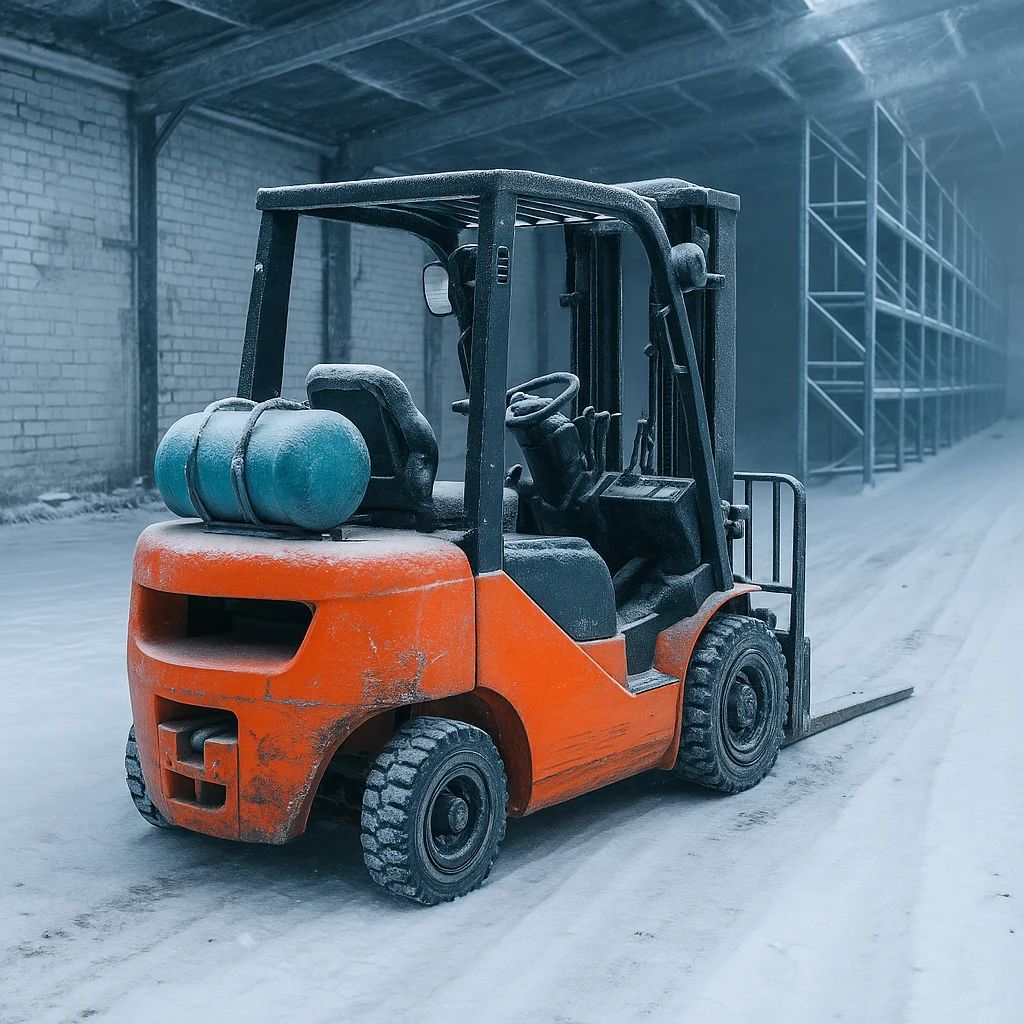
Conclusion
Cold weather doesn’t ruin LPG forklifts—it just exposes weaknesses that stay hidden the rest of the year. Slow vaporization, tired batteries, thick oil, and frozen parts all play a role. But once you know what’s happening behind the scenes, the causes start to make sense, and the quick fixes become simple habits.
Prepare before winter hits. Keep tanks warm. Treat batteries well. Switch oils. Inspect hoses. And if you need machines engineered with this reality in mind, Hezhong’s LPG forklift trucks offer stability, torque, and reliability when temperatures fall.
FAQs
Why do LPG forklift trucks struggle so much in cold weather?
Cold weather slows LPG vaporization, weakens battery output, thickens oil, and can freeze regulators. All of this reduces engine power.
What’s the fastest fix for vaporization issues?
Warm the LPG cylinder. Even storing tanks indoors makes a noticeable difference.
How can I prevent battery failure in winter?
Keep batteries warm, charged, and clean. A battery blanket helps more than people expect.
What maintenance steps help the most in winter?
Winter-rated oil, tank rotation, warm indoor parking, and checking hoses before they crack.
Are Hezhong LPG forklifts suited for cold climates?
Yes. Their models include stronger frames, stable hydraulic systems, and design features that help maintain performance when temperatures drop.


