
Livestock operations these days revolve around constant cycles of feed movement, manure scraping, bale stacking, and barn floor maintenance, all squeezed into tighter daily windows as herd sizes push higher on mid-scale dairy and beef setups. Skid steers and front-end loaders mounted on compact tractors have carried the load for decades, yet producers managing 150 to 600 head increasingly gravitate toward compact wheel loaders in the 1- to 4-ton range—particularly full-hydraulic versions engineered for agriculture and animal husbandry. The shift tracks with broader mechanization patterns in livestock farming, where equipment must deliver consistent performance on repetitive high-cycle work while coping with labor shortages, fluctuating fuel prices, and stricter environmental expectations around nutrient management and soil health.
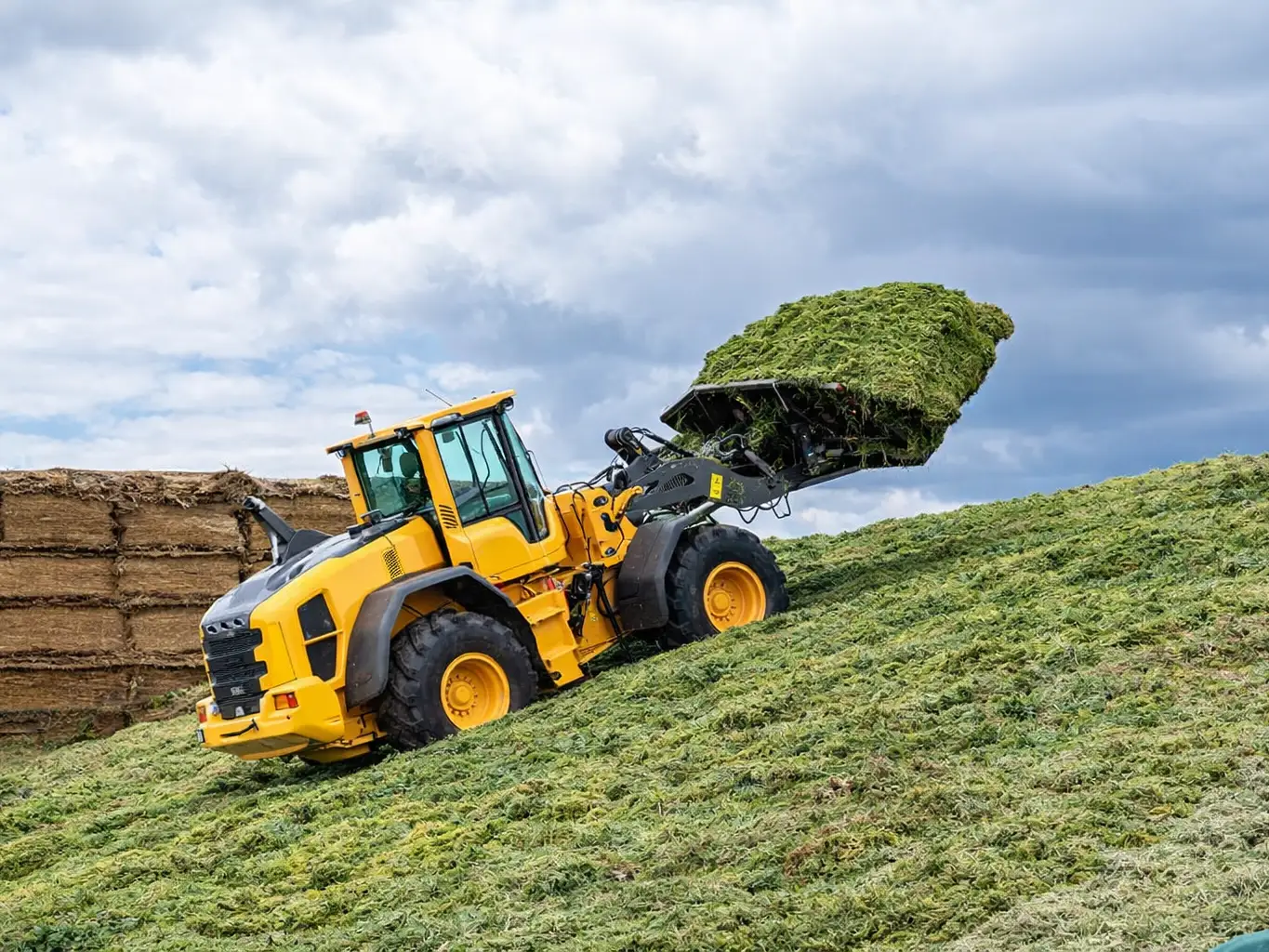
Real barn conditions drive much of the preference: aisles that feel narrower with every expansion, concrete surfaces that degrade under repeated skidding, and the need to minimize downtime during peak manure removal or feed distribution shifts. Compact wheel loaders deliver tangible improvements—higher bucket fill efficiency for quicker cleanouts, raised cabs that eliminate many blind spots in scraping passes, and conventional steering geometry that extends tire life and spares flooring compared with constant pivot turns. Farms tracking these metrics often see cleaning cycles shortened by noticeable margins, repair intervals stretched, and operators maintaining steadier focus across extended hours. Industry observations from 2025–2026 highlight how dairy and beef operations increasingly favor such machines for year-round utility in feeding, cleaning, and material handling, improving overall return on investment against more specialized or seasonal alternatives.
Rising herd densities and evolving regulations around manure management further accelerate the trend. Efficient scraping and loading can reduce daily operational time significantly in medium-sized dairies, supporting better separation of solids and liquids for composting, biogas, or direct field application. This ties into sustainability goals, where quicker manure cycles help capture nutrients more effectively, lower runoff risks, and align with policies promoting reduced emissions and healthier soil profiles through controlled nutrient recycling.
Understanding Compact Wheel Loaders in Livestock Settings
Compact wheel loaders in the livestock-relevant class generally stay under 3 tons with rated operating capacities from 1,500 to 3,000 pounds. Articulated steering provides tight-radius turns without the rear-wheel drag typical of skid-steer designs, protecting barn mats and cutting tire wear on rough or abrasive floors. Full hydraulic systems supply consistent, responsive power to drivetrain and implements alike, and industry-standard quick-attach interfaces handle forks, grapples, buckets, and specialized tools already present on most farms. The configuration suits mixed routines—silage handling one hour, pen cleaning the next—without extensive reconfiguration.
Practical comparisons against skid steers and compact-tractor loaders reveal clear distinctions in field use. Maneuverability holds strong in barn aisles exceeding roughly 2.2 meters wide, even if skid steers retain an advantage in the absolute tightest spots. Lift reach and dump height frequently surpass those of tractor-mounted loaders, simplifying placement into elevated troughs, mixers, or storage stacks. Raised seating combined with expansive glass panels yields superior sightlines, especially valuable during low-visibility morning feed runs or when working close to pen rails. Absence of skidding motion keeps ground pressure lower, preserving concrete integrity over time and limiting compaction in outdoor lots or pastures during transitional weather—factors that grow in importance as rotational grazing and mixed forage systems expand.
These traits match particularly well with core livestock demands: reliable manure handling on dairy farms, steady feed distribution in beef finishing yards, and versatile barn upkeep across diversified operations. In everyday scenarios, the balanced frame supports travel speeds of 10 to 14 mph around the yard—often outpacing skid steers—while hydraulics tuned for efficiency draw less fuel for equivalent work, supporting the gradual adoption of lower-emission configurations seen in recent equipment cycles.
Why More Livestock Farms Are Turning to Compact Wheel Loaders
Multiple proven benefits underpin the growing adoption of compact wheel loaders, reinforced by operational data from farms monitoring uptime, costs, and throughput.
Faster, Cleaner Manure Removal
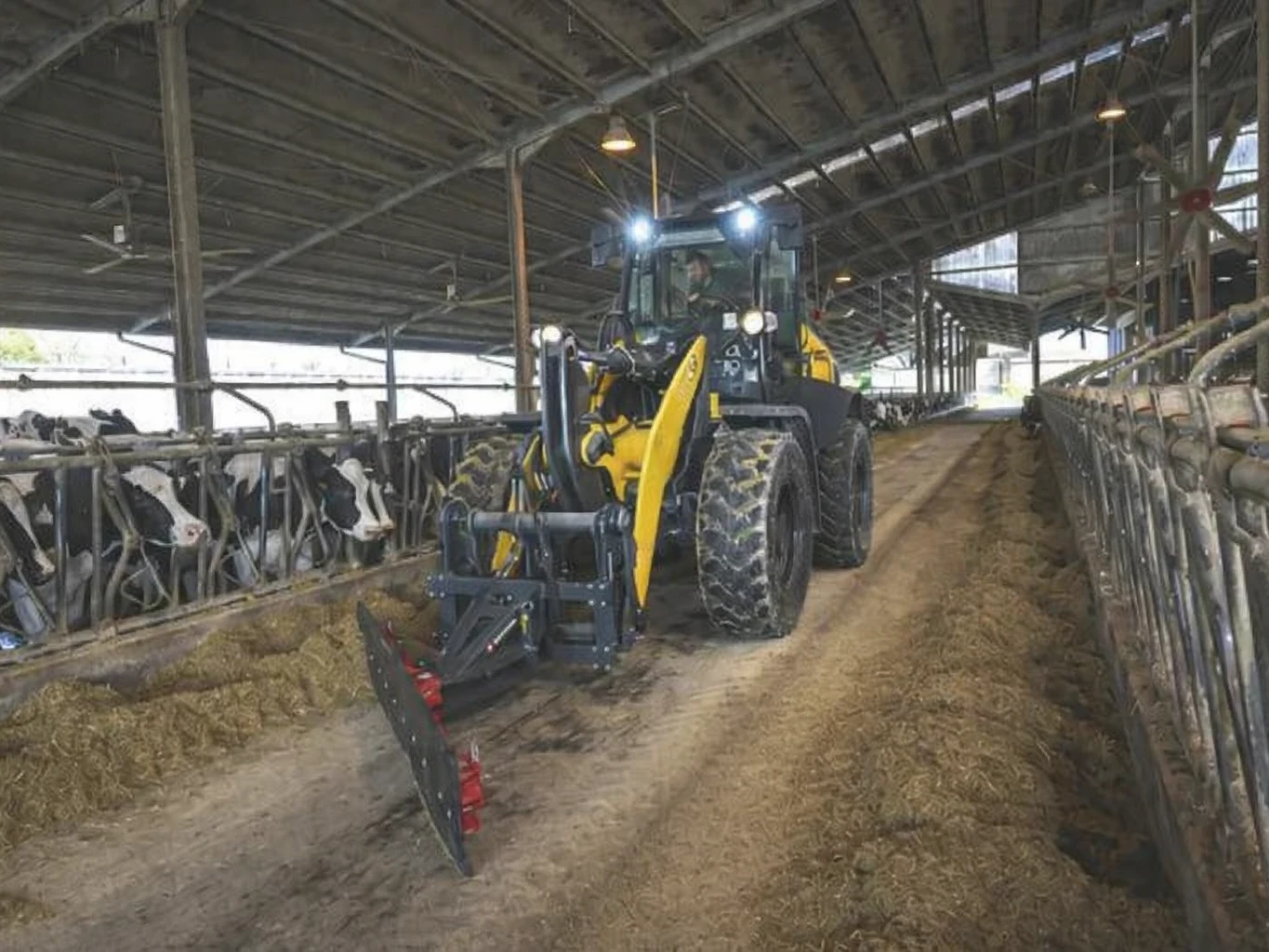
Manure handling consumes a disproportionate share of daily labor—frequently 30 to 40 percent in confined dairy environments. Bucket capacities ranging from 0.8 to 1.2 cubic meters, paired with elevated dump clearances, enable fewer passes to evacuate pens and alleys, sometimes trimming cycle duration by 40 to 50 percent on 300-cow layouts. That reduction equates to 60 to 120 minutes saved per full cleaning round, reallocating time to animal observation or maintenance. The higher cab vantage point offers direct visibility to the bucket cutting edge at floor level, allowing operators to identify uncleaned zones immediately and avoid health-compromising residue buildup. Shielded brake lines and accessible external grease points simplify servicing even amid flying material during aggressive passes, a routine occurrence in densely bedded high-density areas.
Such performance integrates smoothly with nutrient-recovery strategies. Faster removal facilitates solid-liquid separation for anaerobic digestion or composting, improving methane capture and fertilizer quality. Operations pairing these loaders with separation attachments report enhanced compliance with runoff controls and reduced odor issues, with some analyses indicating 15 to 25 percent better nutrient retention when manure cycles accelerate.
Improved Feed Handling and Distribution
Transporting round bales, loading silage clamps, or delivering total mixed rations calls for stable carry capacity and accurate placement, particularly as precision feeding gains ground in tailoring nutrition by group or lactation stage. Compact wheel loaders maintain heavier payloads over distance due to centered weight distribution and articulated stability, frequently achieving 70 percent higher carry loads per trip without stability trade-offs. Automatic bucket return-to-dig and leveling minimize joystick adjustments in repetitive bunk-filling sequences, easing physical demand by up to 30 percent over multi-hour feeding windows. Farms scaling feed volumes observe shorter overall rounds and more even distribution, especially with grapples or dedicated silage tools attached via quick couplers.
In rotational beef systems, this efficiency supports timely supplemental delivery during forage gaps, sustaining gains with reduced waste. Consistent placement—helped by clear cab sightlines—limits spillage into bedding zones, contributing to measurable improvements in feed conversion on tracked herds.
Effective Performance in Confined Barns and Pens
Skid steers dominate zero-radius pivots, yet compact wheel loaders manage most contemporary barn aisles and yard layouts without compromise, aided by steering that blends articulation with optional rear assist for sub-4-meter turns. Narrower profiles clear standard gates readily, and turning dynamics prevent repeated gouging of rubber mats or concrete—issues that accumulate repair expenses over 2 to 3 years on skid-steer-heavy sites. In freestall configurations for 200 to 400 head, this enables fluid movement around resting areas, lowering stress during cleaning peaks.
Outdoor finishing yards benefit from wheeled flotation on gravel or manure-amended ground, avoiding the sink-in common with tracks under wet loads. All-wheel-drive variants maintain grip without excessive mass, delivering dependable traction across seasons.
Significantly Longer Tire Life and Lower Ground Pressure
Skid-steer tires degrade rapidly from skidding friction, particularly in manure-saturated or gravel-adjacent zones, often requiring changes every 800 to 1,200 hours. Conventional steering on compact wheel loaders extends tire service life two to three times under comparable duty—reaching 3,000 hours in drier lots—slashing replacement budgets by 40 to 60 percent. Lower inherent ground pressure curbs rut formation in pens and safeguards pasture sward during movement rounds, preserving yields in grazing-focused systems where compaction can cut forage output by 15 to 20 percent.
In spring-thaw regions, even distribution prevents deep impressions that pond water and elevate disease pressure, supporting regenerative approaches that cycle manure nutrients back into forage stands without mechanical harm.
Wide Attachment Range and Year-Round Versatility
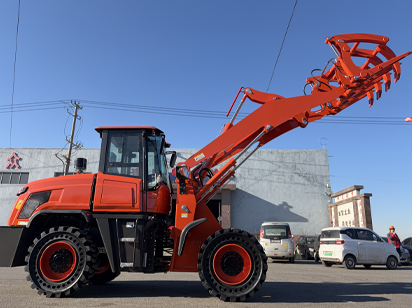
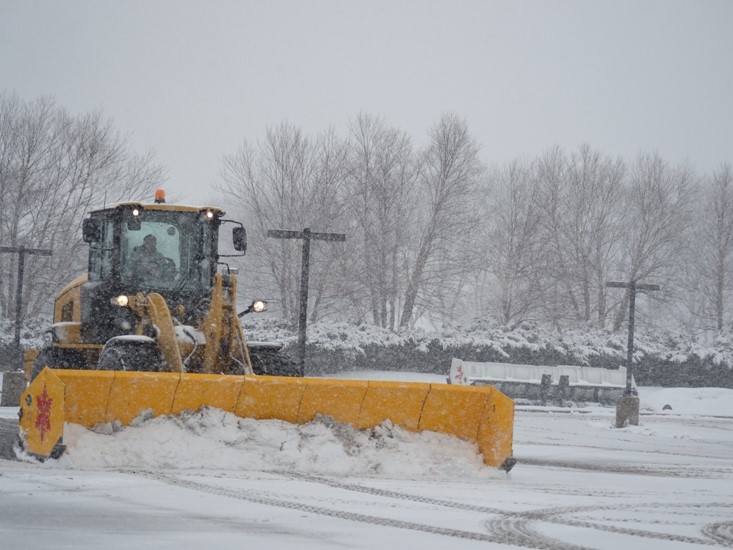
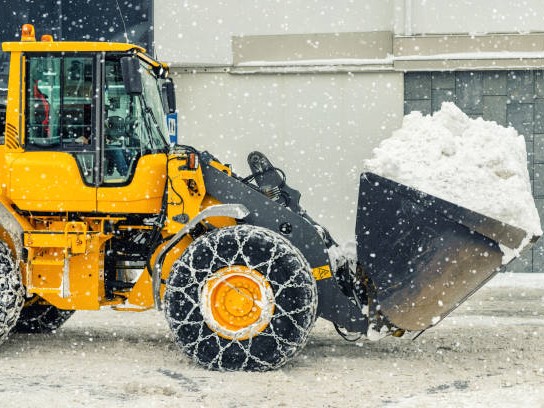
Quick-attach systems standardized across the industry permit swaps among buckets, manure forks, bale grapples, sweepers, and blades in minutes, keeping idle time minimal. A single unit manages summer feeding, continuous cleaning, occasional material shifts, and winter snow control, distributing acquisition cost across calendar quarters—frequently achieving payback within 18 to 24 months on intensive-use farms. Versatility shines brightest on mixed-species sites handling cattle alongside sheep, goats, or poultry litter, where compatible tools cover diverse bedding and feed needs without frequent machine changes.
Better Total Cost of Ownership Over Time
Well-constructed compact models hold competitive pricing, especially from export-oriented builders, often landing 10 to 15 percent below equivalent skid-steer packages including attachments. Refined hydraulics and reduced mass yield fuel savings of 20 to 30 percent in manure-dominant cycles relative to heavier alternatives. Tire intervals lengthen dramatically, service access remains straightforward, and reinforced frames withstand repeated loading without premature fatigue. Resale retention typically hits 60 to 70 percent after five years. Over a five- to seven-year horizon, combined reductions in fuel, tires, and upkeep frequently eclipse initial differentials, particularly amid variable energy markets.
Fit with Today’s Livestock Industry Direction
Persistent labor constraints favor machines that lighten physical workload through superior visibility, intuitive controls, and damped vibration, helping retain experienced hands longer—turnover often falls 15 to 20 percent in more mechanized environments. Reduced compaction aligns with soil-health priorities on pasture operations, while low-emission and battery options emerging in recent lines support footprint reduction without daily output penalties. Future integrations—automated scrapers linked to loaders, sensor-driven ration adjustments—promise tighter efficiency in manure and feed workflows, guided by precision-livestock data.
About Qingdao Hezhong Machinery Manufacturing Co., Ltd.
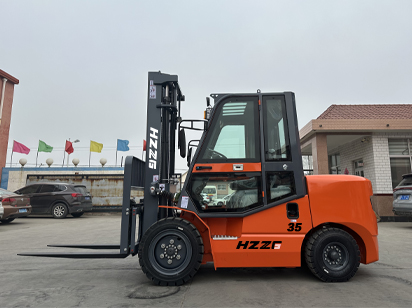
Since 2007, Qingdao Hezhong Machinery Manufacturing Co., Ltd. has concentrated on compact machinery purpose-built for agriculture, forestry, and livestock environments. The operation occupies over 50,000 square meters in Pingdu, Qingdao, with distinct units for research, development, and manufacturing. A workforce exceeding 400, including 55 engineers dedicated to innovation, sustains output above 15,000 mini wheel loaders and forklifts annually.
The lineup emphasizes diesel, gasoline, lithium-battery, and LPG variants of 3 tons and under, assembled from premium components and certified to CE, ISO 9001, ISO 16949, CCC, and equivalent international benchmarks. Tailoring accommodates varied site demands, with exports spanning Europe, Africa, Central Asia, North America, Russia, South America, and further markets supported by comprehensive technical and service networks.
Hezhong loaders feature European-influenced cabs offering broad glass surfaces for clear sightlines, guarded brake plumbing, external grease access for quick upkeep, orderly hydraulic and electrical routing, automatic bucket leveling to lessen operator strain, strengthened frames for endurance, economical engines, ergonomic operator stations, and extensive attachment interchangeability.
Conclusion
Compact wheel loaders address pressing realities in contemporary livestock production by providing robust capability on frequent, high-volume tasks while containing lifetime costs and operator burden. With herds expanding, layouts constricting, and margins under scrutiny, these machines offer a reasoned progression that elevates routine efficiency without introducing undue intricacy. Operations dominated by manure handling, feed distribution, and barn maintenance commonly realize substantial benefits from the transition, especially viewed through the lens of 2026 mechanization and sustainability directions.
FAQs
Why choose a compact wheel loader over a skid steer for manure handling on a dairy farm?
Compact wheel loaders deliver larger bucket capacities and greater lift heights that accelerate manure-pile removal, while articulated steering minimizes tire wear and surface damage relative to skid-steer skidding. Elevated cab positioning enhances visibility, enabling more complete cleaning with reduced repositioning.
How does a compact wheel loader improve feed handling in livestock barns?
Stable load-carrying geometry and automatic bucket leveling facilitate quicker, more accurate transfer of round bales or silage to troughs and mixers, compressing feeding intervals and lightening repetitive-task fatigue.
What makes compact wheel loaders suitable for modern tight barn layouts?
Articulated steering paired with narrower chassis dimensions navigates aisles wider than approximately 2.2 meters reliably, and reduced ground pressure safeguards concrete and mat surfaces more effectively than tracked designs or persistent skidding.
Are compact wheel loaders cost-effective long-term for livestock operations?
They tend to be—extended tire durability, better fuel utilization via tuned hydraulics, and durable reinforced construction decrease maintenance and total ownership expenses markedly over five to seven years in manure-intensive or feed-heavy applications.
Can compact wheel loaders use the same attachments as other farm loaders?
Most incorporate quick-attach mechanisms aligned with industry norms, permitting straightforward transfer of manure forks, grapples, bale spears, buckets, and sweepers for adaptable seasonal performance on livestock farms.