



Snow always looks manageable at first.
A few centimeters on concrete, a light push, maybe one clean pass with a blade. But once traffic compresses it, temperatures swing, and the storm refuses to leave, snow stops being seasonal decoration and turns into an operational problem.
In large-scale snow removal operations, that is usually the moment when small machines and light-duty tools reach their limit. Volume builds faster than it can be moved. Access points narrow. Time windows shrink. Conversations on site shift quickly toward heavier equipment, not because it looks impressive, but because speed, control, and consistency start to matter more than maneuverability alone.
This is where wheel loaders for snow removal quietly move from “nice to have” to “hard to replace” across municipal roads, logistics parks, industrial facilities, and other large sites.
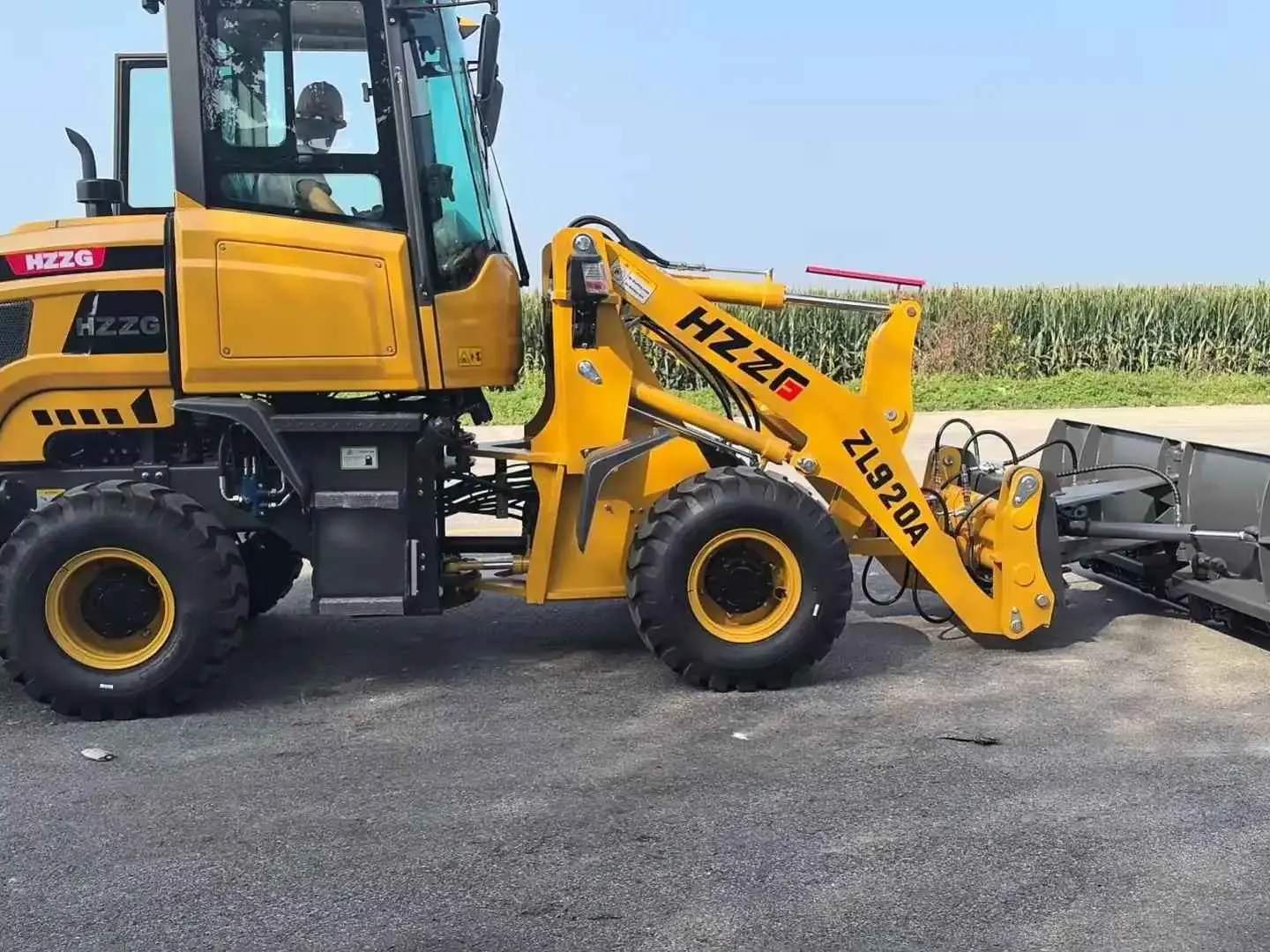
Snow Removal Is Not One Job, and That Changes Equipment Choices
Snow removal sounds like a single task until you have done it through a full winter.
Early storms are mostly about pushing. Mid-season work becomes a cycle of relocating and stacking. Late-season snow is heavier, dirtier, and often mixed with ice. Machines that perform well in one phase can struggle badly in another.
That is why experienced operators rarely talk about snow removal in abstract terms. They talk about how much snow falls in a typical storm, where it accumulates, how far it needs to be moved, and how many times the same area must be cleared in a month.
In those practical conversations, wheel loaders appear naturally. Not as a marketing choice, but as a response to scale.
Why Wheel Loaders Stay Relevant in Snow Removal Operations
Capacity Is Not a Specification, It Is Time Saved
In demanding snow removal conditions, capacity translates directly into fewer passes.
A wheel loader moving several cubic meters of snow per cycle does more than clear faster. It reduces machine hours, limits operator fatigue, and lowers the total number of machines required on site. That difference becomes obvious after the third or fourth heavy snowfall in a single month.
In large-area snow removal, speed is rarely about travel speed. It is about how quickly access can be restored with minimal repetition. Wheel loaders tend to win quietly here.
Weight and Balance Matter More Than People Admit
Light machines are easy to transport and economical to run. Until traction disappears.
A properly weighted wheel loader stays planted when pushing dense, compacted snow piles that would stop smaller equipment almost immediately. That stability is why many operations rely on wheel loaders once snow becomes wet, contaminated, and difficult to manage.
Sometimes heavier is simply safer, especially when repeated relocation is required.
Visibility and Control in Poor Winter Conditions
Snow removal rarely happens under ideal conditions. Low light, blowing snow, long shifts, and uneven surfaces are common.
The elevated cab position and hydraulic responsiveness of modern wheel loaders give operators better visibility and more predictable control. That does not sound dramatic, but over a 10- or 12-hour shift, it shows up clearly in productivity and consistency.
Attachments Decide Whether a Wheel Loader Feels Right or Wrong
A wheel loader without the right attachment is simply a strong machine doing an inefficient job.
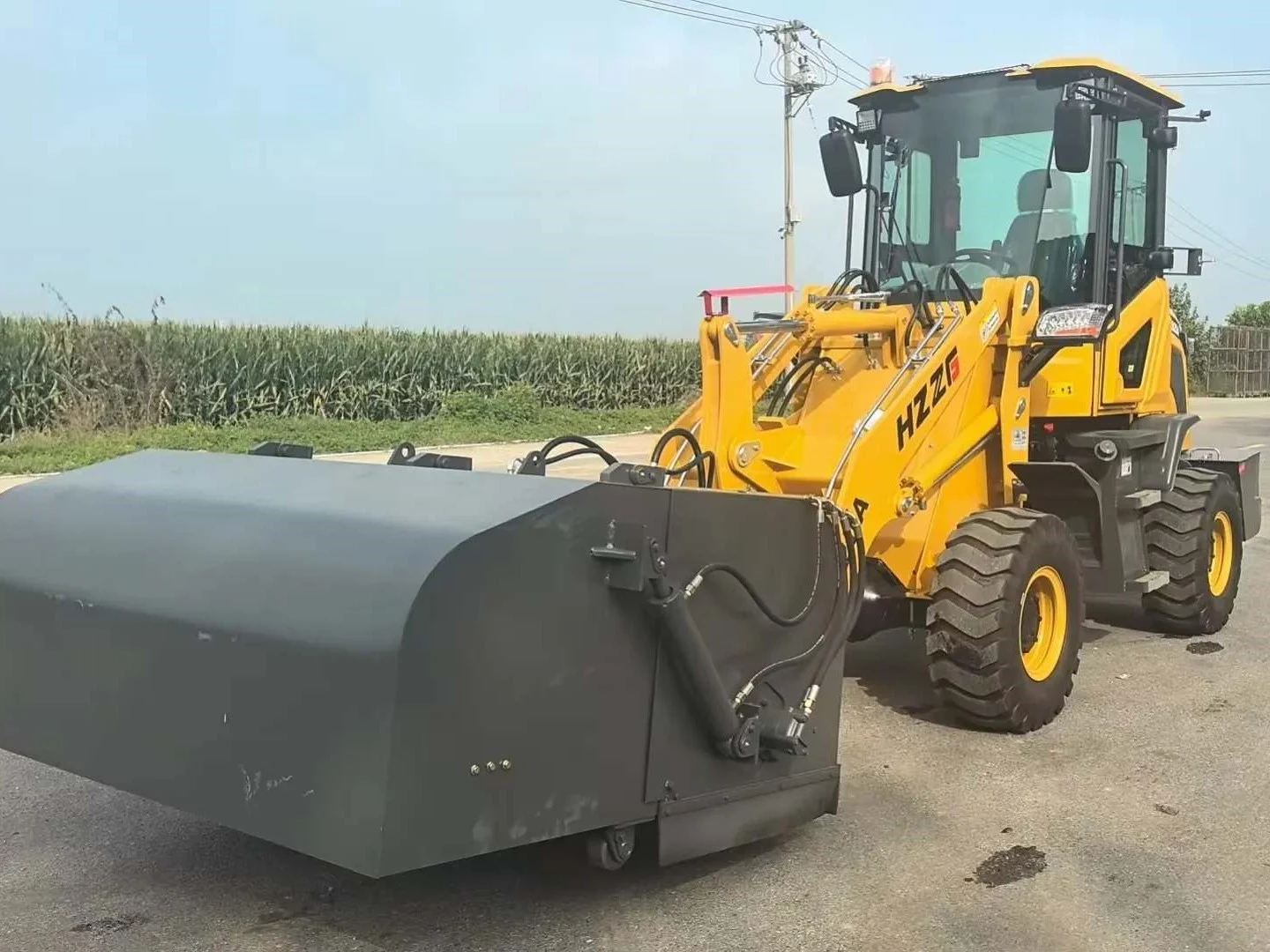
In wheel loader snow removal work, attachment choice often determines whether productivity improves after the first few storms or slowly falls behind. Snow pushers dominate open areas because they move volume with minimal finesse. Blades perform better when direction and edge control matter, such as near curbs, loading docks, or structures. Buckets designed for snow handling become essential once relocation and loading are part of the workflow.
Operators usually learn this through experience. The wrong attachment turns a capable wheel loader into a frustrating tool. The right one makes winter work feel almost routine.
What matters is not how many attachments exist, but whether the loader’s hydraulics, frame, and coupler system handle them without compromise.
Where Wheel Loaders Actually Earn Their Keep in Snow Removal
Wheel loaders are widely used for snow removal in municipal, industrial, and large-area operations where volume and reliability outweigh agility.
Municipal Snow Removal Is About Rhythm, Not Power
City snow removal is repetitive and time-sensitive. Wheel loaders typically support plowing fleets by handling collection points, intersections, and snow loading.
They are not the most visible machines on the route, but without them, the system backs up quickly. Anyone who has seen a city run out of snow storage space understands how critical this role becomes.
Industrial and Commercial Sites Value Reliability Over Everything
Factories, ports, and logistics centers care less about theoretical efficiency and more about whether equipment performs every day.
In these environments, wheel loaders for snow removal are chosen because they start, push, and keep going. Attachment changes are planned. Downtime is not. If trucks cannot move, everything else stops.
Large, Open Areas Expose Weak Machines Quickly
Airports, distribution hubs, and large yards do not forgive underpowered equipment. Snow piles grow fast, and relocation distances increase with every storm.
Wheel loaders operating in these environments are part of a system rather than standalone machines. Their performance is measured by how little they slow others down.
Choosing a Wheel Loader for Snow Removal Is a Judgment Call, Not a Formula
Specifications help. Experience decides.
Buyers who have worked through multiple winters look beyond brochures. They pay attention to cold-start behavior, hydraulic response after hours of continuous pushing, and how easily attachments can be adapted as conditions change.
This is where manufacturers that understand application-level details gain trust. Increasingly, that includes Chinese suppliers that have moved beyond basic production into solution-driven manufacturing for snow removal equipment.
The discussion today is less about origin and more about whether the machine fits the job as winter unfolds, not as it was planned on paper.
Where Qingdao Hezhong Machinery Fits Into Real Snow Operations
Qingdao Hezhong Machinery Manufacturing Co., Ltd. produces full hydraulic wheel loaders designed for demanding working environments, including winter operations where reliability and adaptability matter.
Rather than positioning equipment as one-size-fits-all, Hezhong focuses on matching wheel loader configurations to actual snow removal use cases. This includes attention to attachment compatibility, structural stability, and hydraulic performance in cold climates.
Buyers familiar with long-established Chinese manufacturing practices often recognize the practical engineering mindset behind this approach. It is not about novelty. It is about building machines that behave predictably when conditions are not.
For snow removal, that predictability often matters more than headline numbers.
About Qingdao Hezhong Machinery Manufacturing Co., Ltd.
Based in Qingdao, China, Qingdao Hezhong Machinery Manufacturing Co., Ltd. is a construction machinery manufacturer with a strong focus on full hydraulic wheel loaders.
The company serves international markets across infrastructure, municipal services, and industrial operations. By combining in-house manufacturing with application-oriented support, Hezhong positions itself as both an equipment supplier and a long-term partner for customers operating in complex and demanding environments, including heavy winter conditions.
Conclusion
Snow does not care about plans.
Machines that work well in theory sometimes fall short after weeks of cold, pressure, and repetition. Wheel loaders remain central to serious snow removal strategies because they handle volume, weight, and unpredictability without drama.
Choosing the right wheel loader for snow removal is less about chasing specifications and more about understanding how winter actually behaves on your site. That is where experience, from both operators and manufacturers, quietly makes the difference.
FAQs
Are wheel loaders suitable for large-scale snow removal operations?
Yes. Wheel loaders are commonly used in large-scale snow removal where volume, stability, and repeated relocation are required.
What causes problems when using wheel loaders for snow removal?
Most issues come from attachment mismatch, inadequate traction setup, or underestimating how heavy snow becomes after multiple storms.
Do Chinese wheel loader manufacturers build machines for cold climates?
Many do. Performance in winter depends more on configuration, hydraulics, and build quality than on origin alone.
Is attachment selection more important than wheel loader size in snow removal?
In many cases, yes. A properly matched attachment can allow a mid-size wheel loader to outperform a larger machine used incorrectly.
Can one wheel loader handle both pushing and loading snow?
With proper attachments and planning, a single wheel loader can manage both pushing and loading tasks in many snow removal operations.


