



Cities face real pressure when snow hits hard. Roads ice over, traffic grinds to a halt, emergency vehicles struggle to get through. Keeping streets clear isn’t just convenience—it’s safety and basic mobility. Municipal crews work around the clock in those conditions, and the equipment they use makes or breaks the effort. Wheel loaders have become a go-to option for many departments. They handle heavy, compacted snow that lighter machines can’t touch. Upfront cost runs higher than some alternatives. Over multiple seasons, though, the durability and low downtime often tip the scales. Total cost of ownership tells the full story here, showing why these machines pay off when the storms keep coming year after year.
Total Cost of Ownership in Municipal Snow Operations
Total cost of ownership goes beyond the sticker price on the purchase order. It adds up everything from fuel to repairs over the machine’s life.
Purchase price hits first. Wheel loaders built for snow work carry substantial tags because of heavy frames, powerful hydraulics, and cold-weather packages. Departments feel that bite in the budget year. Operational costs follow close behind—diesel for long shifts, operator overtime during storms, salt and sand for traction. Maintenance adds up too: grease, filters, hydraulic fluid in harsh conditions. Downtime hurts when a machine sits in the shop during a blizzard. Performance fade over years forces earlier replacements if the unit can’t push like it used to.
Snow removal amplifies these factors. Salt eats metal. Sub-zero temps thicken fluids. Constant pushing stresses components. Total cost of ownership calculations help managers see past the initial outlay to the real expense over five or ten seasons.
Initial Acquisition Considerations
Wheel loaders demand serious capital. A mid-size unit with snow-ready tires, quick coupler, and heated cab easily tops six figures. Smaller skid-steers or truck plows come cheaper. The trade-off shows in capacity. One loader with a 4-cubic-meter bucket clears what takes multiple lighter machines, cutting labor hours per storm.
Energy and Fuel Efficiency
Diesel consumption varies with load and idle time. Modern loaders with tier-4 finals engines and hydrostatic drives sip fuel compared to older mechanical units. In snow pushing, where the machine often runs at partial throttle moving piles, efficient torque delivery keeps gallons per hour down. Over a season with 400–600 operating hours, that difference adds up to thousands saved. Hybrid or electric prototypes cut it further in pilot cities.
Maintenance Realities in Winter Work
Salt and ice accelerate wear on pins, bushings, and undercarriages. Loaders designed for heavy work use sealed joints and corrosion-resistant coatings to fight back. Hydraulic systems take abuse from pressure spikes pushing frozen piles. Robust cylinders and filtered fluids extend life. Parts standardization keeps costs reasonable when something does break. Compared to specialized blowers with complex augers or truck plows needing frequent blade swaps, loaders often prove simpler to keep running through multiple winters.
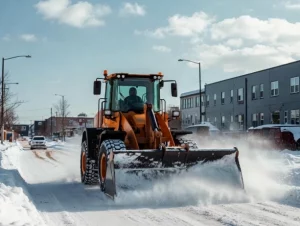
Why Wheel Loaders Matter in Urban Snow Clearing
Wheel loaders bring specific strengths to winter maintenance that lighter equipment struggles to match.
The basic design centers on a large front bucket or pusher driven by powerful hydraulics. Articulated steering and four-wheel drive provide traction on ice. Operators control lift and tilt precisely, allowing efficient pushing or high dumping into trucks. Quick-attach systems swap attachments fast when conditions change.
Powerful snow moving stands out. Wide pushers or big buckets shift massive volumes in single passes, clearing arterials quickly. High breakout force breaks up compacted or frozen layers. Maneuverability helps in tight urban spaces—tight turning radii navigate around parked cars or obstacles.
Different road types benefit from size variation. Large units dominate main roads with long pushes. Compact models fit alleys and residential streets. Public areas use blowers to relocate snow without blocking access. Cold-weather reliability keeps engines starting and hydraulics flowing at -30°C or lower.
Municipal Needs and Wheel Loader Fit
Urban snow demands range from light dustings to multi-day blizzards.
Standard sweepers or truck plows handle slush or light accumulation on open roads. Efficiency drops in deep, wet snow. Wheel loaders step in for heavy lifts, reducing passes and operator fatigue. In mixed fleets, they tackle the worst sections while lighter units clean up.
Main arterials need rapid restoration. Large loaders with wide pushers or buckets move snow to shoulders or load trucks fast. Travel speeds allow quick jumps between sections.
Secondary streets present obstacles. Mid-size units with angled blades navigate parked cars while maintaining pace. Articulation prevents curb damage.
Plazas and pedestrian zones require relocation. Loaders with blowers throw snow to collection points, keeping walkways open. Low-pressure tires protect decorative surfaces.
Attachments That Boost Performance
Snow pushers contain and move volume without spillage. V-plows cut drifts and windrow efficiently. Blowers relocate over distance for tight spaces. Quick-couplers change tools in minutes.
Configurations match local storms. Wet heavy snow favors wide pushers. Powder benefits from blowers. Standardized couplers allow fleet interchangeability.
Operation Practices and Risk Control
Winter work calls for careful habits.
Cold starts demand block heaters and fluid checks. Salt washdowns prevent corrosion. Operators watch for ice buildup on articulation joints.
Safety focuses on visibility. Cabs with large glass and cameras reduce blind spots. Stability systems prevent tips on uneven ice. Training stresses slow speeds near pedestrians.
Maintenance includes daily greasing and frequent filter changes. Hose inspections catch wear early. These steps keep availability high during peaks.
Efficiency Gains: Cases from the Field
A midwestern city with 200 cm annual snowfall deployed mid-range loaders with pushers. Main roads cleared 40% faster. Fuel per kilometer fell 25%. Operators reported less fatigue from better cabs.
A coastal area facing wet snow used large units for primaries and compact for alleys. Traffic restored in four hours versus eight. Parts costs dropped 30% from standardization.
Qingdao Hezhong Machinery Manufacturing Co., Ltd. Snow Removal Solutions
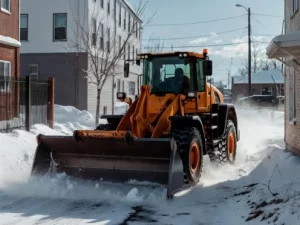
Qingdao Hezhong Machinery Manufacturing Co., Ltd. specializes in heavy equipment for demanding conditions, including full-hydraulic wheel loaders suited to snow operations. The company’s experience supports robust designs with reliable cold-weather performance. Models feature efficient hydraulics, durable frames, and attachment compatibility, providing municipalities with effective winter maintenance tools.
Conclusion
Total cost of ownership shows wheel loaders as a solid long-term play for urban snow. Upfront premium buys capacity and durability that pay back in fewer hours, lower fuel, and less downtime. Versatile across road types and storm intensities, with smart attachment use, they keep cities moving when it matters most.
FAQs
Are wheel loaders the right fit for every municipal snow job?
Different sizes and attachments make them adaptable to main roads, alleys, and plazas alike.
How do maintenance costs stack up for wheel loaders in winter work?
Robust build and accessible parts keep upkeep reasonable over multiple seasons.
Does a wheel loader make sense on a tight snow removal budget?
Higher start cost, but lower running expenses often deliver better value long-term.
How to pick the best attachments for wheel loader snow clearing?
Match pusher or blower to road width and snow type for fastest results.
What keeps wheel loaders running strong in deep cold?
Regular checks on fluids, tires, and salt protection maintain performance through harsh storms.


