
The Critical Intersection of Vertical Logistics and Fire Safety
When you are managing a high-density warehouse, every vertical inch is tied to your bottom line. But as you push your racking higher, you inevitably run into a dangerous and expensive ceiling: the fire sprinkler system. Operating equipment without a precise understanding of your forklift overall raised height is essentially gambling with your facility’s safety. One minor miscalculation at full mast extension won’t just break a sprinkler head; it can trigger thousands of gallons of water damage, ruining inventory and halting production for weeks.
The gap between your mast’s highest point and the sprinkler deflector is not a “suggestion”—it is a legal mandate often governed by NFPA 13 standards. This guide moves past the theoretical numbers found in brochures to look at how these machines perform in the real world. Whether you are running a compact electric unit or a heavy-duty Hezhong Material Handling Solution, mastering the art of height measurement is the first step in professional risk management.
Beyond the Spec Sheet: Why Typical Measurements Fail
If you rely solely on a manufacturer’s “Max Lift Height” to plan your warehouse clearance, you are setting yourself up for a collision. This is the most common mistake I see in the field.
Max Lift Height vs. Overall Raised Height
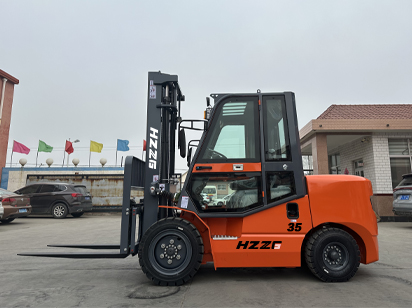
The “Max Lift Height” tells you where the forks end up. However, the forks are rarely the highest point of a forklift when it’s fully extended. The mast assembly—the heavy steel rails and chains—usually extends significantly above the fork level. The Overall Raised Height (ORH) is the measurement from the floor to the absolute peak of the machine. Depending on the design, this peak could be the top of the mast rails or the load backrest.
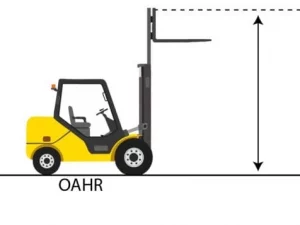
The Hidden Height of the Load Backrest
The load backrest is that steel grid meant to keep pallets from leaning into the operator. It is a vital safety feature, but it’s often the “silent” height adder that people forget to measure. On many Balance Forklift Trucks, the backrest can stick up an additional 2 to 4 feet above the forks. If your calculations don’t account for this, your “safe clearance” effectively vanishes the second your operator lifts a load to the top tier.
Professional Steps to Measure Your Actual Vertical Footprint
You cannot manage what you do not measure accurately. While brochures give you a baseline, a professional safety audit requires physical verification on your own warehouse floor.
Setting the Baseline: Floor and Tires
First, get the machine on a perfectly level concrete pad. Any slight incline at the base will be magnified by the time the mast reaches 200 inches. Next, check the tires. If you are running pneumatics that are low on air, the machine sits lower. Conversely, brand-new solid tires might add an extra inch compared to a worn-out set. For a “worst-case” safety measurement, always use your newest tires at full pressure.
Executing the Full Extension Measure
This is a two-person job. Have a spotter watch the ceiling while the operator raises the mast to its absolute limit. Don’t stop when the forks reach the top; pull the lever until the cylinders are fully extended. Use a laser distance measurer from the floor to the absolute highest point of the extended assembly. This is your true ORH.
Accounting for the “Mast Bounce”
In the industry, we talk about “dynamic height.” When a forklift is moving a heavy load at height, the mast can flex or bounce due to momentum and weight. If your static clearance is exactly 18 inches, that tiny bit of flex might be enough to clip a sprinkler pipe. A pro always adds a “safety cushion” of at least 2 inches to the legal minimum to account for this real-world movement.
Decoding the 18-Inch Rule: Sprinkler Clearance Standards
In almost all modern fire codes, the magic number is 18 inches (roughly 45 centimeters). This is the minimum vertical gap required between the top of your goods (or the forklift) and the bottom of the sprinkler deflector.
This isn’t just about avoiding a hit. Sprinkler heads are engineered to create a specific spray pattern to suppress fires. If the forklift mast is too close, it creates an “umbrella effect,” blocking the water from reaching the area directly below. Even if you never touch the pipe, being too close can lead to a “non-compliance” fine during your annual fire marshal inspection.
Mast Choices: Two-Stage vs. Three-Stage Clearance
Your choice of mast completely dictates your vertical safety margin.
The Limitation of Two-Stage Masts
Two-stage masts are common and durable, but they often lack “free lift.” This means the inner mast rails start to extend the moment the forks begin to rise. In low-ceiling environments, this makes them a liability because the machine gets taller even when you’re just moving a pallet across the floor.
The Advantage of Three-Stage Full Free Lift (FFL)
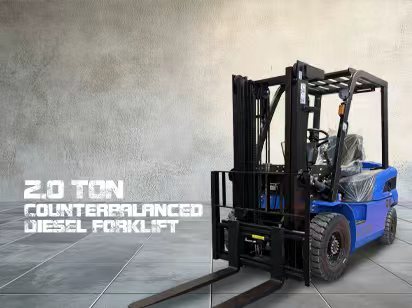
Modern warehouses almost always prefer the Three-Stage FFL mast. This design allows the forks to rise significantly—often 50 to 60 inches—before the mast rails themselves start to extend. This is a game-changer for working under low-hanging sprinklers or mezzanine levels. Many Quality Forklift Products prioritize this FFL configuration because it gives the operator far more “vertical breathing room.”
Real-World Variables That Can Ruin Your Calculations
Even with a perfect static measurement, certain environmental factors can change your clearance in an instant.
Ground Incline and Dynamic Tilt
If your floor has a slight ramp or a drain dip, the forklift will tilt as it passes over. A one-degree tilt at the base of a high mast can translate into a massive swing at the top. If your sprinklers are located near any floor irregularities, you need to double your safety buffer.
Attachments and Fork Extensions
Adding a side-shifter, a carpet pole, or fork extensions changes your height profile. Most attachments add weight and increase the height of the carriage. Never assume your “clean” mast height is accurate once you’ve bolted on 300 pounds of specialized hardware.
About Qingdao Hezhong Machinery Manufacturing Co., Ltd.
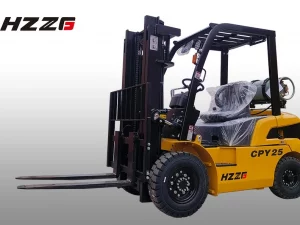
Balancing high lift capacity with tight clearance constraints requires world-class engineering. Qingdao Hezhong Machinery Manufacturing Co., Ltd. has been at the forefront of this challenge since 2007. Operating out of a 50,000-square-meter facility in Pingdu, Qingdao, we combine nearly two decades of experience with a massive production capacity of 15,000 units annually. Our team of 55 specialized engineers is dedicated to ensuring that every Forklift from Hezhong meets the most rigorous international standards, including ISO 9001 and CE certifications. We believe that professional material handling is built on a foundation of “Quality, Commitment, and Partnership,” and we invite you to explore our About Us page to see the manufacturing precision behind our equipment.
Conclusion
Calculating for sprinkler clearance is a core part of professional warehouse management. By shifting your focus from “Max Lift Height” to “Overall Raised Height” and choosing the right mast technology, you can maximize your storage density without risking a catastrophic flood. Take the time to physically measure your fleet, account for real-world flex, and always partner with manufacturers who provide the technical transparency you need to stay safe and compliant.
Frequently Asked Questions (FAQs)
How do I measure forklift overall raised height with a load backrest?
You must measure from the floor to the absolute highest point of the entire mast and carriage assembly. If the load backrest is taller than the inner mast rails at full extension, the top of the backrest is your true Overall Raised Height. Use a laser level while the machine is at its maximum extension to get the most accurate number.
What is the OSHA requirement for forklift clearance under sprinklers?
OSHA typically follows NFPA 13 standards, which require at least 18 inches of clearance between the sprinkler head and the top of any storage or equipment. This gap is necessary for the water spray pattern to develop properly during a fire.
Does a 3-stage mast always have a lower overall raised height?
No, the Overall Raised Height is usually determined by the lift capacity and the total extension needed. However, a 3-stage mast usually has a lower “collapsed height” and better “free lift” capabilities, allowing you to move loads through low doorways or under low sprinklers without extending the mast rails.
Can I modify my load backrest to gain more sprinkler clearance?
Technically, you can, but you should never do it without written approval from the forklift manufacturer. Modifying any safety component like a load backrest can compromise the structural integrity of the machine and will likely lead to OSHA violations and insurance issues in the event of an accident.