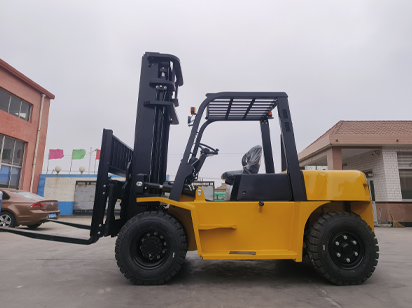

A forklift that won’t lift a load can bring a warehouse to a stop in minutes. One minute you’re staging pallets for outbound, the next you’ve got a truck at the dock, operators waiting, and a mast that barely moves. This guide focuses on the real-world problem behind the search query “forklift won’t lift a load,” with causes and fixes that make sense for warehouse forklifts and mixed-shift fleets. The goal is practical: figure out what’s happening fast, confirm it with a field check you can trust, and get the truck back to safe, predictable lifting without guessing.
If you need to reference forklift types and configurations while you troubleshoot, you can start with the Forklift Product Center.
Quick safety rule before troubleshooting
Before you chase causes, treat the symptom like a safety event. A forklift that won’t lift a load may still move and steer, which makes it tempting to “try one more time.” That’s usually when damage happens—bent forks, stressed chains, or a dropped pallet.
If you see fresh hydraulic fluid pouring out, hear sharp mechanical popping from the mast, notice a chain that looks slack or uneven, or feel the truck rocking unpredictably under load, stop and tag the unit out. If the load is unstable, get it down and secured first. If the forks are stuck up with a load and the truck is in a traffic lane, clear the area and bring the right support in rather than improvising.
In a typical warehouse setting, the safest approach is to remove the load, move the truck to a flat, open space at low speed, and troubleshoot with the forks low. Your best “fix” is the one that doesn’t create a second incident.
Diagnose the symptom first
“Won’t lift” is a broad complaint. Two operators can say the same thing and mean totally different problems. Before you touch anything, identify which version you’re dealing with.
Sometimes the forklift won’t lift at all, even empty. That often points to controls, interlocks, power supply, or a major hydraulic issue. Other times it lifts empty but won’t lift a load, which commonly points to capacity and load center, pressure relief, pump output, or internal leakage that only shows up under demand. You may also see a slow or weak lift where the mast rises but takes forever, or a lift that rises and then drifts down, which suggests leakage in cylinders or valves.
Intermittent failures matter too. If the lift works for ten minutes and then quits, treat that as a clue—heat, vibration, or an electrical signal issue can be part of the story.
The troubleshooting checklist that actually works in warehouses
The fastest warehouse troubleshooting is not “replace parts until it lifts.” It’s a structured pass from low-risk, low-cost checks to deeper hydraulic and mechanical causes. Each checkpoint below uses the same pattern: check point, possible causes, field verification method, and fix action.
Checkpoint 1 — Operator controls and safety interlocks
Check point: The forklift drives normally, but the lift function does nothing, stops immediately, or behaves differently depending on who is driving.
Possible causes: A safety interlock may be active, the truck may not be in the correct operating state, or a control input isn’t being recognized. In warehouses with frequent operator changes, small differences in procedure can look like a mechanical fault.
Field verification method: With the forks clear of any load, place the truck on level ground and attempt lift in a controlled, repeatable way. Watch indicator lights and listen for any change in sound when the lift is commanded. If the symptom is intermittent, repeat the same sequence multiple times and note what changes when it fails—seat position, brake state, direction selector, or any warning indicators.
Fix action: Reset the operating state to the correct conditions and retest. If the lift still fails or the interlock seems inconsistent, stop troubleshooting at the operator level. Do not bypass safety circuits in a warehouse environment. Route the truck to qualified service diagnostics.
Checkpoint 2 — Hydraulic oil level and visible leaks
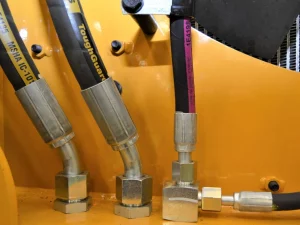
Check point: Lift is slow, weak, or dead. Other hydraulic functions may also feel weak, noisy, or inconsistent.
Possible causes: Low hydraulic oil, aeration, or an external leak can starve the system. In real fleets, this is one of the most common roots because it’s easy to miss until performance drops.
Field verification method: Look for fresh hydraulic fluid around hoses, fittings, cylinders, and under the truck. Check the reservoir level according to the machine’s procedure. If the oil looks foamy or milky, suspect aeration or contamination. If the truck has been running hot, allow it to cool and recheck—hot oil can behave differently, and a marginal leak can worsen as seals warm up.
Fix action: Correct the oil level with the proper hydraulic fluid, repair or replace leaking hoses and seals, and clean the area so you can verify whether the leak returns. If there is active leaking under pressure, do not keep testing under load. A small drip during an unloaded test can become a burst under a heavy pallet.
Checkpoint 3 — Load weight, load center, and capacity confusion
Check point: The forklift lifts empty but won’t lift the load you think it should lift, or it starts lifting and then stalls or shudders.
Possible causes: The load may exceed the truck’s capacity at the real load center. In warehouses, the “weight” may be known, but the center of gravity often isn’t. Long pallets, uneven stacks, off-center picks, and loads sitting forward on the forks can push a truck beyond its effective lifting capacity. Fork wear and tire condition can also reduce performance and stability.
Field verification method: Confirm the load’s actual weight using receiving data, a scale, or shipment documentation, then look at how the load sits on the forks. If the pallet is longer than standard or the load is offset, the load center shifts forward and capacity drops. Confirm the forks are fully inserted and positioned correctly under the pallet. Inspect fork heels for visible thinning or deformation. If the truck can lift a lighter pallet immediately afterward, that difference points strongly toward capacity/load-center rather than a total hydraulic failure.
Fix action: Reposition the load, re-pick it with better centering, split the load, or use the correct attachment for the load type. If you suspect fork damage or excessive wear, tag the truck out; forklifts that “sort of lift” can still be unsafe.
Checkpoint 4 — Mast chains, rollers, and mechanical binding
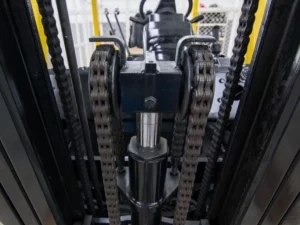
Check point: The truck sounds like it’s trying to lift, but the mast barely moves, sticks, jerks, or makes grinding noises.
Possible causes: Mechanical binding in mast channels, damaged rollers, misalignment, debris in the rails, or chain issues can prevent smooth lifting even if the hydraulics are producing force. Warehouses with dust, shrink-wrap fragments, and floor debris see this more than they expect, especially on trucks that run close to racking.
Field verification method: With the forklift secured, forks low, and no load, visually inspect mast rails, rollers, and chain condition. Look for uneven wear patterns, obvious debris, or dry rails. Slowly command lift and observe whether one side moves differently than the other. Any uneven motion is a red flag for binding or chain issues rather than a simple hydraulic weakness.
Fix action: Clean mast channels, restore lubrication per the manufacturer’s guidance, and replace damaged rollers or chains as needed. Do not “force it” by revving or shock-loading the lift; binding can release suddenly and create instability at the worst time.
Checkpoint 5 — Lift cylinder seal bypass and “drifts down” behavior
Check point: The forklift can lift, but it won’t hold. The load slowly drifts down, or lift feels weak under load even though it moves empty.
Possible causes: Internal leakage past lift cylinder seals can allow pressure to bypass inside the cylinder. Holding/check valve issues or control valve leakage can also cause drift. This is often mistaken for “low power,” but the real issue is that pressure can’t stay where it needs to be.
Field verification method: With safety rules followed and ideally with no load, raise the forks slightly, return the control to neutral, and watch for drift. Repeat and observe whether tilt or other functions drift in a similar way. If drift happens quickly, it’s a strong indicator of internal leakage. If qualified staff and proper gauges are available, pressure checks can confirm whether the system reaches normal pressure or bleeds off.
Fix action: If internal bypass is confirmed, plan a cylinder seal rebuild or replacement through service. If a valve is suspected, the fix typically involves inspection and servicing of the relevant valve components. Avoid running heavy loads while drift is present; the risk is not just performance, it’s load control.
Checkpoint 6 — Relief valve behavior and pump output under load
Check point: The forklift tries to lift but stalls early, especially under load, and the lift feels weak or slow even after basic checks.
Possible causes: A relief valve may be opening too early, pump output may be reduced, suction lines may be restricted, or filters may be clogged. Under load, weak pump output or early relief will show up as a truck that lifts an empty mast but can’t generate enough pressure to raise a pallet.
Field verification method: Listen during lift command. A relief valve opening often has a distinct sound as pressure dumps. If the truck heats up faster than normal during repeated lift attempts, suspect inefficiency in the hydraulic circuit. If the forklift has service indicators for filtration restriction, check them. A full pressure-and-flow diagnosis requires trained technicians and the correct equipment; this is a common point where a warehouse team should stop DIY testing.
Fix action: Replace clogged filters where applicable and correct obvious restrictions. If pump wear or relief setting issues are suspected, move to professional service diagnostics. Continued operation with a failing pump can spread contamination through the hydraulic system and turn a manageable repair into an expensive rebuild.
Checkpoint 7 — Electrical or control issues, especially with intermittent lift failure
Check point: Lift works, then fails, then returns without a clear mechanical change. It may correlate with vibration, temperature, or time into the shift.
Possible causes: Loose connectors, sensor issues, control signal faults, or intermittent wiring problems can cut lift function or reduce output. In warehouse fleets, intermittent faults are often misdiagnosed because the truck “behaves” during a quick check.
Field verification method: Note the exact conditions of failure—after long travel, after a cold start, after a battery swap, or after a bump. Inspect accessible connectors for looseness, moisture, or damage. Observe whether other functions fail at the same time; if multiple functions drop together, that points toward a broader electrical/control issue.
Fix action: Secure or repair connectors and wiring as needed, then retest with a consistent procedure. If the fault persists or affects safety systems, escalate to service diagnostics.
Prevent the next “won’t lift” event in a warehouse fleet
In a warehouse, prevention is less about perfection and more about avoiding avoidable stops. Small leaks should be caught early, not when the lift turns weak at the worst moment. Operators should be trained to recognize the difference between a capacity problem and a mechanical problem; a poorly centered long pallet can feel like a failing forklift, and it wastes time while the real issue sits on the forks.
Mast lubrication and cleanliness matter too. A mast that runs dry or collects debris can bind, which makes the truck feel sluggish and unpredictable. The same goes for fork condition. Warehouses often run forks hard, and worn forks can quietly reduce safe handling margins.
If you want a quick way to align operations and maintenance around the right configurations for warehouse work, reviewing the available forklift categories and typical setups at the Hezhong Machinery official website can help standardize what “normal performance” should look like across your fleet.
When to stop troubleshooting and call service
A good warehouse rule is simple: stop troubleshooting when the next step requires specialized tools, creates increased risk, or could mask a safety defect. If you suspect relief valve settings, pump output loss, internal cylinder bypass, or control system faults that are not obvious, it’s time for professional diagnostics. The same is true if the mast shows uneven movement, chain issues, or mechanical binding that could fail under load.
At that point, the best move is to document the symptom clearly, record what checks were performed, and take the truck out of production. If you need to reference a known warehouse-capable model while planning replacements or additions, you can review a typical 3.5-ton diesel configuration on the CPC(D)-35 diesel forklift page.
About Qingdao Hezhong Machinery Manufacturing Co., Ltd.
Qingdao Hezhong Machinery Manufacturing Co., Ltd. is a China-based manufacturer with international cooperation and shared technologies since 2007. According to the company’s About Us information, it is located in Pingdu, Qingdao, with more than 50,000 square meters of facilities organized across three major factories supporting R&D and production. The company states it has more than 400 employees, including 55 engineers focused on new product innovation in construction machinery, and an annual capacity of more than 15,000 units including mini wheel loaders and sweeper forklifts. It also notes that its products meet internationally required manufacturing standards and certifications such as CCC, ISO 9001, ISO 16949, CE, and EGS, with sales in more than 40 countries. For the detailed company profile, visit the About Qingdao Hezhong Machinery.
Conclusion
A forklift won’t lift a load for a reason, and the fastest fixes come from treating troubleshooting like a process instead of a guess. Start with safe operating conditions and simple checks that rule out interlocks, low hydraulic oil, visible leaks, and capacity/load-center mistakes. Then move to mast mechanics, drift behavior, and the hydraulic system’s ability to build and hold pressure under load. If the next step requires gauges, teardown, or carries safety risk, stop and escalate. In warehouse operations, the best troubleshooting outcome is not just “it lifts again,” but “it lifts reliably and holds a load the way it should, shift after shift.”
FAQs
Why won’t my forklift lift a load but it lifts empty?
This usually points to a load-related demand issue rather than a total system failure. In warehouses, the most common causes are load center problems, an overloaded or off-center pallet, or a hydraulic system that can’t build enough pressure under load because relief is opening early or pump output is weak. A quick field check is to verify the load’s weight and how far forward it sits on the forks, then compare performance with a clearly lighter pallet. If it consistently lifts lighter loads but stalls on heavier ones, treat it as a capacity/pressure-under-load problem.
Why is my forklift lift slow and weak during warehouse shifts?
Slow and weak lift is often tied to hydraulic oil level, aeration, filtration restriction, or heat. In a busy warehouse, small leaks and low fluid can go unnoticed until performance drops. Check for visible leaks, confirm the hydraulic level, and pay attention to whether the problem worsens as the truck warms up. If it does, you may be dealing with internal leakage or pump efficiency loss that becomes more noticeable at temperature.
Why do my forks go up but won’t hold a load?
If the forks rise and then drift down, the forklift may be losing pressure through internal leakage in the lift cylinders or through valve leakage paths. A simple verification is to raise the forks slightly with no load (if allowed by your safety policy), return the control to neutral, and observe how quickly the forks settle. Fast drift is a strong sign that seals or valves need service. Do not keep lifting heavy pallets while drift is present; control is part of safe lifting.
Why does my forklift “won’t lift” problem come and go?
Intermittent lift problems are often tied to operating state, interlocks, connectors, or control signals rather than a single broken mechanical part. In warehouse fleets, vibration and repeated direction changes can expose loose connections. Track when it happens—after a long run, after a cold start, or after hitting bumps—and note whether other hydraulic functions fail at the same time. The more consistent your observation, the faster service technicians can pinpoint the cause.