



Snow removal is rarely judged by how it starts. It is judged by how it holds up after the third storm, when piles grow heavier, storage space disappears, and crews are already stretched thin. That is usually when attachment decisions begin to matter more than the machine itself.
In many snow removal operations, wheel loaders are brought in because smaller equipment simply runs out of margin. They have the weight, traction, and pushing power to keep work moving when conditions are no longer forgiving. But even a capable wheel loader can lose efficiency quickly if the attachment does not match the snow conditions, the ground surface, or the way the site actually functions.
This guide focuses on wheel loader snow removal attachments commonly used in municipal, industrial, and large-area winter operations—V-plows, straight blades, snow pusher boxes, and snow blowers—and explains how to choose between them based on real field conditions rather than catalog descriptions.
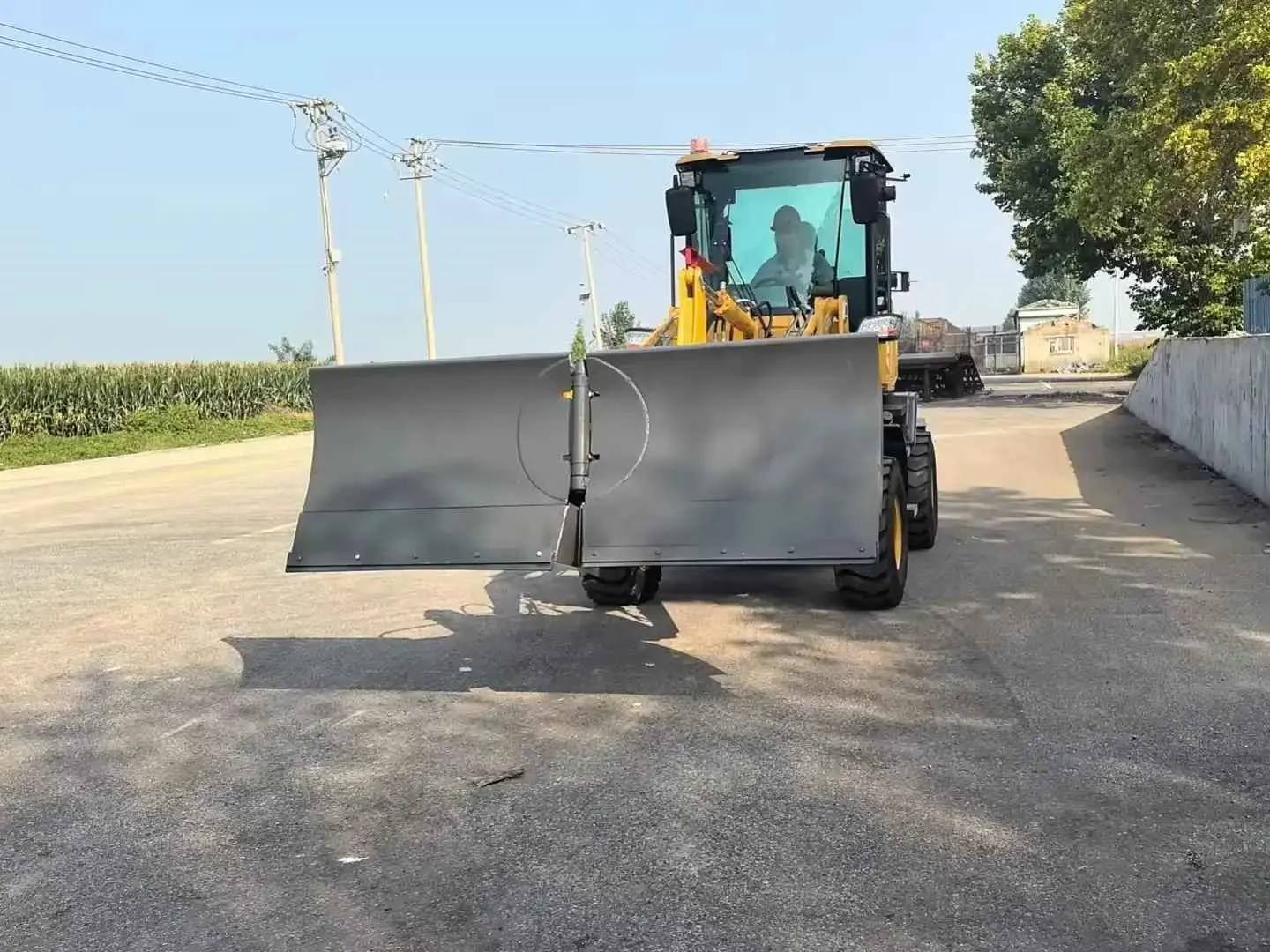
Why Attachment Decisions Decide Winter Productivity
Many buyers still start with the loader. Horsepower, operating weight, axle type. Attachments are often chosen later, based on availability or past habits. In winter work, that order is usually backward.
Snow changes faster than equipment specs. Dry snow moves easily. Wet snow does not. Compacted piles behave more like soil than powder. An attachment that performs well early in the season can become a liability by mid-winter.
When productivity drops in wheel loader snow removal, it is rarely because the machine suddenly lacks power. More often, the attachment is no longer suited to the conditions it is being asked to handle.
Conditions Come First, Not Attachment Names
Snow Is Not Just Snow
Light, dry snowfall is forgiving. Most attachments will move it without trouble. Once temperatures hover around freezing, snow becomes denser and more resistant. At that point, containment often matters more than blade width.
Compacted snow banks, especially those formed after repeated plowing, require cutting ability. Trying to push them with the wrong attachment wastes time and increases wear on both the loader and the operator.
Understanding which phase of winter you are dealing with changes the decision entirely.
What the Snow Is Sitting On Matters
Under the snow is where costly mistakes usually happen. Asphalt and reinforced concrete tolerate aggressive scraping. Brick pavers and decorative surfaces do not. Gravel surfaces introduce another challenge: once stone mixes with snow, cleanup becomes slower and more expensive.
In commercial and municipal projects, surface damage is not a minor issue. It becomes a repair cost that often exceeds the price difference between attachments. Choosing the right wheel loader snow attachment directly affects that risk.
Space Dictates Workflow
Open areas allow snow to be pushed and stacked with minimal planning. Tight lanes, loading docks, and internal roads do not. Some sites can live with snow piles. Others must remove snow entirely to maintain visibility, access, or safety compliance.
Attachments behave very differently depending on how much room they have to work. Ignoring space constraints often creates bottlenecks later in the season.
What Each Wheel Loader Snow Removal Attachment Is Actually Good At
V-Plows: Breaking Through, Not Carrying Volume
V-plows perform best when the job involves cutting into packed snow or opening paths through built-up banks. The split design reduces resistance when entering dense material, which is useful in municipal routes and roadside work.
They are less forgiving in confined spaces. Without enough room to channel snow properly, efficiency drops and edge control becomes harder to maintain.
Straight Blades: Control Over Speed
Straight blades are simple by design, and that simplicity is their strength. They offer predictable control along curbs, walls, and building edges. On sites where precision matters more than raw output, straight blades remain a reliable option.
Their limitation appears in wide, open areas. As snow depth increases, straight blades tend to roll snow forward rather than contain it, which leads to more passes and more time per cycle.
Snow Pusher Boxes: Fewer Passes, Higher Output
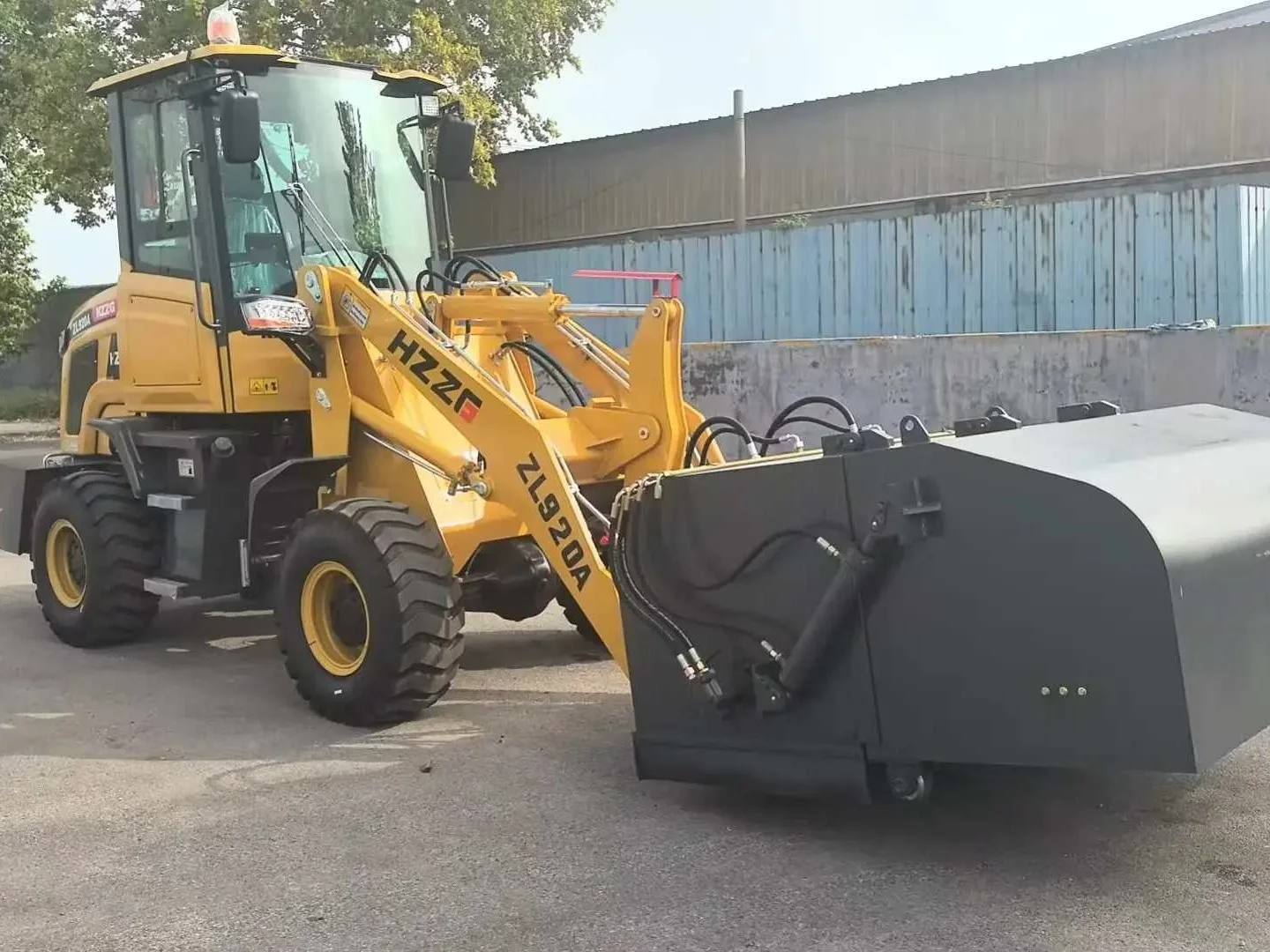
Snow pusher boxes are built around one idea: move as much snow as possible in each pass. In large parking lots, logistics yards, and industrial facilities, this often translates into noticeable productivity gains.
They are not ideal everywhere. In narrow corridors or cluttered areas, their size can work against them. Once output increases, planning where snow will be stacked becomes critical to avoid secondary congestion.
Snow Blowers: Solving the Space Problem
Snow blowers are typically chosen when pushing snow aside is no longer enough. By throwing snow away from the work area, they reduce pile buildup and help preserve visibility.
For wheel loaders, snow blowers place higher demands on the hydraulic system. Flow and pressure determine whether the attachment performs as intended. Without sufficient hydraulic capacity, results are disappointing, regardless of build quality.
Where Buyers Commonly Go Wrong
A common mistake is assuming one attachment will handle the entire winter season. Another is selecting based on last year’s conditions rather than current site layouts or snowfall patterns. Traffic flows change. Storage areas shrink. Weather patterns shift.
There is also a tendency to underestimate how attachment choice affects downstream tasks. Clearing snow quickly does not help if loading and hauling become inefficient later.
These issues rarely appear during the first storm. They surface after weeks of repetition.
A Practical Way to Decide What You Actually Need
A useful selection process starts with a few grounded questions. How heavy is the typical snowfall? Where does the snow go after it is cleared? Is surface protection a priority? Does the wheel loader need to load trucks, or is stacking acceptable?
From there, attachment selection becomes clearer. Large, open areas usually favor containment. Precision areas favor control. Limited storage space favors removal over piling.
This approach works best when wheel loader snow removal equipment is viewed as a system, not a collection of parts.
How Qingdao Hezhong Machinery Approaches Snow Removal Solutions
Qingdao Hezhong Machinery Manufacturing Co., Ltd. produces full hydraulic wheel loaders designed for demanding operating environments, including winter conditions where reliability matters more than theory.
Rather than treating attachments as accessories, Hezhong approaches snow removal as a configuration challenge. Loader size, hydraulic capability, attachment compatibility, and site conditions are evaluated together. This reflects the needs of municipal, industrial, and commercial users who cannot afford trial-and-error during peak winter operations.
About Qingdao Hezhong Machinery Manufacturing Co., Ltd.
Qingdao Hezhong Machinery Manufacturing Co., Ltd. is a Chinese construction machinery manufacturer focused on full hydraulic wheel loaders. Based in Qingdao, the company integrates manufacturing, engineering, and quality management to support customers across infrastructure, municipal services, and industrial sectors.
With experience in international markets and an emphasis on application-driven design, Hezhong Machinery positions itself as both an equipment supplier and a practical solution provider for complex operating environments.
Conclusion
Snow removal is not won by specifications alone. It is shaped by how equipment behaves after weeks of cold, pressure, and repetition. The right wheel loader snow removal attachment reduces passes, protects surfaces, and keeps crews productive long after the first snowfall.
When attachment choices are made with real conditions in mind, winter operations become more predictable and far less reactive.
FAQs
Which wheel loader snow removal attachment works best for heavy snow?
Dense, wet snow often favors attachments that contain material, such as snow pusher boxes, especially in open areas.
Are snow blowers practical for wheel loaders in snow removal work?
They can be effective when space is limited, but only if the wheel loader has sufficient hydraulic capacity to support them.
How does ground surface affect wheel loader attachment selection?
Sensitive surfaces require better control and less aggressive edges, while durable surfaces allow greater flexibility in attachment choice.
Can one attachment handle all wheel loader snow removal conditions?
In most cases, no. Many operations adjust attachments as snow conditions and site demands change throughout the season.
Why involve the manufacturer when choosing wheel loader snow attachments?
Manufacturers with application experience can help align wheel loader configuration and attachment choice, reducing costly adjustments during winter operations.


