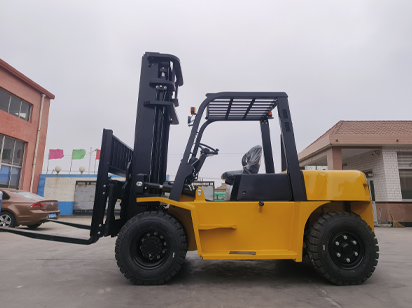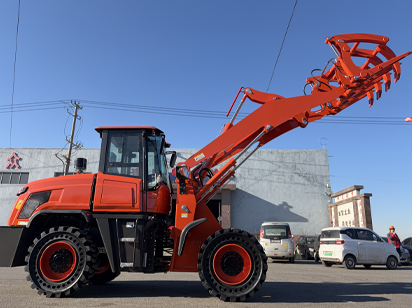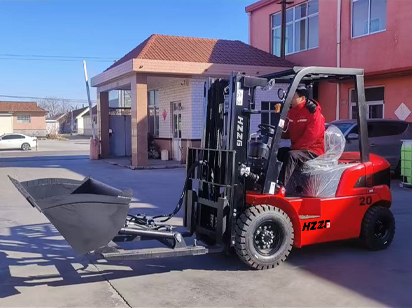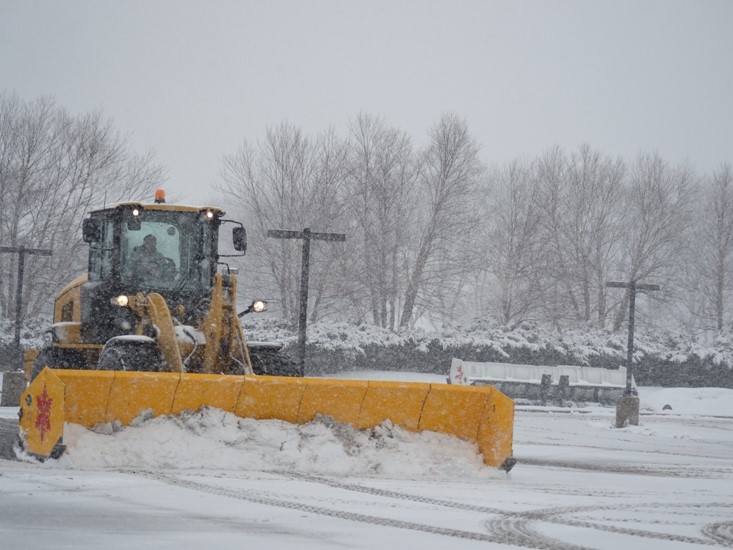

Wheel loader attachments for farm livestock use have become essential tools across mid-sized dairy and beef operations in 2026, where daily routines revolve around pulling silage from bunkers, moving wrapped rounds to feed areas, clearing pens before milking, and handling pallets of supplement or bedding without wasting time or damaging material. Producers running 150 to 500 head increasingly rely on quick-attach setups that turn compact or full-hydraulic machines into versatile platforms capable of handling multiple high-frequency tasks. Silage grabs leave smooth vertical faces that slow spoilage, bale clamps secure wrapped bales without puncturing plastic, manure forks with grapples clear alleys efficiently, and pallet forks unload deliveries in minutes rather than hours.
The shift reflects practical realities on the ground. Feed costs keep climbing, labor stays scarce, and environmental regulations demand cleaner nutrient management. A single poorly chosen attachment can add hours to feeding rounds or increase waste through uneven silage faces and torn wraps. Properly matched tools, on the other hand, frequently cut daily labor by 30 to 50 percent while preserving feed quality and reducing losses that show up in herd performance or compost piles.
Wheel Loader Attachment Basics for Livestock Applications
Quick couplers provide the backbone for switching attachments on wheel loaders used in agriculture and animal husbandry. Most compact models in the 1- to 4-ton class accept standard skid-steer-style plates or hydraulic variants that lock firmly in seconds. Full-hydraulic systems supply the flow—typically 15 to 25 gallons per minute at 2,500 to 3,000 psi—required for powered grabs and clamps, while third-function hydraulics enable independent rotation or clamping action.
Hydraulic needs differ significantly between tools. Silage grabs and bale clamps depend on strong auxiliary circuits for bite and hold strength. Basic pallet forks or light-material buckets run on standard boom hydraulics. Matching flow and pressure prevents sluggish performance or overheating during long shifts. Loader lift capacity also dictates safe pairing; overloading risks tipping on uneven barn floors or yard slopes.
Key distinctions appear clearly in field conditions. Silage grabs prioritize cutting power for dense stacks. Bale clamps focus on even pressure to protect wrap integrity. Manure forks with grapples combine penetration and overhead clamping. Pallet forks emphasize adjustable spacing for stable pallet handling. Light-material buckets handle loose, low-density loads with minimal spillage.
Hezhong full-hydraulic wheel loaders align with these requirements, delivering consistent flow and quick-attach compatibility suited to livestock tasks.
Top Wheel Loader Attachments for Farm and Livestock Use in 2026
Silage Grab / Shear Grab / Defacer
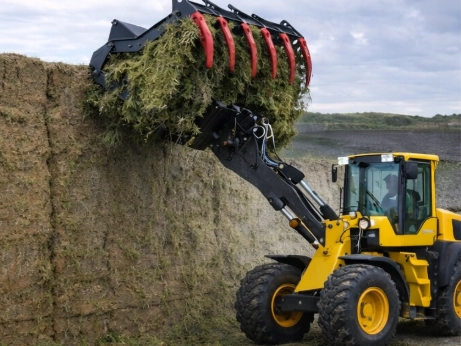
Silage grabs rank high on dairy and beef farms that store in bunkers or pits. Dual hydraulic rams drive tines deep into the stack, slicing a clean vertical face that limits oxygen penetration and secondary fermentation. On a 300-cow dairy pulling 10 to 20 tons daily, a properly sized grab shortens extraction time while leaving almost no loose material. Shear-style versions cut precisely through dense corn or grass silage, reducing losses that routinely reach 5 to 15 percent when faces turn ragged.
Defacer drums loosen the outer layer through rotation, creating uniform material for TMR mixers without clumps. Operators observe steadier ration intake and fewer digestive upsets when faces remain even. Tine construction matters—high-strength spring steel resists bending under load—and jaw openings of 50 to 60 inches allow efficient large bites.
Bale Clamp / Round Bale Grab
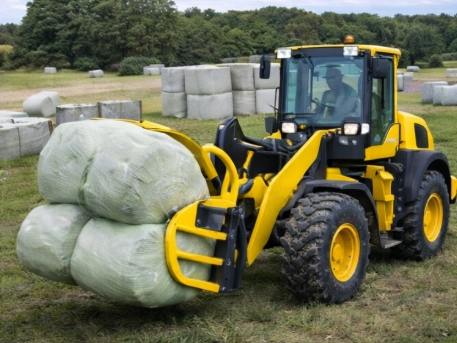
Bale clamps transport wrapped silage or dry hay rounds without piercing the plastic film, maintaining airtight conditions through storage and feeding periods. Tubular arms distribute pressure evenly across the surface, permitting safe movement of one or two bales depending on loader rating. Rotation models add precision for loading mixers or stacking in tight storage bays.
Farms handling wrapped bales daily report substantially lower waste compared with piercing spears that risk exposure to air and moisture. Opening widths of 70 to 80 inches accommodate common 4- to 6-foot diameters, and synchronized arms prevent twisting during lifts. Regular greasing at pivot points extends service intervals under constant use.
Manure Fork with Grapple
Manure forks equipped with overhead grapples clear pens, scrape alleys, and move bedding in a single pass. Tines penetrate packed waste while the upper clamp secures loose loads during carry, minimizing scatter on concrete floors or gravel yards. In freestall barns with high stocking density, this combination accelerates daily removal and reduces labor demands.
Agricultural grapples also manage loose silage or feed residues effectively. Wider frames and curved tines improve fill efficiency, and replaceable wear edges withstand abrasive surfaces. Shaking action before dumping keeps mixers cleaner.
Pallet Forks
Pallet forks handle bagged feed, seed pallets, and equipment crates with adjustable tine spacing that centers loads for stability. On farms receiving bulk shipments, these forks unload trailers quickly and stack supplies in dry areas. Spacing adjustments from 20 to 48 inches fit varying pallet dimensions, and reinforced carriages support 3,000- to 5,000-pound loads without deflection.
Light-Material Bucket
Light-material buckets with taller sides and greater capacity scoop loose feed, grains, or bedding shavings. Rolled-back profiles reduce spillage during transport, and bolt-on cutting edges allow straightforward replacement after wear from gritty materials. These buckets prove valuable in feed rooms or when topping off rations.
Bale Spear
Bale spears serve as a cost-effective choice for dry hay or straw rounds. Multiple tines—typically three or four—penetrate deeply for secure lifts, though they work best with unwrapped bales to prevent wrap damage. Replaceable conus points simplify repairs when points bend or dull.
Grapple Bucket
Grapple buckets combine bucket volume with clamping tines for brush, loose hay, or debris cleanup. Curved tines grip irregular loads securely, making them useful for pen maintenance or light clearing around buildings.
Other Practical Options
Snow blades and sweepers extend utility into winter months, while root rakes remove rocks or roots from feedlot surfaces.
Attachment Comparison and Compatibility Guide
Operations under 200 head commonly start with silage grabs and bale clamps to address feed priorities. Mid-sized farms add manure grapples and pallet forks for broader coverage. Larger setups favor combinations such as silage defacers paired with high-volume buckets.
Hezhong full-hydraulic compact loaders support mainstream quick-attach systems and deliver auxiliary flow adequate for powered tools. Budget considerations range from basic forks at the lower end to hydraulic grabs with rotation at the higher end, with payback driven by time savings and reduced waste.
How to Select Wheel Loader Attachments for Your Livestock Farm in 2026
Identify the task that consumes the most daily hours. Heavy reliance on silage extraction calls for a shear grab or defacer to maintain quality. Significant wrapped bale movement directs attention toward bale clamps with rotation for accurate placement.
Bale diameter and weight influence clamp opening and loader capacity requirements. Barn aisle widths affect narrow-body choices. Hydraulic setup determines feasibility; third-function lines prove necessary for clamping or rotating tools.
Balance initial cost against long-term benefits. Accessible grease points and replaceable wear components minimize downtime. Verify warranty terms and parts availability to prevent delays during critical seasons.
About Qingdao Hezhong Machinery Manufacturing Co., Ltd.
Since 2007, Qingdao Hezhong Machinery Manufacturing Co., Ltd. has concentrated on compact machinery designed for agriculture, forestry, and livestock environments. The facility in Pingdu, Qingdao spans more than 50,000 square meters, with separate units dedicated to research, development, and production. A team exceeding 400 employees, including 55 engineers focused on innovation, supports annual production above 15,000 mini wheel loaders and forklifts.
The product range centers on diesel, gasoline, lithium-battery, and LPG-powered loaders of 3 tons and below, built from premium components and certified to CE, ISO 9001, ISO 16949, CCC, and additional international standards. Customization addresses varied working conditions, and exports cover Europe, Africa, Central Asia, North America, Russia, South America, and further regions with dedicated technical and after-sales support.
Hezhong loaders incorporate European-style cabs offering wide glass surfaces for clear visibility, protective brake-line sleeves, external grease access points, orderly hydraulic and wiring routing, automatic bucket leveling to lessen operator fatigue, reinforced frames for durability, fuel-efficient powertrains, ergonomic operator stations, and extensive attachment compatibility.
Conclusion
Wheel loader attachments tailored for farm and livestock use provide concrete improvements in daily efficiency, feed preservation, and operational flexibility. Silage grabs maintain bunker quality, bale clamps safeguard wrapped rounds, and forks streamline manure and pallet handling, enabling producers to achieve more with the same equipment. As herd sizes expand and cost pressures intensify in 2026, deliberate attachment choices transform compact wheel loaders into reliable assets for consistent, sustainable performance.
FAQs
What is the best wheel loader attachment for silage handling on a dairy farm?
Silage grabs or shear grabs excel at cutting clean vertical faces on bunker piles, reducing spoilage and accelerating extraction while delivering uniform material for TMR mixing.
How does a bale clamp compare to a bale spear for wrapped round bales on livestock farms?
Bale clamps grip externally without piercing plastic, preserving airtight seals and minimizing losses, while bale spears penetrate the bale and suit unwrapped dry hay more appropriately.
Which wheel loader attachment works best for manure cleanup in barns?
Manure forks with grapples penetrate packed waste and clamp overhead for secure transport, clearing pens quickly without scattering residue across floors or yards.
Are pallet forks useful on compact wheel loaders for farm use?
Pallet forks manage bagged feed, seed pallets, and supplies efficiently, with adjustable spacing ensuring stable lifts and rapid unloading of deliveries.
What hydraulic requirements do silage grabs and bale clamps need on a wheel loader?
These tools generally require auxiliary hydraulics and third-function capability for independent clamping or rotation, compatible with flow rates found on full-hydraulic compact models.