



Mining camps in Peru’s high desert or Chile’s coastal ranges, along with Brazil’s sugarcane spreads and Argentina’s grain belts, put material handling gear through constant punishment. Steep pitches covered in loose scree, post-rain mud that swallows tires, fine abrasive dust that clogs everything, and temperature shifts from blistering midday heat to chilly nights wear down equipment fast. Standard indoor forklifts typically last only months before tires chunk out on jagged rock, axles take permanent set from side loads on slopes, hydraulic lines weep from vibration, and cooling systems struggle on long pulls uphill. Unplanned stops multiply, parts bills climb steeply, and output targets slip away.
5 ton+ diesel rough terrain forklifts shift the balance. With full four-wheel drive, generous chassis height, oversized pneumatic tires, and stout diesel engines, these units lift and carry beyond five tonnes across broken, unpaved ground shift after shift. Durability separates the workable from the marginal—how many accumulated hours pass before major strip-downs become necessary. Logs pulled from South American deployments show properly built models rack up extended run times, stretch service cycles, and trim lifetime costs in exactly these punishing settings.
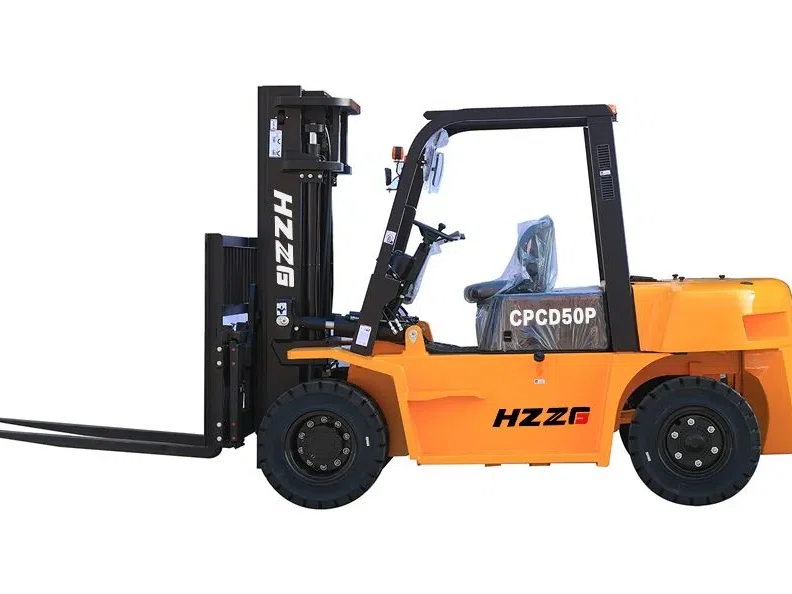
Why South American Mining & Agriculture Sites Demand 5 Ton+ Diesel Rough Terrain Forklifts
High-elevation copper pits in Peru demand repeated shuttling of ore containers, tooling, and timber across 15–25 degree faces strewn with sharp fragments. Brazilian iron ranges and Chilean support yards present parallel heavy lifts amid dust and uneven footing. On farms, Brazilian sugarcane crews stack 6–7 tonne bundles during crush season in fields turned slick by seasonal downpours, while Argentine soybean operations move fertilizer pallets and machinery over yielding soil.
Ordinary counterbalance designs, engineered for level warehouse floors, give up quickly. Shallow clearance invites hang-ups, narrow treads spin uselessly in slime, and drivelines lack the reserve to handle sustained torque under load on grades. Diesel rough terrain configurations meet these realities head-on. Continuous four-wheel drive keeps momentum in low-traction spots, clearance often topping 350 mm dodges underbody strikes, and wide, deep-lug tires deliver flotation plus bite on soft or rocky surfaces.
Diesel propulsion fits isolated, high-demand duty. It generates strong torque from idle for breaking out heavy starts on inclines, runs independent of grid power or charging downtime, and copes with thin air at altitude when breathing and cooling are adequately addressed. Fleet records from analogous Latin American setups indicate unplanned interruptions drop 40–60% once 5 ton+ diesel off-road forklift units take over primary handling roles.
Key Durability Factors That Matter Most in South American Harsh Conditions
Endurance under these stresses traces back to deliberate component choices.
Frame and chassis take top billing. Heavily braced steel with thick plating and generous section modulus resists torsional deflection from offset payloads on cambered ground, sidestepping fatigue cracks that show up in lighter builds after 2,000–3,000 hours. Elevated axles or large wheel offsets secure the needed clearance while shielding driveline joints from direct impact.
Drivetrain elements follow suit. Beefy axles paired with planetary wheel reducers soak up shock without early seal blowouts or gear distress, even through repeated crossings of ruts or talus. Full-time 4WD allocation prevents uneven loading that accelerates wear during contour work.
Engine performance holds the line in hot, dusty, elevated air. Packages featuring large-core radiators, high-dust media filters, and torque-optimized curves resist thermal soak on extended hauls or idle periods. Air restriction stays controlled, pushing out service intervals noticeably.
Tire construction affects uptime directly. Aggressive-tread pneumatics, frequently foam-filled to cut flats, stand up to embedded stones and grinding abrasion longer than compact solids. Suspension—whether coil-over or hydraulic—dampens transmitted forces, preserving frame integrity and operator focus through rough hours.
Hydraulics and electrics demand sealed integrity plus protective finishes to counter moisture, coastal salt spray near certain extractive sites, and chemical dust from fertilizer handling. Service bays positioned for quick reach allow daily checks and element swaps without major teardown, vital where supply chains stretch thin.
Real-World Durability Records: 5 Ton+ Diesel Rough Terrain Forklifts in South American Sites
Deployment data from the field supplies straightforward evidence.
Peruvian copper and gold sites at altitude see 5-tonne diesel rough terrain forklifts managing ore staging and rig support over 12-hour turns in thin atmosphere and perpetual fines. One tracked example hit 3,200 hours with brake linings and minor seals as primary replacements—no structural weld repairs, no transmission pull. Tires delivered close to 4,500 hours, roughly half again the span of generic units in the same benches. Output stayed even despite elevation, aided by cooling capacity and torque band.
Brazilian cane fields drive hard during harvest windows in saturated ground. Accumulated hours on multiple machines cross 8,000 before significant internal work. Sealing improvements on hydraulics and final drives curbed ingress-related faults, extending intervals around 30%. Hose failures and axle weeping dropped sharply, with fuel burn holding predictable at 8–10 liters hourly under peak load—numbers fleet controllers rely on for budgeting.
Support duties in Chilean mines and Argentine bulk yards mirror the pattern. Units clear 5,000 hours on routine care alone, highlighting how focused design against local wear modes produces clear advantages in availability and part longevity.
How to Choose a Durable 5 Ton+ Diesel Rough Terrain Forklift for Your South American Operation
Specification alignment starts with proven four-wheel drive and clearance surpassing 350 mm—non-negotiable for inclines and yielding terrain. Engine particulars should deliver robust low-end pull and cooling sized for elevated temperatures plus altitude effects.
Insist on documented hour tallies or service trails from matching regional environments over printed specs alone. Establish parts proximity; ready supply of consumables like filters, gaskets, and bushings averts lengthy halts.
Ownership cost analysis matters: weigh acquisition against anticipated upkeep, diesel burn, and revenue impact from idle time. Configurations with widened intervals and accessible subassemblies commonly yield lower cumulative outlay.
For sites near shorelines or with aggressive media exposure, corrosion barriers and enclosed systems rise in importance. Insights from operators running equivalent machines in South America offer the most dependable durability preview.
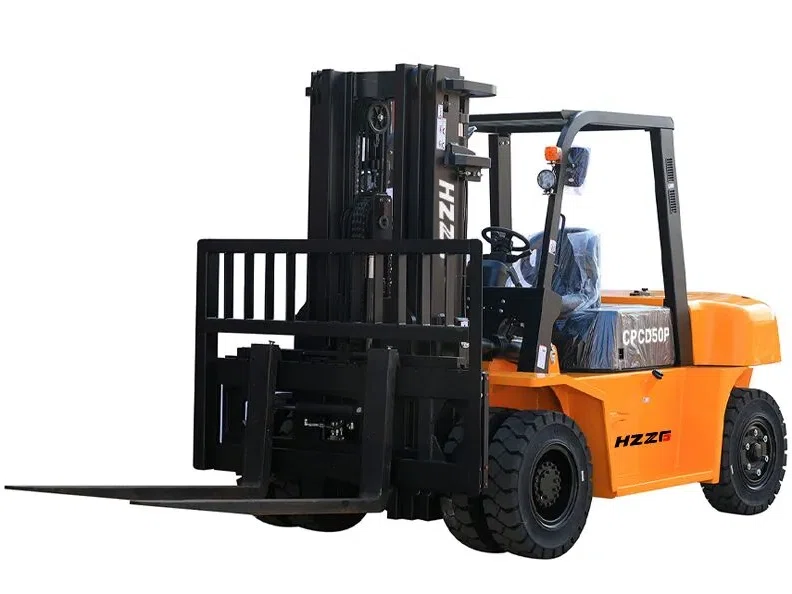
Qingdao Hezhong Machinery Manufacturing Co., Ltd.
Founded in 2007 and situated in Pingdu, Qingdao, China, Qingdao Hezhong Machinery Manufacturing Co., Ltd. operates across more than 50,000 square meters of facilities dedicated to design, fabrication, and assembly of construction and handling machinery. Over 400 personnel, including a 55-member engineering group, drive product advancement. Yearly capacity exceeds 15,000 units, principally wheel loaders, forklifts, and related implements.
Certifications encompass CCC, ISO 9001, ISO 16949, CE, and additional standards, confirming compliance with international norms. Shipments reach beyond 40 countries, addressing needs in construction, agriculture, forestry, mining, and public works. Emphasis rests on solid, dependable builds tailored for severe duty cycles globally, grounded in quality discipline, reliability, and enduring client ties.
Conclusion
South American mining and agricultural records repeatedly affirm that 5 ton+ diesel rough terrain forklifts furnish the staying power essential for consistent function amid severe topography and weather. Strengthened frames, resilient transmissions, and considered detailing work together to curb breakdowns, widen maintenance windows, and uphold steady throughput across long service spans. Operations facing these daily rigors find that correctly matched equipment brings concrete savings in expense and disruption while safeguarding output.
FAQs
What makes a 5 ton+ diesel rough terrain forklift suitable for South American mining sites?
Continuous four-wheel drive, ample ground clearance, and fortified build quality enable navigation of steep faces, scattered rock, and heavy dust with reduced failure frequency. Peruvian and Chilean hour logs commonly reach 3,000–5,000 with basic upkeep only, easing the constant threat of downtime in distant high-country workings.
How durable are 5 ton+ diesel rough terrain forklifts in Brazilian agriculture applications?
Cane and soybean cycles push these units past 8,000 hours in numerous tracked instances before extensive repair. Upgraded containment on hydraulics and drivelines blocks moisture and grit entry, while tire patterns and thermal management sustain full-shift runs with markedly fewer halts versus ordinary diesel counterparts.
What key features should I look for in a durable 5 ton diesel off-road forklift for Latin America?
Target full-time 4WD, clearance beyond 350 mm, substantial axles, dust-capable filtration, and anti-corrosion measures. Torque-rich engines with capable cooling manage heat and elevation reliably, and reachable service locations maintain availability where part transit lags.
Why do South American operators prefer diesel rough terrain forklifts over electric models for heavy-duty work?
Diesel delivers assured output in grid-absent zones, ample low-speed grunt for burdened climbs, and no range restrictions across extended turns. Hands-on exposure in dust-laden pits, muddy plots, and shifting conditions underscores superior fit for extractive and broad-acre demands.
How can I verify the real durability of a 5 ton+ rough terrain forklift before purchasing for South America?
Secure verified hour records, maintenance chronicles, and application imagery from parallel regional uses. Benchmark wear on tires, seals, and hydraulics relative to baseline machines, and lock in nearby spares access to contain risks of drawn-out stoppages.


