
Chariots élévateurs électriques are becoming an important piece of equipment to use in your modern warehouse or logistics operation. As e-commerce continues to rise and more companies adopt the use of ‘smart warehousing’, there is a growing trend of companies replacing traditional internal combustion engine powered forklifts with electric powered forklifts. This is because the electric forklifts have the benefits of lower running costs, less emissions, and are able to integrate well with other automated systems in the warehouse. We take a look at why electric forklifts are becoming essential in modern warehouses, highlighting the efficiencies, costs, safety, and future technology related to electric forklifts.
What Is an Electric Forklift Truck?
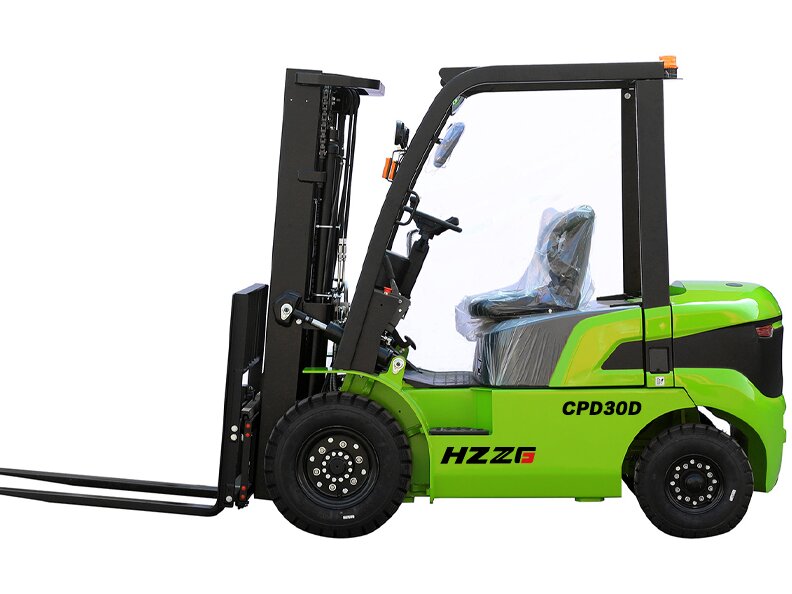
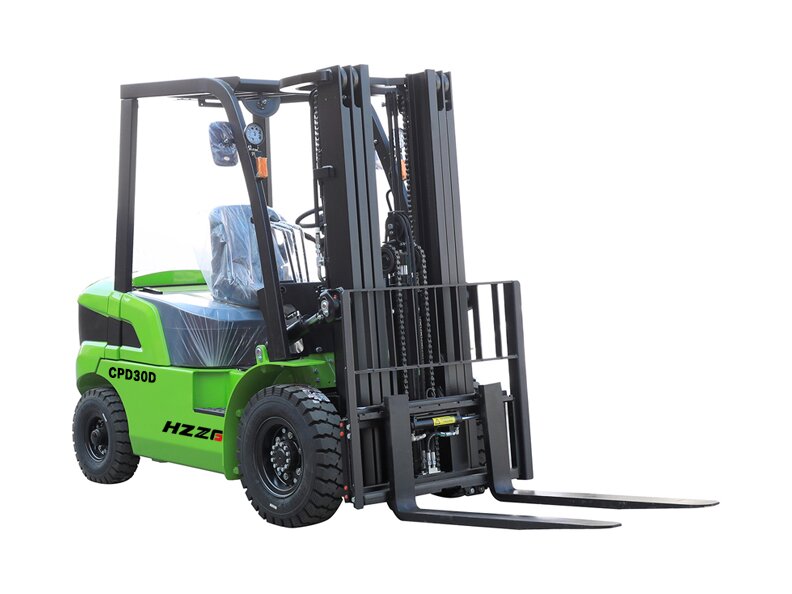
Electric forklift trucks are battery powered electric material handling equipment used for lifting, moving and stacking goods in warehouses, factories and distribution centers. Unlike their internal combustion engine cousins, such as diesel or LPG forklifts, they use electric motors which are powered by rechargeable batteries.
Core Components
To get a better idea of the electric forklift’s function, take a look at its basic parts.
Battery System
Power for all functionalities of the vehicle. Typically powered by a Lithium-ion or Lead-acid battery.
Electric Drive Motor
Precise movement control and instant torque response.
Hydraulic Lifting System
Enables efficient lifting and lowering of heavy loads.
Control and Safety System
Stable operation with sensors, controllers and safety features.
Why Are Warehouses Switching to Electric Forklifts?
As supply chains globally are becoming more complex and demands on companies with respect to sustainability are increasing, also the warehouses of these companies are facing new challenges: They need to become more efficient and at the same time also greener. This is why electric forklifts are becoming more and more the first choice.
Key Industry Drivers
Sustainability and ESG Requirements
Electric forklifts are being used by companies to help reduce their carbon footprint and to comply with environmental regulations.
Warehouse Automation Trends
Electric forklifts are better to integrate with a WMS and smart logistics systems.
Rising Fuel and Maintenance Costs
New electric models save money in the long run and are even cheaper to operate than other type of combustion engines.
How Do Electric Forklifts Improve Warehouse Efficiency?
Efficiency is one of the key factors for running a successful warehouse. Electric forklifts improve efficiency of operations with the smooth operation, fast response and integration with systems.
Enhanced Maneuverability and Precision Control
Ergonomic Electric Forklifts have Instant Torque to pick accurately down narrow aisles in very high-density warehouses. They offer comfort through their electronic steering system and smooth operation. Ergonomic design helps to reduce long-term work place fatigue and allows for greater operating space which can increase work efficiency. Also, Ergonomic design allows for operator to have very comfortable operation of forklift.
Reduced Downtime and Maintenance Needs
Electric forklifts require less maintenance than combustion-powered forklifts because of their simpler mechanical design. Their battery management systems help to charge the forklift’s battery to optimal levels, allowing extended use between charges. Multi-way valve for great stability and durability.
Integration with Smart Warehouse Systems
Modern electric forklifts are able to connect to your warehouse management system (WMS).
-
Real-time tracking of equipment usage
-
Intelligent task assignment
-
Fleet optimization and scheduling
This transforms forklifts from standalone machines into smart logistics nodes.
Electric Forklift vs Internal Combustion Forklift
Performance Comparison
| Feature | Chariot élévateur électrique | Chariot élévateur diesel |
|---|---|---|
| Operating Cost | Lower | Higher |
| Maintenance | Minimal | Frequent |
| Noise Level | Low | High |
| Emissions | Zero | High |
| Indoor Use | Excellent | Limited |
Key Insight
Electric forklifts are better suited for indoor warehouse operations and automation-oriented sustainable business models. The forks are moved low noise, low vibration; Noise reduction type cushion reduces the vibration by 20 % and the sound insulation cotton under the pedal reduces the noise by 5 %.
How Do Electric Forklifts Reduce Total Cost of Ownership?
While electric forklifts require an initial investment to purchase, it offers long term savings for operators.
Energy Cost Savings
Electricity, when used wisely with off-peak charging, is more cost-efficient than using diesel or LPG as fuel for your generators.
Lower Maintenance Costs
Few moving parts and no engine oil or exhaust system needed. Highest comfort and performance during operation and lowest running costs.
Higher ROI Over Time
The return of investment of most businesses is achieved in 2 to 4 years, due to reduced operating expenses as well as higher efficiency.
What Battery Technologies Are Used in Electric Forklifts?
Lithium-Ion Batteries
-
Fast charging
-
Long lifespan
-
Low maintenance
Lead-Acid Batteries
-
Lower upfront cost
-
Longer charging time
-
Higher maintenance requirement
Charging Strategies
Modern warehouses often use:
-
Opportunity charging
-
Shift-based charging cycles
-
Battery rotation systems
How Do Electric Forklifts Improve Workplace Safety?
Safety is a big concern in warehouse operations. Electric forklifts have several safety advantages.
Better Operator Ergonomics
The compact design of the battery in the fork handle improves visibility and reduces fatigue for the driver. Easy to read the digital instruments. Digital instruments are more intuitive and more accurate than traditional mechanical instruments. Easy to operate.
Lower Noise and Vibration
Our electric forklifts are very quiet and smooth to operate. This means there is less stress in the workplace, and less chance of injury.
Advanced Safety Systems
Modern models include:
-
Collision detection sensors
-
Speed control systems
-
Emergency stop functions
By increasing the length of the brake arm by 40mm, while maintaining the desired level of pedaling force, by reducing it by 10% on average, while increasing the effect of braking by 20% on average, the operation becomes easier.
What Are the Environmental Benefits of Electric Forklifts?
Electric forklifts support sustainability goals across logistics industries.
Zero Emissions Operation
Zero exhaust emissions means the air quality inside is protected.
Higher Energy Efficiency
Electric motors are much more efficient than combustion engines when converting the energy that is put into them to the actual work that the motor performs.
ESG Compliance
L’aide aux entreprises permet de respecter les exigences de reporting environnemental.
Real-World Warehouse Case Study
Project Overview
-
Warehouse size: 20,000㎡
-
Fleet: 15 electric forklifts
-
Industry: E-commerce fulfillment center
Results After Deployment
-
30% increase in operational efficiency
-
25% reduction in maintenance costs
-
40% improvement in order handling speed
How to Choose the Right Electric Forklift
Selecting the right model depends on operational needs.
Key Factors
-
Load capacity requirements
-
Warehouse layout and aisle width
-
Daily operating hours
-
Charging infrastructure
Battery Selection
-
Lithium-ion for high-frequency operations
-
Lead-acid for budget-sensitive applications
High load integrated frame body. One-piece welding boltless design increases strength by 20% for greater safety. Durable construction for work on uneven ground.
Future Trends of Electric Forklift Technology
Electric forklifts are evolving at a fast pace incorporating smart technology in them.
AI and Fleet Optimization
Predictive maintenance and route optimization are increasingly becoming standard features.
Integration with Automation Systems
In Smart Warehouses, Forklifts are increasingly being integrated with AGVs (Automated Guided Vehicles) to create more efficient operations.
Battery Innovation
Fast-charging, combined with the capabilities of next-generation solid-state batteries, will continue to improve performance reliability over shifts.
The heat dissipates quickly, and by increasing the number of cooling holes, the heat exchange ability is increased by about 30%.
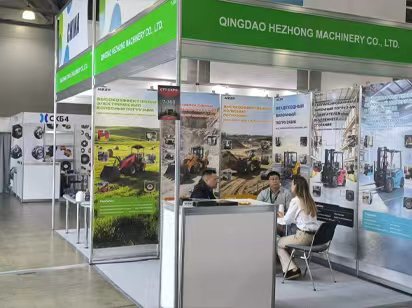
Who Is QINGDAO HEZHONG MACHINERY MANUFACTURING CO., LTD?
Qingdao Hezhong Machinery Manufacturing Co., Ltd. is one of the major Machinery manufacturers in China. We have experience of international cooperation since 2007. Our annual production capacity of mini wheel loaders and forklifts is over 15,000 units. We have diesel, electric and LPG forklifts that can be fitted with a variety of attachments. All our products meet required Chinese and international manufacturing standards, such as CCC, ISO 9001 and CE. Our innovative products have ergonomic design to reduce fatigue of operator, high loading capacity. We are one of China’s leading manufacturers of sustainable material handling equipment.
Key Takeaways
Electric forklifts are becoming essential in modern warehouse operations because of their:
-
Lower operating costs
-
Higher efficiency
-
Improved safety performance
-
Strong environmental benefits
-
Compatibility with smart logistics systems
This represents a long-term strategic investment for warehouses around the world transitioning to an automation focus and supporting future sustainability initiatives.
Questions fréquentes
1. How long does an electric forklift battery last?
Typically 5–7 years depending on usage frequency.
2. Can electric forklifts be used outdoors?
Yes. Depends on weatherproofing features. So mostly for indoor or semi-outdoor use.
3. How long does charging take?
Lithium-ion batteries are charged in around 1-2 hours. Lead-acid batteries require about 6-8 hours to fully charge per cycle.
4. Are electric forklifts powerful enough for heavy loads?
Yes – recent designs are capable of handling industrial-grade lifting loads with their higher-power drive motors.
5. What is the biggest advantage of electric forklifts?
E-cargo bikes have lower total cost of ownership than conventional vehicles, while being zero emission. Therefore they are ideal for a sustainable logistics world.