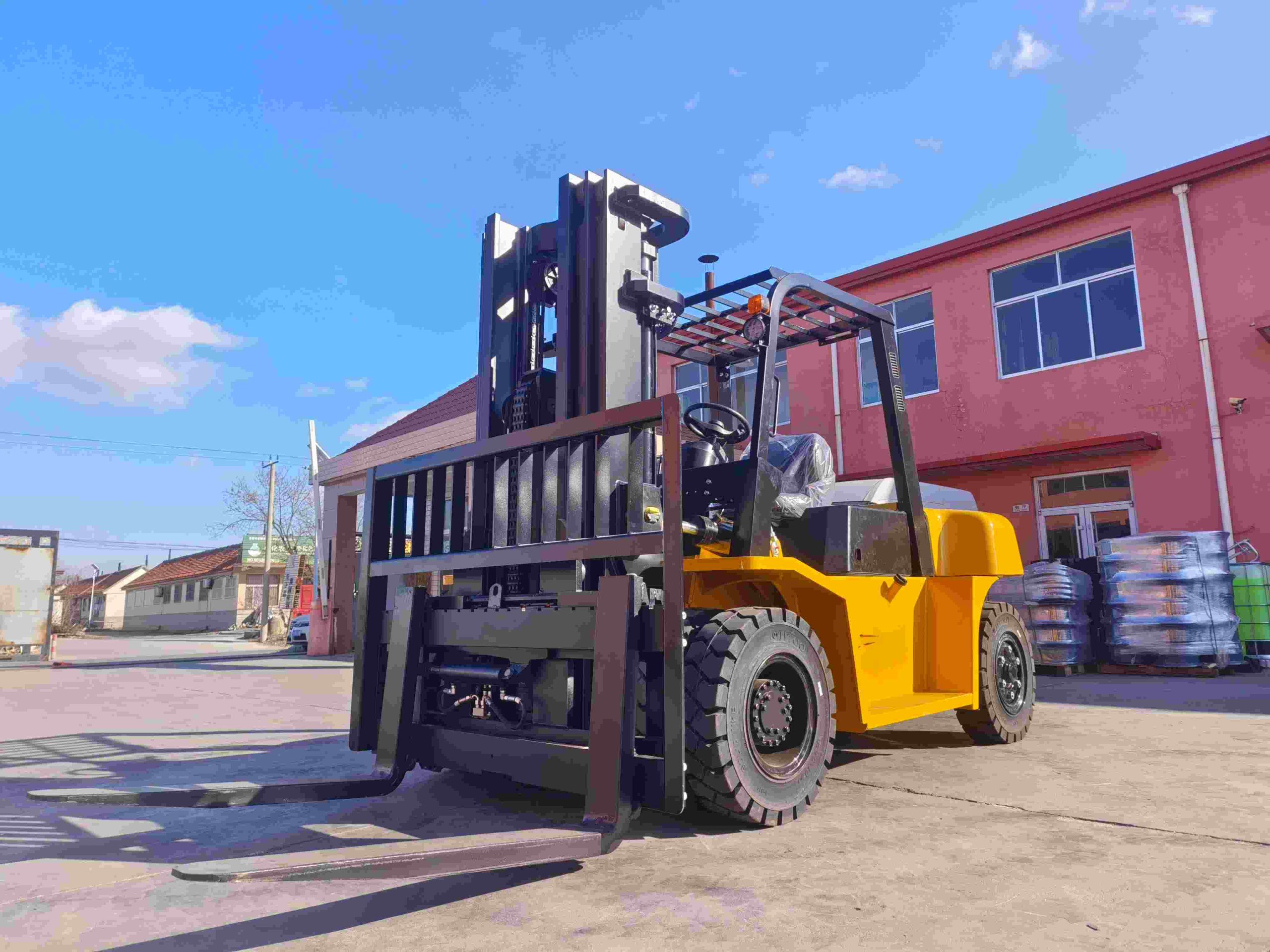

A two-ton electric forklift can be a practical warehouse machine only when its complete operating envelope fits the building. Rated capacity is important, but the truck must also pass through the lowest doorway, turn at aisle ends, approach pallets squarely, and stack without striking racking or overhead services. The CPD-20D electric forklift has a 2,000 kg rated load, a 500 mm load center, a 3,000 mm lifting height, and published dimensions that buyers can use for an initial site-fit review. This guide explains how to turn those figures into a warehouse measurement plan before requesting a final configuration.
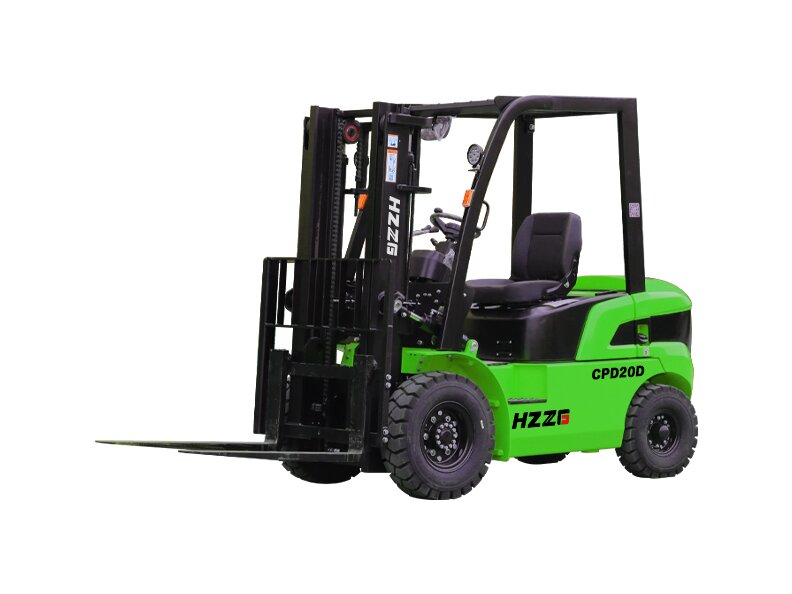
Which CPD-20D Dimensions Matter Before a Warehouse Trial?
A product specification is useful when each number is matched to a real restriction. Buyers should measure the complete travel path, not only the main storage aisle.
Will the Truck Pass Through Every Doorway?
The CPD-20D product page lists an overall width of 1,164 mm, a lowered mast height of 2,000 mm, and an overhead guard height of 2,150 mm. The narrowest clear width and lowest overhead point on the route must exceed the applicable machine dimension with a safe operating margin. Check dock doors, fire doors, cold-room entrances, strip curtains, ramps, ceiling beams, pipes, lights, and temporary obstructions. The selected mast can change the lowered and extended height, so the final configuration must be checked again before delivery.
How Does Truck Length Affect Access?
The listed truck length without forks is 2,500 mm, while the standard fork length is 1,070 mm. Fork projection, pallet depth, rear swing, and the approach path all affect maneuvering. Draw the complete truck-and-load envelope and verify loading-bay corners as well as rack aisles.
Does a 2,230 mm Stacking Aisle Mean Any 2.23 Meter Aisle Is Suitable?
No. The published minimum right-angle stacking width is a reference for the stated standard configuration. A real warehouse aisle also contains pallets, rack protection, columns, overhang, pedestrian clearances, and operating tolerance.
What Is the Difference Between Turning Radius and Aisle Width?
The CPD-20D lists a 2,190 mm turning radius and a 2,230 mm minimum right-angle stacking width. Turning radius describes the truck’s turning geometry, while stacking width relates to a defined maneuver. Neither number automatically proves that a loaded forklift can turn into a rack opening in a specific building. Pallet orientation, load length, fork length, and clearance from the nearest fixed obstruction must be included in the review.
How Should the Working Aisle Be Measured?
Measure clear distance between the nearest obstructions, including column guards, rack uprights, protruding pallets, curbs, staging lanes, and fire equipment. Map the longest pallet and its overhang. If space is close to the calculated requirement, conduct an on-site trial with representative loads.
Can the CPD-20D Safely Handle Every 2,000 kg Pallet?
The model’s rated capacity is a starting point, not a promise for every load shape and lift condition. Capacity must be reviewed together with load center and stacking height.
Why Does the 500 mm Load Center Matter?
The published 2,000 kg capacity is associated with a 500 mm load center. A deeper pallet, an unevenly distributed product, or a load that cannot sit against the fork face may move the center of gravity forward. That increases the load moment and can reduce permitted capacity. Provide the supplier with pallet dimensions, maximum weight, weight distribution, and fork-entry direction. For irregular loads, include a drawing showing the center of gravity.
How Do Lift Height and Attachments Change the Review?
The standard lifting height is listed as 3,000 mm. If the warehouse needs a taller mast, free lift, longer forks, a side shifter, or another attachment, the final residual capacity may differ. Attachment weight and forward projection also affect the working envelope. Request an approved load chart and confirm that the delivered data plate reflects the exact mast, forks, carriage, attachment, and battery configuration.
What Floor and Route Conditions Should Buyers Check?
Warehouse fit includes more than horizontal clearance. The floor and route must support stable travel with the combined weight of the truck and load.
Which Floor Details Affect Daily Operation?
Inspect floor capacity, flatness, cracks, joints, thresholds, dock plates, ramps, and slippery zones. The CPD-20D lists 115 mm ground clearance at the mast, so abrupt transitions and raised edges deserve attention. Ramp or dock-edge work must follow approved operating limits and site traffic rules.
How Should Pedestrians Be Included in the Layout?
Physical fit does not guarantee safe interaction with people. Define pedestrian routes, crossings, exclusion zones, speed limits, warning systems, and staging positions. Site risk assessment and local rules should determine separation requirements rather than minimum machine dimensions.
How Should Runtime and Charging Fit the Warehouse Layout?
The product page lists an operating time of approximately six to eight hours. Actual runtime depends on the work cycle, so the charger and parking location should be planned alongside the aisle study.
What Changes Real Operating Time?
Load weight, travel distance, lift frequency, acceleration, ramps, temperature, floor resistance, attachments, and idle time all affect energy use. Record completed pallet cycles and state of charge during a representative shift. The official electric forklift product range includes several capacity options, but each model still requires its own duty-cycle review rather than a category-wide runtime assumption.
Where Should the Charging Area Be Placed?
Choose a location that supports natural breaks without placing cables across traffic routes or reducing essential aisle width. Confirm voltage, phase, frequency, circuit capacity, connector requirements, ventilation, temperature limits, and site safety provisions for the selected battery and charger. The company’s earlier 2-ton electric forklift feature overview also provides background on battery and controller options, while the final order specification should govern the actual charging plan.
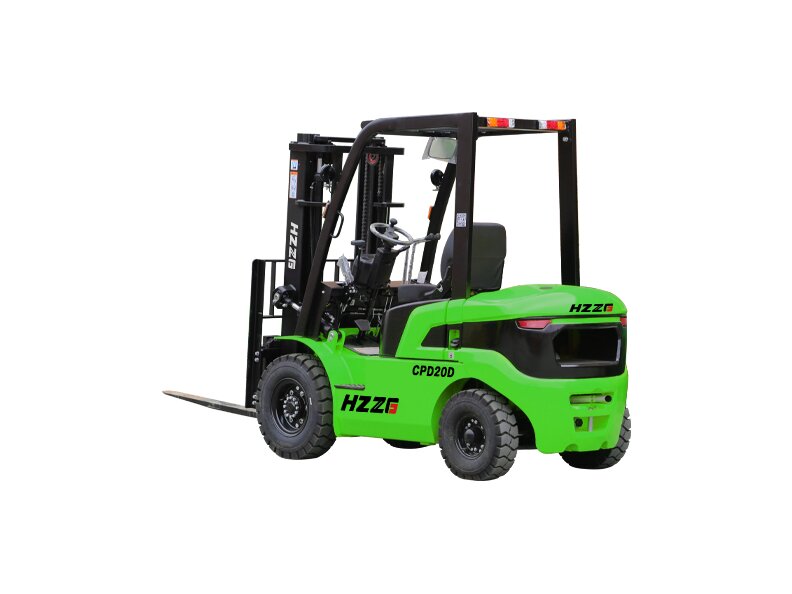
Why Is QINGDAO HEZHONG MACHINERY MANUFCTURING CO., LTD a Reliable Electric Forklift Supplier?
Warehouse configuration depends on accurate communication between the buyer and supplier.
QINGDAO HEZHONG MACHINERY MANUFCTURING CO., LTD manufactures electric, diesel, LPG, and rough-terrain forklifts as well as wheel loaders and attachments. CPD-20D buyers can provide warehouse drawings, pallet data, lift heights, route restrictions, shift details, and local electrical information so the proposed configuration can be checked against the intended work.
Conclusión
The CPD-20D should be selected from measured warehouse conditions, not from its two-ton label alone. Check the full doorway path, 1,164 mm truck width, mast and guard heights, 2,190 mm turning radius, and 2,230 mm reference stacking width against the real truck-and-load envelope. Then verify load center, lift height, floor conditions, pedestrian separation, battery duty cycle, and charging access. A scaled layout review followed by a representative site trial provides the strongest basis for approval.
Preguntas frecuentes
Is a 2,230 mm Aisle Always Wide Enough for the CPD-20D?
No. The published value is a reference for defined conditions. Actual space must account for pallet dimensions, fork length, rack protection, load overhang, fixed obstacles, operating clearance, and the final truck configuration.
Can the CPD-20D Lift 2,000 kg to Any Height?
Not automatically. Permitted capacity depends on load center, lift height, mast, forks, attachments, and the complete configuration. Use the approved load chart and delivered data plate.
What Measurements Should We Send for a Configuration Check?
Send pallet weights and dimensions, center-of-gravity information, lift height, rack and aisle measurements, doorway widths and heights, floor conditions, ramps, travel distance, daily cycles, charging windows, electrical supply, and required attachments.