



Modern Warehouses and the Shift to Efficient Lithium Battery Forklifts as Global Logistics Goes Green. Lithium battery carretillas elevadoras eléctricas are fast becoming the norm for warehouse logistics and modern material handling. Gone are the days of lead acid batteries and noisy, polluting diesel and petrol powered forklift trucks. With the emphasis on improving the efficiency of global warehousing and logistics, lithium battery electric forklifts are fast becoming the preferred choice for forward thinking companies wanting to reduce operating costs and increase productivity.
As the cost of labor increases, more stringent environmental regulations are implemented, and demand for uninterrupted multi-shift operation continues to rise, lithium-ion is becoming the preferred technology for the forklift batteries of the future. However, lithium battery forklifts are no longer considered the bleeding edge of technology. The real question is whether the increased performance and longer life of the lithium-ion forklifts will provide a suitable return on investment for warehouse managers, fleet operators, and industrial buyers. In this article we will outline the advantages, operating effects, and long-term value of the lithium-ion forklifts on the market today to aid businesses in their purchasing decisions.
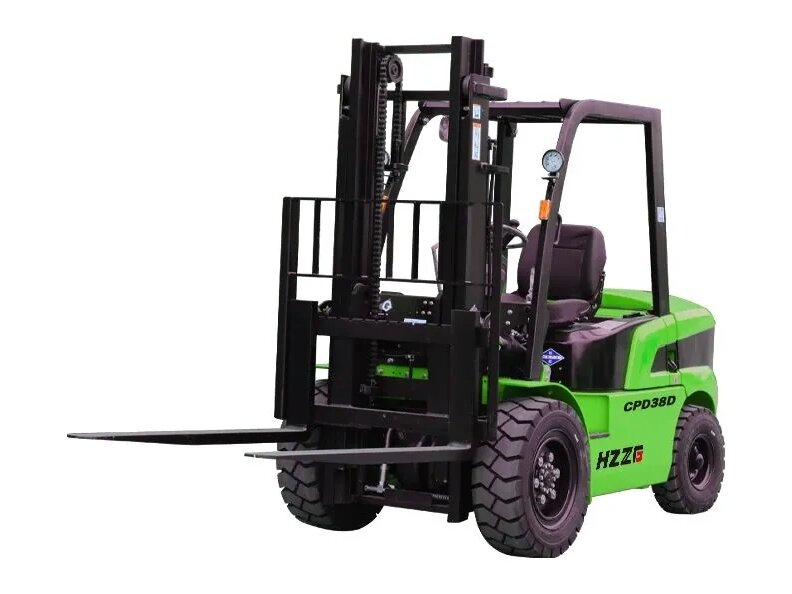
What Makes Lithium Battery Electric Forklifts Different from Traditional Forklifts?
Lithium battery electric forklifts are the latest innovation in material handling and are designed to be more efficient, reliable and environmentally friendly than traditional lead-acid forklifts or internal combustion forklifts. Their cutting-edge design incorporates the latest in electrochemical energy storage and sophisticated management systems, delivering superior performance to help improve productivity in a variety of warehousing and logistics applications.
Key Technological Differences
Lithium-ion batteries have greater energy density, and can be recharged faster than traditional lead-acid batteries. The elimination of replenishing water means that there is less need for maintenance and less downtime. The Intelligent Battery Management System (BMS) continuously monitors temperature, voltage, and current in real time to guarantee the maximum of safety and life time for the battery. By far the most electric forklifts are driven by batteries. The so-called accumulator is a corresponding battery. The function of the accumulator is to store the available but limited amount of electric energy and to use it expends it in the required area. The particularly high electrochemical efficiency of the lithium batteries of our forklifts allows them to operate with a constant level of performance even under high work loads.
Operational and Structural Variations
The new electric drive system provides for more smooth and better controllable acceleration due to constant torque. Due to the compact design of the lithium batteries a better weight distribution and visibility is achieved. Low noise and low vibration also in long running times makes for more comfort while operating. For reduction of vibration a noise reduction type cushion is used. It reduces the vibration by 20%. Sound insulation cotton is installed under the pedal. It reduces the noise by 5%. Ergonomic design enables comfortable work also in long-term. It minimizes work fatigue, increases operating space and work efficiency. Driver can work comfortably and safely and thus provides for more productive working.
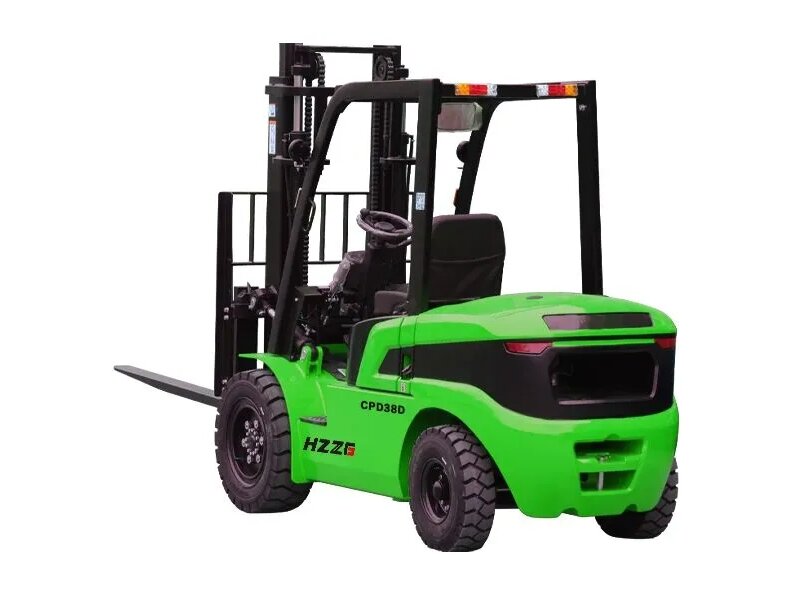
How Do Lithium Battery Forklifts Impact Operational Efficiency?
Efficiency is key to competitiveness. Our Lithium batteries for forklifts increase work productivity thanks to fast recharging times, consistent power supply and lowest possible down time for maintenance.
Charging Speed and Downtime Reduction
The new lithium-ion technology can be refueled during short breaks, thus allowing maximum usage of the equipment in between shifts. The fast heat dissipation in the battery allows for operation of a high performance device, even after intensive usage. More cooling space and thus faster heat dissipation is achieved by increasing the number of cooling holes by 30% in order to guarantee stable operation.
Energy Efficiency and Performance Stability
Lithium batteries hold a consistent voltage throughout the discharge of a Lithium battery. This is in contrast to lead-acid batteries which can experience power drops near the end of their charge cycle reducing the lifting capacity of the battery. Lithium batteries hold their charge well due to high energy conversion efficiency, which results in less electricity being used to operate the battery on an annual basis. The durable multi-way valve is designed to provide excellent stability and durability during the repetitive lifting process of the hydraulic unit.
Are Lithium Battery Forklifts Cost-Effective in the Long Run?
The initial investment cost for non-traditional stormwater management structures typically is higher than for traditional structures. However, the structures may offer long-term savings when compared on the basis of total cost of ownership, for example, by having lower maintenance requirements or a longer life.
Inversión inicial vs ahorro a largo plazo
Commercial-grade Lithium battery systems last longer than most alternatives – Typically up to 8–10 years or 3,000–4,000 charge cycles. Given the lower energy costs plus the fewer mechanical wear items than a lead-acid based system, the extra upfront cost is easily recouped over time. The big plus – very predictable performance over time and less chance of decline or catastrophic failure as a system ages.
Maintenance and Lifecycle Costs
Lithium batteries do not have acid spills or corrosion problems associated with lead acid batteries. This greatly reduces the need for maintenance work and improves workplace safety. Simple infrastructure is all that is required with no dedicated battery rooms or ventilation systems required for lithium batteries. A true maintenance free solution providing the highest level of comfort and operation with lowest possible maintenance costs. This is ideal for facilities that require long term reliability with minimum upkeep investment.
How Do Lithium Battery Forklifts Contribute to Environmental Sustainability?
Sustainability has become a key factor in many companies’ industrial procurement strategies. The aim is to reduce their carbon footprint while at the same time successfully managing their business.
Reduction in Carbon Emissions and Waste Generation
Electric forklifts are Zero Emission, which means they produce Zero Tailpipe Emissions helping to keep your workplace clean. In addition to Zero Emissions, electric forklifts also have lower energy usage per lift cycle than their diesel counterparts, resulting in less Greenhouse Gas Emissions. The use of recyclable materials in lithium cells also adheres to the principles of a Circular Economy, by not producing waste.
Compliance with Green Logistics Standards
Modern lithium forklift designs comply with international environmental certifications such as CE, RoHS, ISO9001, ISO16949, and ISO14001 standards—ensuring adherence to global sustainability benchmarks. These certifications facilitate corporate reporting on environmental performance through measurable energy efficiency metrics.
What Should Businesses Consider Before Investing in Lithium Battery Forklifts?
Before you transition to a full fleet or buy new units, you need to test for compatibility, the right workload, needed infrastructure and the correct supplier.
Assessing Operational Needs and Fleet Compatibility
When selecting the correct lift for your facility, it is crucial to establish whether the current shift pattern, load to be lifted, aisle width and degree of automation will be suitable for the new lift. Also whether it is possible to retrofit the current lead acid lift, check the voltage of the current lift against the new lift, obtain a professional assessment to confirm the lift can be converted safely and also to confirm that any work carried out will not affect the warranty.
Evaluating Supplier Reliability and After-Sales Support
Maximising uptime is a key consideration when selecting a manufacturer. A reliable supplier with comprehensive technical support will provide local service and rapidly respond to any issues that may arise. A supplier with local stock and a dedicated helpline for parts will also be able to assist. In addition, a supplier that provides diagnostics training ensures that operators are able to get the best from the equipment by using the best practices.
Why QINGDAO HEZHONG MACHINERY MANUFACTURING CO., LTD Is a Trusted Partner for Electric Forklifts?
QINGDAO HEZHONG MACHINERY MANUFACTURING CO., LTD. is a globally recognized high-quality producer of advanced all electric electric forklifts. These are equipped with lithium batteries and offer ample opportunities in today’s everchanging logistics environment.
Compromiso con la Calidad y la Innovación
Qingdao Hezhong Machinery Manufacturing Co., Ltd. is one of the leading Machinery manufacturers in China. Since 2007, the company has been in the field of construction machinery manufacturing and has engaged in international cooperation and sharing of advanced technologies. Hezhong Machinery is based in Pingdu, a town in the East Coast of Qingdao in China. The company operates from three large factories which spans over 50,000 square meters and is dedicated to Research and Development. The team of engineers in Hezhong specializes in producing high quality forklifts through precise assembly to ensure maximum durability in the toughest applications and also incorporates the latest lithium technology to provide the safest performance. An electric forklf for instance is a type of forklift that operates by electricity — this is the underlying principle of Hezhong’s CPD38D series of forklifts which are robust and designed for high efficiency warehouse operations.
Global Service Network and Customer Support
Our products are distributed in Europe, Africa, Central Asia, North America, Russia and South America and many other countries worldwide. Professional technical support is provided for all our customers all over the world after sales. We do not only sell goods, we also design and provide specialized products and solutions for various industries and applications, such as factories, warehouses, seaport and airports, and cold storage etc..
Conclusion: Evaluating the True Value of Lithium Battery Electric Forklifts
Adopting lithium battery electric forklifts aligns operational efficiency with sustainability objectives by reducing emissions while improving productivity metrics such as uptime utilization rates. Although initial investment levels may appear higher compared with conventional models powered by diesel or lead-acid cells, cumulative advantages—including lower maintenance expenditure, enhanced operator comfort from reduced vibration levels (vibration reduced by 20%), consistent power delivery throughout each charge cycle—and compliance with green logistics standards confirm their strategic value within modern industrial fleets seeking sustainable growth trajectories.
FAQs about Lithium Battery Electric Forklifts
1. How long does a lithium battery forklift typically last?
A well maintained unit is expected to last from 8 to 10 years, or from 3,000 to 4,000 charge / use cycles, depending on usage.
2. Can existing lead-acid forklift fleets be upgraded to lithium batteries?
Many devices can be retrofitted if the dimensions of the space match up with the specifications of the required electrical parts. Expert evaluation is however essential before undertaking any retrofitting.
3. What safety features are integrated into lithium battery forklifts?
Newer systems come equipped with intelligent BMS modules that are able to manage overcharge protection as well as thermal monitoring sensors to shut down in the event of an abnormal situation. Such systems enable operators to work safely 24/7 while also being able to protect their valuable equipment in high throughput logistics centers. Such centers are catered for by the wide range of high performance products offered by QINGDAO HEZHONG MACHINERY MANUFACTURING CO., LTD.


