



A 3.5-ton rough terrain forklift can operate on inclines. This is possible when the gradient, ground state, load placement, machine setup, and driving methods stay within safe limits. Big tires and high ground clearance help the machine. A tough drivetrain and a solid chassis also make this equipment great for building sites and farms. They work well in timber yards and dirt industrial zones too. Still, “rough terrain” does not mean the machine is safe on all steep hills. Drivers must look at the data plate and the gradeability rating. They also need to review the load chart, tires, brakes, and maker’s manual before starting any job.
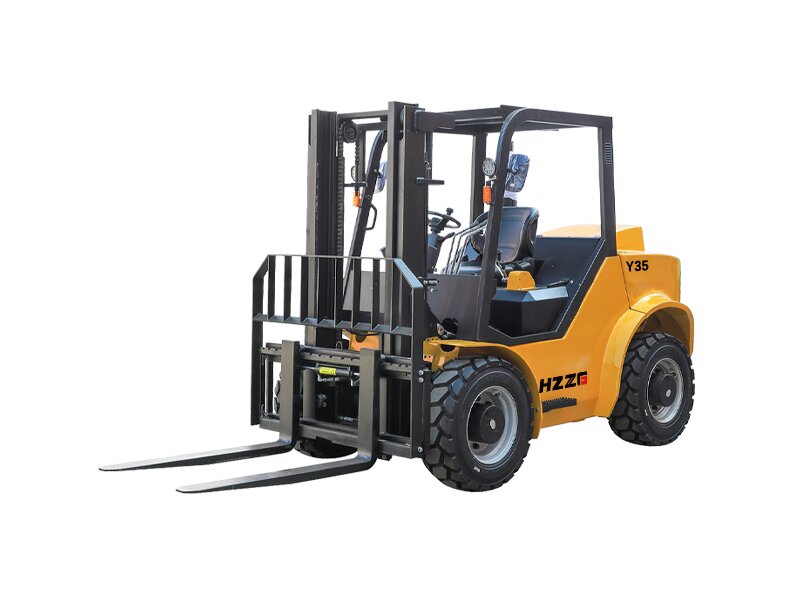
Can a 3.5-Ton Rough Terrain Forklift Climb a Slope?
Engine strength is just a single detail. Gradeability shows the sharpest hill a machine can go up under specific situations. However, this rating does not promise safe lifting, steering, or stopping.
What Does Gradeability Mean in Practice?
Makers normally show gradeability as a percentage. For example, a 20% grade means the land goes up 20 units across 100 flat units. It is definitely not a 20-degree angle. The printed number might apply to a loaded or empty vehicle. It often assumes dry earth, proper tires, slow movement, and straight driving. Certain official rough-terrain forklift data sheets display loaded gradeability by itself. Because of this, buyers must verify what the number actually means.
Mud, loose gravel, wet grass, deep ruts, and soft dirt can lower grip and braking power. A forklift might possess enough energy to move up a hill. Even so, it could lack proper balance or a safe stopping distance. OSHA tells drivers to avoid hills that go past the maker’s suggested limits.
How Does the Load Center Affect Slope Safety?
A 3.5-ton rating does not make every 3,500 kg load safe in all spots. The actual capacity connects to a specific load center. It also depends on the lift height, the mast type, and the attachment setup.
Why Can the Safe Capacity Become Lower?
The load center is the flat distance from the front of the forks to the item’s center of gravity. Load moment is the item’s weight multiplied by the load-center distance. If the center of gravity shifts forward, the tipping force gets stronger. OSHA points out that long or uneven loads often need a reduced weight limit. This remains true even if the item weighs less than the basic capacity.
Wood, metal pipes, large pallets, and odd-shaped items can move the center of gravity to the front or side. On a hill, gravity brings another tipping force into play. Drivers should keep the item centered and tied down. It must stay close to the fork carriage and very low during movement. Fork extensions, heavy clamps, or side shifters can lower the remaining lifting power. Therefore, the revised capacity plate must guide the work.
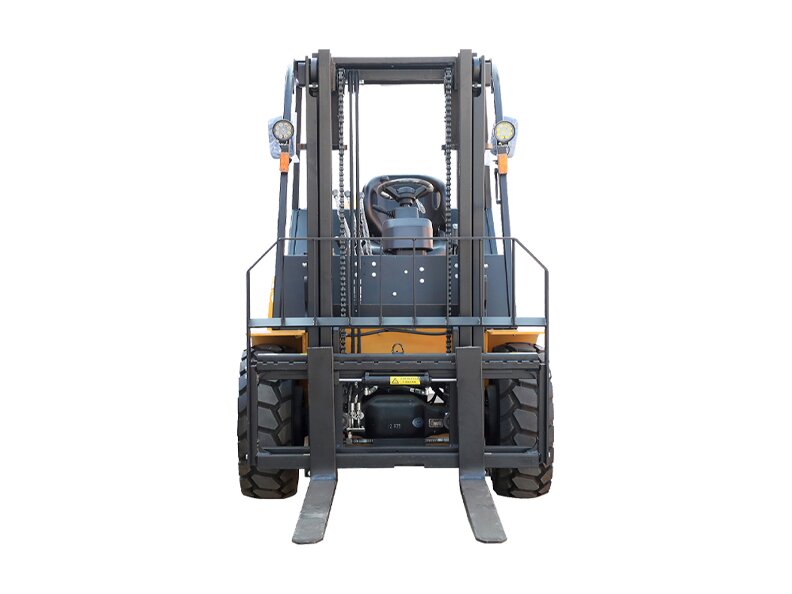
What Is the Safest Way to Travel on a Slope?
Driving on hills requires careful planning and steady movement. Workers should check the path first. They must measure the hill’s steepness. Also, they need to keep people walking and other cars away from the active area.
Which Direction Should the Forklift Travel?
When carrying an item, always keep the goods pointing up the hill. This usually means driving forward to go up. It means backing down the hill while looking toward the travel path. When the machine is empty, the forks must point down the hill. OSHA strongly warns drivers never to turn on a ramp or a slanted surface.
Drivers must use a slow speed and smooth gas pedal control. They should apply the brakes gently and keep the forks low. Avoid quick steering changes and angled driving. Do not drive across the side of a hill. Never lift the goods while the machine is moving. Use a skilled guide if the driver cannot see clearly. Stop the vehicle if the ground gets slick. Halt if the tires slide, the goods move, or the driver fails to keep a straight line.
How Can a Site Confirm That a Slope Is Acceptable?
Making this choice requires blending the machine’s printed limits with real job site details. An empty test drive can test tire grip and ground space. However, this test does not prove the path is totally safe with a heavy load.
What Should Be Checked Before Work?
Workers must verify the rated capacity and the load center. They also need to check the loaded gradeability, lift height, and attachment limits. Inspect the tires, brakes, steering parts, and safety alarms. Walk the path to look for sharp drop-offs, deep holes, and loose dirt. Watch out for water puddles, high obstacles, and people walking nearby.
Stop the job if the hill is steeper than the allowed limit. Halt if the dirt cannot hold the machine’s weight. Pause the work if the item’s weight or center of gravity is not clear. Do not continue if you must turn on the hill or if the brakes feel weak. Picking a different path might be better. Using a smaller load or a different lifting tool could also increase safety.
Why Choose QINGDAO HEZHONG MACHINERY MANUFCTURING CO.,LTD?
A trusted seller will pair the right forklift with the specific load and land type. They consider the hill steepness, lift height, and daily work hours. They do not just suggest a machine based only on its basic lifting limit.
A Reliable Rough Terrain Forklift Supplier
QINGDAO HEZHONG MACHINERY MANUFCTURING CO.,LTD offers diesel rough terrain forklifts. These machines work well for building tasks, farming, and wood moving. They also support mining, waste sorting, and many other outdoor jobs. The company focuses on tough machines and proper job matching. They provide custom designs, strict quality checks, and great support for global buyers after the sale.
When planning a 3.5-ton project, buyers need to share the item sizes and the required lift height. They must also tell the seller about the ground type, hill steepness, daily running hours, and needed tools. This information helps the seller suggest the best mast and drivetrain. It also ensures the right tires and capacity setup.
Conclusión
Safe driving demands straight movement and a slow pace. It requires low forks and proper item placement. Hard dirt, working brakes, and a skilled driver are also vital. Never view the 3.5-ton rating or the peak gradeability as an absolute green light. The data plate, load chart, user manual, and a careful site check must all agree before the work begins.
Preguntas frecuentes
1. Can a 3.5-ton rough terrain forklift carry 3.5 tons uphill?
This is only safe if the data plate and load chart allow that exact weight. The limit depends on the real load center, lift height, tool setup, and hill steepness. A lighter working weight is often needed.
2. Is four-wheel drive enough for safe slope work?
No, it is not. Four-wheel drive adds better tire grip. However, it cannot fix a hill that is too steep or dirt that is too soft. It also cannot make up for a long load center, bad brakes, or dangerous steering.
3. Can the forklift turn on a slope?
Drivers must avoid turning on any hill. They should only move straight up or straight down. All turning must happen on hard, flat land. If a path forces the machine to drive across a hill, workers must plan a different route before starting.


