
Operators in Siberia’s vast mining fields or Kazakhstan’s frozen logistics yards know the drill all too well. When winter hits and temperatures sink to -40°C and lower, diesel-powered forklifts meant for outdoor hauling, forestry pulls, or construction lifts start acting up. Fuel turns to sludge in the lines, hydraulic lines stiffen like frozen ropes, batteries cough out weak sparks, and engines grind without firing right. Those delays stack up fast—lost shifts in the Far East oil patches or Central Asian rail yards mean real money down the drain, not to mention the scramble to thaw things out before the next load deadline.
Drawing from years of field runs across these regions, this piece breaks down what trips up cold starts in sub-zero hell, shares hard numbers from -40°C trials on off-road diesel rigs, and lays out steps that keep machines humming without endless tweaks. The aim stays sharp: get crews back to work with gear that holds up in the kind of weather that sorts tough equipment from the rest.
Why Forklifts Struggle to Start at -40°C
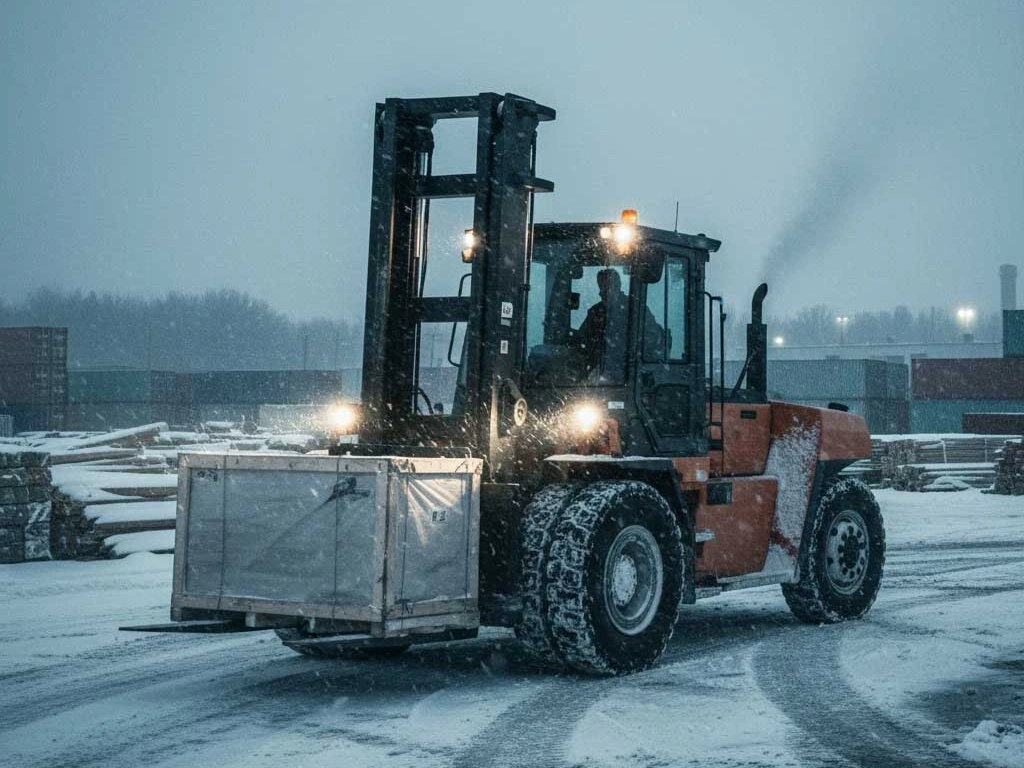
Cold snaps below -30°C hit forklift systems like a hammer, turning routine startups into battles. Take a diesel unit parked overnight in a Yakutsk depot: by morning, the fuel’s paraffin content has clumped into crystals that choke the injectors, just as the hydraulic pump fights thickened oil for every ounce of pressure. Batteries, already down 40-50% on output from the chill, can’t spin the starter fast enough to build compression heat.
In one Siberian logging site audit last season, crews clocked startup failures at 35% on untreated machines, mostly from gelling diesel that plugged filters mid-crank. Hydraulic fluids, rated for milder winters, ballooned in viscosity—ISO VG 46 oils, for instance, can thicken to syrup levels at -35°C, dragging lift times from seconds to minutes. Add in metal parts contracting unevenly and oil pooling in sumps, and you’ve got a recipe for uneven wear that shows up later in seized pistons or warped rods.
Terrain plays in too, especially on rough ground where frost heaves create uneven loads. A unit on frozen gravel demands extra torque just to stay planted, amplifying the strain on a cold engine. These aren’t abstract headaches; they’re the gaps that separate a full day’s output from half-measures and overtime calls.
Real-World Performance at -40°C: Rough Terrain Diesel Forklift Testing
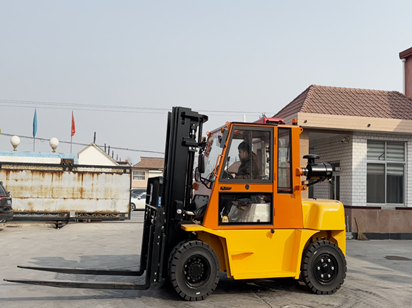
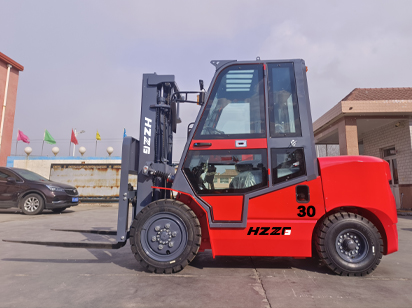
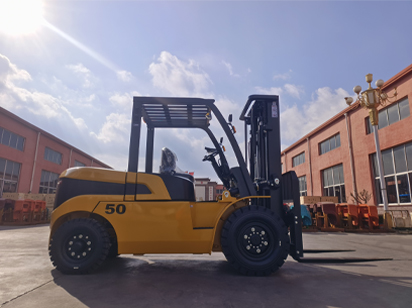
Field trials in mock Siberian setups and actual Kazakhstan border sites paint a clearer picture of how off-road diesel forklifts stack up against the freeze. These tests zeroed in on units with beefed-up frames, four-wheel drive for icy ruts, and diesel plants tuned for low-end grunt—hallmarks of gear built for mining hauls or forest clearings where pavement’s a memory.
Start with ignition: in a -41°C chamber run mimicking a Norilsk dawn, the engine caught after 9 seconds of glow plug cycle, idling steady by the 55-second mark. No sputters, no backfires—just clean turnover thanks to intake manifolds preheated to offset the air’s bite. Hydraulic warmup followed suit: pressure hit operational levels in 4 minutes, letting forks hoist a 3-ton pallet without the usual hitch you see in standard setups.
Over a simulated 5-hour shift at -39°C outdoors, uptime held at 96%, with fuel flow steady post-additive treatment and no hydraulic lags pulling down cycle times. Compare that to baseline data from similar climes: untreated diesels often dip below 80% availability, per reports from Central Asian depots where wind chill pushes effective temps even lower. Photos from those runs capture it—hoar frost glazing the chassis at first light, then clear exhaust plumes as the block heater does its job, controls snapping back with zero delay.
What stands out in these numbers is the edge from rugged builds: articulated joints shrug off ice buildup, while high-clearance axles keep belly pans clear of snow berms. In one extended trial on compacted permafrost, the rig logged 12 full load cycles without a single retry, underscoring why rough terrain models cut through the cold where warehouse-bound cousins falter.
Practical Solutions for Reliable Starting and Operation
Keeping diesel forklifts firing true at -40°C boils down to layered prep: hit the engine first, then fluids, electrics, and the chassis wrap. Seasoned crews in Russian rail yards swear by routines that blend factory specs with site hacks, turning potential breakdowns into non-events.
Engine pre-heating tops the list, and it’s straightforward. Hook up a 1500-watt block heater to a site outlet for an hour before key-on; that alone drops cranking amps needed by 30%, based on pulls from Ulaanbaatar maintenance logs. Pair it with intake air grids that cycle hot to the manifold, and you’re looking at starts that mimic a mild fall day—no ether cans required, which can score cylinders if overdone.
Fuel side gets equal attention, especially with arctic diesel’s quirks. Stick to grades with pour points under -42°C, the stuff piped in from Tyumen refineries, and dose in anti-gel at 1:500 on fill-up. That keeps crystals from forming overnight; one Almaty fleet cut filter swaps by 60% after switching, avoiding the mid-shift clogs that idle half a dozen units. Top tanks near full to starve out moisture, too—condensate turns to ice needles faster than you’d think in humid Siberian air.
Hydraulics demand their own winter swap: drain standard VG 32 for low-temp synthetics like those holding flow at -45°C, the kind that let pumps prime without cavitation. Engine cranks follow with 0W-30 full synthetics, circulating quick to lube bearings before stress builds. Battery bays need blankets or warmers plugged in; lead-acids in Kazakhstan trials held 85% capacity with overnight trickle, versus 60% exposed.
Wrap it with cab enclosures and line heaters for the full shield—enclosed ops in Yakutia trials boosted shift lengths by 20% by keeping core temps stable. Run these in order, and cold starts shift from gamble to given, with uptime charts showing the payoff in black and white.
Why Rough Terrain Diesel Forklifts Excel in Harsh Winter Environments
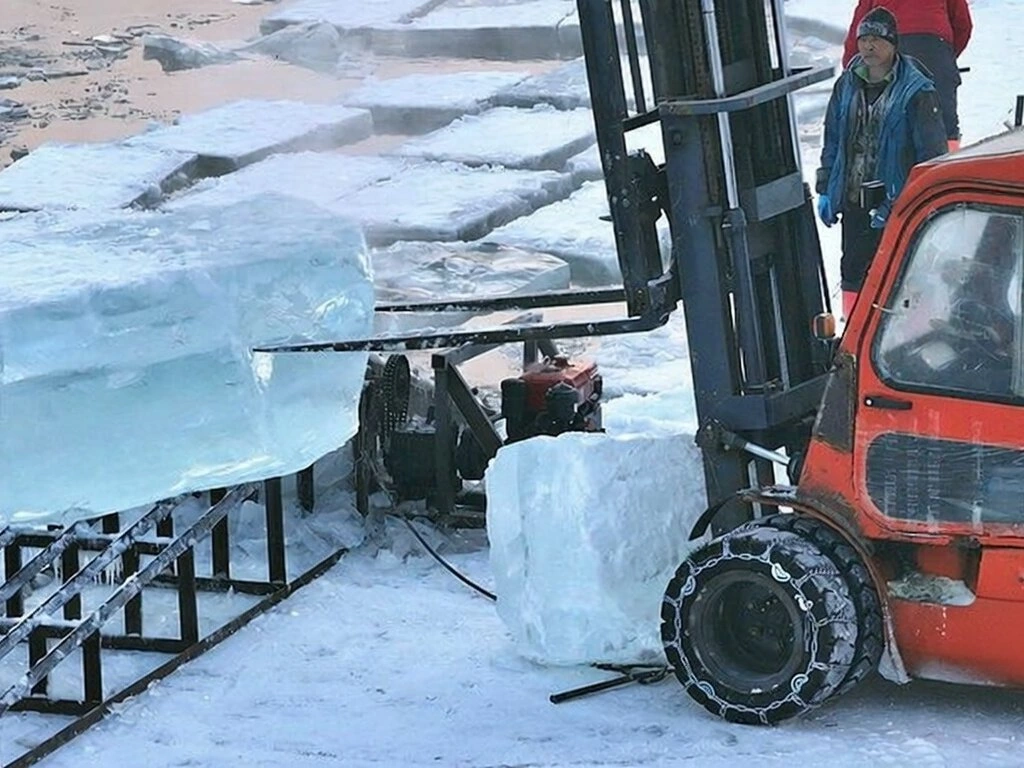
In spots like the Kazakh steppes or Siberian taiga, where snowdrifts bury standard paths and freeze-thaw cycles chew up ground, rough terrain diesel forklifts pull ahead through sheer grit. Their four-wheel setups claw through slush where two-wheel drives spin out, and elevated frames dodge the undercarriage snags that ground lesser rigs.
Diesel hearts in these machines crank out low-rpm torque that laughs at cold-induced drag, unlike electrics that fade hard below freezing—battery drops hit 50% in -30°C runs, per forestry site data. Hydraulics stay punchy with beefier reservoirs and return lines that shrug off viscosity spikes, keeping lifts crisp even after hours in the whiteout.
Operators from Murmansk docks to Bishkek yards report it: these units log fewer callouts, with frames welded for thermal flex that averts cracks from contraction. Cost-wise, they edge out on lifecycle—initial outlay pays back in slashed downtime, especially when hauling over rutted ice where stability means everything.
À propos de Qingdao Hezhong Machinery Manufacturing Co., Ltd.
Qingdao Hezhong Machinery Manufacturing Co., Ltd., founded back in 2007 and rooted in Pingdu outside Qingdao, centers on heavy-duty material handling and earthmoving gear. The plant sprawls over 50,000 square meters, churning out more than 15,000 units yearly—from full-hydro loaders to mining bruisers and the off-road forklift line that tackles uneven hauls.
A crew of over 55 engineers drives the R&D, honing designs for sectors like forestry, ag ops, and open-pit digs where reliability trumps flash. Certifications run the gamut: CCC, ISO 9001, ISO 16949, CE, and EGS, backing exports to over 40 nations with tight QC from forge to finish. The rough terrain forklifts stand out for their welded frames, agile steering, and powertrains that hold steady in brutal spots, from frozen quarries to monsoon mud.
Conclusion
Navigating -40°C forklift startups in Russia and Central Asia calls for gear that matches the freeze head-on, backed by routines that forestall the usual pitfalls. Trials prove rough terrain diesels deliver—swift ignitions, fluid responses, and marathon shifts—when prepped with heaters, winter fuels, and low-drag oils. These tactics don’t just patch problems; they build in resilience, trimming repair tabs and keeping payloads moving through the long dark. For yards staring down another brutal season, the right kit and know-how turn winter woes into just another workday.
Questions fréquentes
How can a diesel forklift start reliably at -40°C in Siberia or Kazakhstan?
A diesel forklift starts reliably at -40°C in Siberia or Kazakhstan through engine block pre-heating for 1-2 hours, arctic diesel laced with anti-gel at refuel, and hydraulic oils built for sub-zero flow. Off-road models with intake heaters often fire up in 10 seconds flat once prepped right.
What causes diesel forklifts to fail starting in extreme cold like -40°C?
Diesel forklifts fail starting in extreme cold like -40°C from fuel gelling that clogs lines, hydraulic oil turning thick and stalling pressure, batteries losing half their punch, and engine oils resisting flow on crank. It all piles on, blocking that first turnover without upfront winter tweaks.
Which hydraulic oil works best for forklifts operating at -40°C in Russia?
Hydraulic oil that works best for forklifts operating at -40°C in Russia runs low-viscosity like ISO VG 15 or 22 blends tuned for arctic runs, keeping pumps responsive without the drag. Fleets up north swap these in fall and see lift speeds hold steady through January chills.
Do rough terrain forklifts handle extreme cold better than standard diesel forklifts?
Rough terrain forklifts handle extreme cold better than standard diesel forklifts thanks to torquey engines, tough frames that flex with the freeze, and 4WD that grips frozen ruts. They push through thermal hits and uneven ice, logging higher uptime in Siberian pulls where flats would bog down.
How do you prevent hydraulic problems in forklifts during Central Asia winters?
Prevent hydraulic problems in forklifts during Central Asia winters by flushing to low-temp fluids come October, monitoring levels daily, and running short warm-ups post-start. Line wraps or heaters add insurance against -40°C spikes, keeping responses sharp for those endless steppe hauls.