
Farms handle diverse operations these days, from shifting feed stocks to managing manure piles and organizing hay stacks, all requiring machinery that holds up under constant demands. Finding the right wheel loader for the farm means evaluating how well it fits specific workflows, balancing immediate capabilities against ongoing reliability and expenses. Market figures indicate the wheel loader sector hit around USD 15.5 billion last year, fueled by growing needs in agriculture for adaptable handling solutions. This breakdown walks through essential steps, delivering a hands-on checklist that guides farm managers toward choices that enhance output while keeping overhead in check.
Understand Your Farm Needs: The Starting Point in Wheel Loader Selection
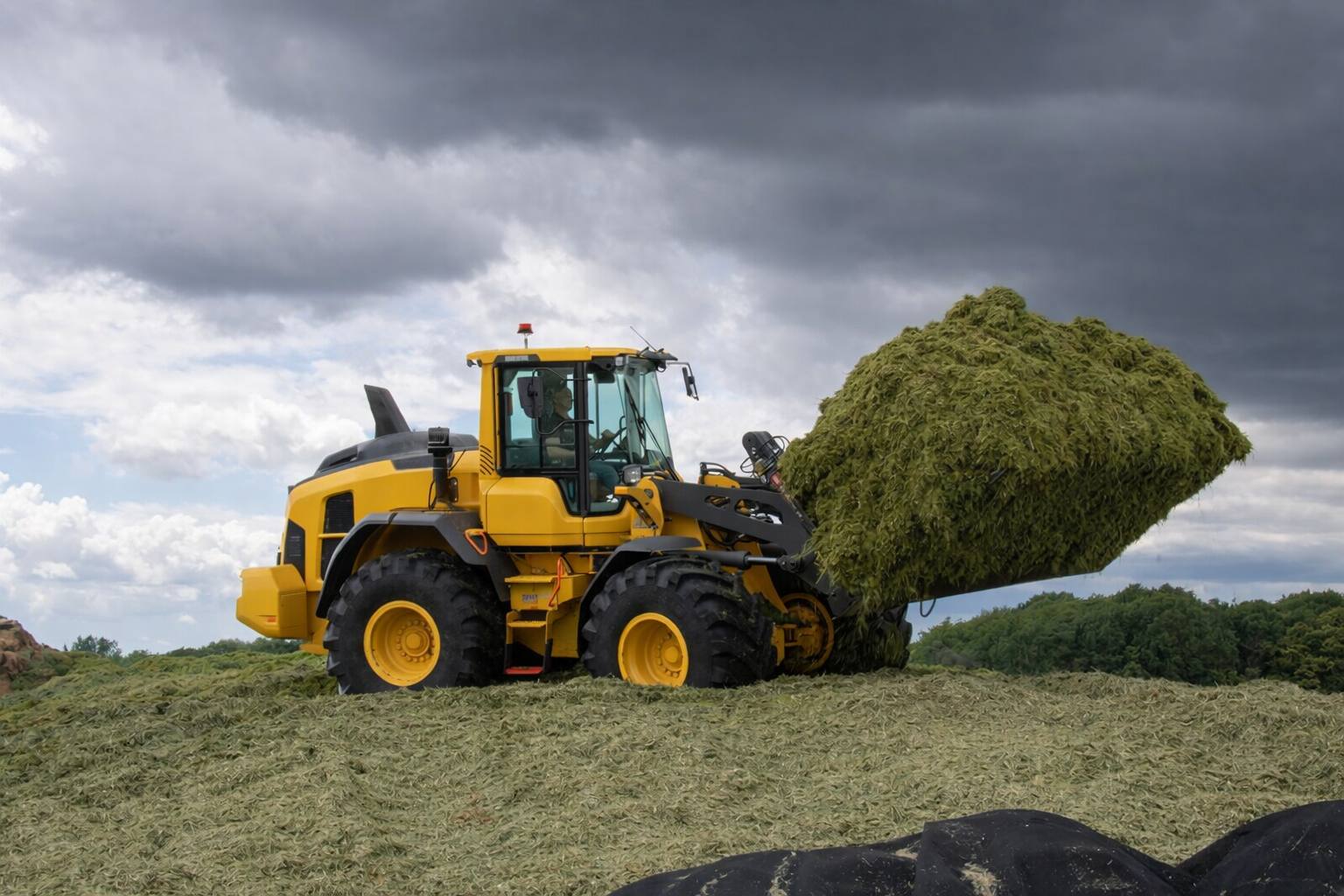
Operations vary across farms, influenced by acreage, crop varieties, animal numbers, and ground conditions. Before examining particular models or options, map out routine activities to identify exactly what the machine must accomplish. A livestock setup, for example, often demands swift distribution of silage over irregular surfaces inside sheds, whereas a crop-focused property might emphasize rapid transfer of harvested produce into transport vehicles amid narrow time frames. Begin by outlining duties such as bulk material transfer, debris removal, stacking operations, and nutrient transport—these shape the equipment’s primary functions.
Factor in the extent of activities. Properties below 500 acres typically see advantages in smaller wheel loaders rated under 3 tons, which navigate confined zones without overly compressing the earth. Expansive holdings, on the other hand, benefit from units capable of repeated heavy hauls, minimizing trips and conserving hours. Landscape elements matter significantly; sloped or saturated soils necessitate equipment with enhanced grip and balance to sidestep slides that disrupt schedules or trigger mishaps.
For a practical start, track activities across several days: record how often tasks occur, quantities involved, and any holdups from existing gear. This uncovers trends, like requiring at least a 1-cubic-yard scoop for effective waste management in animal facilities. Insights from extension programs reveal that ill-suited machinery can diminish performance by as much as 20 percent, escalating energy consumption and idle periods. Matching the wheel loader to these specifics helps avoid excess spending or inadequate results, laying groundwork for stronger yields.
Key Specifications to Check: Load Capacity and Stability for Farm Tasks
Handling capacity forms a fundamental aspect in assessing wheel loaders for rural applications, directly affecting volume shifted per cycle. Determine necessary strength from standard payloads—dry forage around 800 pounds per cubic yard, saturated compost nearer 1,200 pounds. Apply a straightforward calculation: tipping threshold equals density multiplied by volume, adjusted by a 1.2 buffer for irregular loads. Mid-scale operations generally target units managing 2 to 3 tons, confirming they cope with loaded scoops minus overturn hazards during elevations.
Balance connects tightly here, particularly across properties with inclines or yielding substrates. Seek configurations featuring lowered mass centers and broad stances, which curb oscillations on bumpy routes. Pivot-based direction control bolsters this, enabling sharper maneuvers without sacrificing steadiness, suited to restricted spots like feeding areas. Real-world use demonstrates that reinforced structures paired with fluid systems maintaining uniform distribution lessen incident potentials, as operators describe reduced close calls over varied landscapes.
Evaluate these traits under actual circumstances where feasible. Secure a short-term unit and test with site-specific substances to measure effectiveness. Field knowledge highlights that dependable loaders endure longer and ease strain on handlers, resulting in fewer slips through extended shifts. Addressing instability early circumvents expensive fixes later, rendering this evaluation vital for enduring property oversight.
Attachment Compatibility: Expanding Functionality for Diverse Farm Uses
Wheel loaders excel in rural settings via their capacity to interchange tools, converting a single unit into a versatile asset for multiple roles. Fit ensures smooth connections, so confirm rapid-latch mechanisms permitting switches in seconds sans additional implements. Typical rural add-ons encompass scoops for grain shifts, clamps for bale or fodder management, and prongs for stacked supplies—each demands secure mounting to prevent dislodges or harm.
Scrutinize hydraulic support for these extensions. Delivery rates need alignment with tool requirements; a clamp, for instance, relies on consistent force to secure without damaging contents. Properties managing assorted yields gain from flexible arrangements, allowing one loader to transition from ground preparation via tillers to seasonal clearing. Such flexibility diminishes requirements for extra units, curbing storage demands and upkeep outlays.
During evaluations, catalog essential add-ons and verify against loader details. Discrepancies frequently breed aggravation, with handlers contending mismatched elements. Approaches include selecting broad-fit latches, expanding choices absent modifications. Operations adopting this method note savings nearing 15 percent in asset allocations, illustrating that deliberate compatibility decisions yield gains in throughput and adaptability.
Operator Visibility and Comfort: Prioritizing Safety in Farm Environments
Unobstructed views from the enclosure rank high on active properties, where barriers like stock or machinery appear unexpectedly. Enclosure layouts with expansive glazing and slim supports minimize obscured areas, enabling quick threat detection amid movements. Raised operator positions assist further, offering broad perspectives over cargo zones and forward paths, particularly beneficial when reversing with maximum loads.
Ease factors, including tunable seating and temperature regulation, maintain concentration over prolonged sessions. Shock-absorbing setups mitigate bumps from irregular surfaces, lessening weariness that might prompt oversights. In particulate-heavy scenarios like crop processing, sealed compartments with filtration sustain cleanliness, bolstering wellness across durations.
Assess these attributes by replicating site conditions in trials—traverse common grounds and execute duties to sense variances. Safeguarding begins at this stage: superior sightlines diminish occurrences, with analyses indicating up to 25 percent drops in events for enhanced enclosures. This emphasis protects personnel and curtails interruptions from harms, solidifying the loader’s contribution to fluid processes.
Maintenance Ease and Total Ownership Costs: Long-Term Considerations for Farms
Wheel loaders require consistent servicing to remain operational, thus favor designs with straightforward access zones. Components like sieves, lubricants, and drives ought to permit rapid inspections minus breakdowns, trimming time on standard procedures. Monitoring systems that oversee mechanics from afar signal problems prior to escalation, aligning with properties where halts affect nourishment timelines or collection preparations.
Account for comprehensive possession expenses past acquisition: incorporate fuel economy, component sourcing, and residual worth. Optimized drives could reduce consumption by 10 percent on routine paths, accumulating through cycles. Support infrastructures count as well; nearby providers guarantee prompt restorations, essential amid high-demand phases.
Planning instruments encompass projections over half a decade: yearly outlays sum energy plus servicing plus value loss. Properties employing this tactic commonly pick units with sectional parts, simplifying enhancements. Such planning averts financial shocks, guaranteeing the outlay fosters expansion instead of depleting funds.
Incorporating 2026 Trends: Future-Proofing Your Farm Wheel Loader Choice
With rural practices advancing, wheel loaders integrate developments such as combined drives merging traditional fuels with electrics for diminished outputs and hushed performance—advantageous close to herds. Mechanized components, like location-based guidance, optimize repeated actions such as site transfers, heightening accuracy.
Battery-driven variants build momentum for enclosed applications, eliminating vapors in structures while supplying power for substantial elevations. Inspect for adaptable programming that conforms to emerging standards or innovations, prolonging utility.
Align progressions to property objectives: a setup pursuing eco-balance could emphasize reduced-output alternatives, syncing with incentives. This proactive stance circumvents outdatedness, with estimates projecting 30 percent expansion in intelligent assets by decade’s end. Merging these sustains competitiveness in properties.
Budgeting and Financing: Practical Tips in Your Buyer’s Checklist
Establish feasible allocations by referencing comparable properties—smaller loaders frequently span $50,000 to $100,000, varying with inclusions. Encompass extensions and guarantees in sums for precision.
Funding avenues like rentals distribute burdens, retaining liquidity for activities. Weigh terms and figures, preferring adaptable closures.
Return assessments aid: enter activity volumes to gauge labor and duration reductions. This validates expenditures, confirming the loader integrates with fiscal strategies minus pressure.
Real Farm Case Studies and Top Recommendations
Across a central U.S. dairy spread covering 300 acres, adopting a comprehensive hydraulic wheel loader refined nutrient distribution. The unit’s firmness tackled damp settings, slashing transfer durations by 25 percent and curbing overflows. Handlers observed heightened sightlines, averting impacts in packed facilities.
A further instance from a western vegetable site entailed tools for strip cultivation. The loader’s swift connectors facilitated fluid changes between scoops and prongs, elevating daily yields amid gathering periods. Service records indicated scarcer failures owing to sturdy fluids, conserving on corrections.
Suggestions concentrate on variants adapted for rural use: those rated 2-3 tons, with comprehensive traction, and adaptable pressures perform in blended duties. Elements like sealed compartments and optimized drives tackle frequent hurdles, providing worth through phases.
Final Buyer’s Checklist: Essential Steps for Farm Wheel Loader Selection
Assemble a thorough inventory spanning all facets: initiate with property requirements review, then affirm handling strength via weight computations. Verify tool fit with conventional connectors, and trial sightlines in demonstrations. Examine servicing reach and compute possession outlays across five years. Blend advancements like combinations if pertinent, and synchronize with allocations via funding contrasts. Draw from instances for tangible understandings.
This methodical path streamlines selections, converting possible confusion into assured resolutions.
À propos de Qingdao Hezhong Machinery Manufacturing Co., Ltd.
Qingdao Hezhong Machinery Manufacturing Co., Ltd. emerges as a key player in China’s machinery sector, leveraging global partnerships and tech exchanges since starting operations in 2007. Based in Pingdu within Qingdao, the firm occupies over 50,000 square meters divided into three primary facilities for innovation, development, and assembly. Employing more than 400 staff, with 55 specialists driving advancements in building equipment, it achieves yearly output surpassing 15,000 compact wheel loaders and lift trucks.
The range highlights loaders below 3 tons, designed for rural, woodland, and husbandry sectors. Variants encompass fuel-based, vapor, battery, and gas-driven models, all integrable with assorted tools for varied settings. Outputs comply with worldwide benchmarks, possessing accreditations like CCC, ISO 9001, ISO 16949, CE, and EGS. Shipments extend to Europe, Africa, Central Asia, North America, Russia, South America, and additional regions, backed by tailoring options and committed expertise and support groups focused on superior provision.
Conclusion
Selecting an appropriate wheel loader elevates rural workflows, amplifying throughput while managing expenditures. Adhering to this inventory—from requirement appraisals to financial planning—positions setups for achievement amid shifting requirements. Outcomes include machinery that blends effortlessly, underpinning lasting progress.
Questions fréquentes
What should I look for in a wheel loader for dairy farm feed handling?
For dairy setups, emphasize units with robust fluid delivery for clamps and scoops, guaranteeing even nutrient spread minus blockages. Firmness on slippery bases averts overturns, and sealed compartments with ventilation manage particulates. Determine strength from daily volumes shifted; undergauging prompts additional runs, boosting energy expenses. Safeguards involve routine fluid inspections to evade drips amid intense distribution.
How do I determine the right load capacity for my grain farm wheel loader?
Commence with substance masses—crops at 750 pounds per cubic yard—and scale by scoop size, incorporating a buffer. For average grain sites, 2-3 ton ratings handle vehicle fills adequately. Conduct on-property trials for validation; excess burdens accelerate deterioration. Remedies encompass strengthening chassis for regular substantial elevations, staving off halts during collection peaks.
Why does attachment compatibility matter for mixed crop and livestock farms?
Blended properties manage varied roles, so mismatched tools squander moments on exchanges. Choose swift-latch setups accommodating prongs, scoops, and drills. This breadth lessens asset demands, conserving area and funds. Should problems surface, such as insecure holds leading to falls, install broad adapters as remedies, assuring fluid transitions between planting and herd maintenance.
How can I reduce maintenance costs on a farm wheel loader?
Select layouts with direct entry for sieves and lubricants, shortening workshop durations. Tracking setups monitor operations, highlighting concerns promptly. For rural uses, timetable per usage—every 250 hours for lubricant swaps—deterring severe lapses. Overall expenditures decline with streamlined component acquisition; properties document 15-20 percent reductions via forward-thinking patterns.
What 2026 trends should influence my wheel loader choice for sustainable farming?
Examine combinations lowering discharges by 20-30 percent, matching green-oriented sites. Location tech aids exact placement, trimming discards. For eco-focus, battery variants fit enclosed duties, dodging vapors. Select per property aims; where aids apply, these directions yield enduring economies and adherence.