
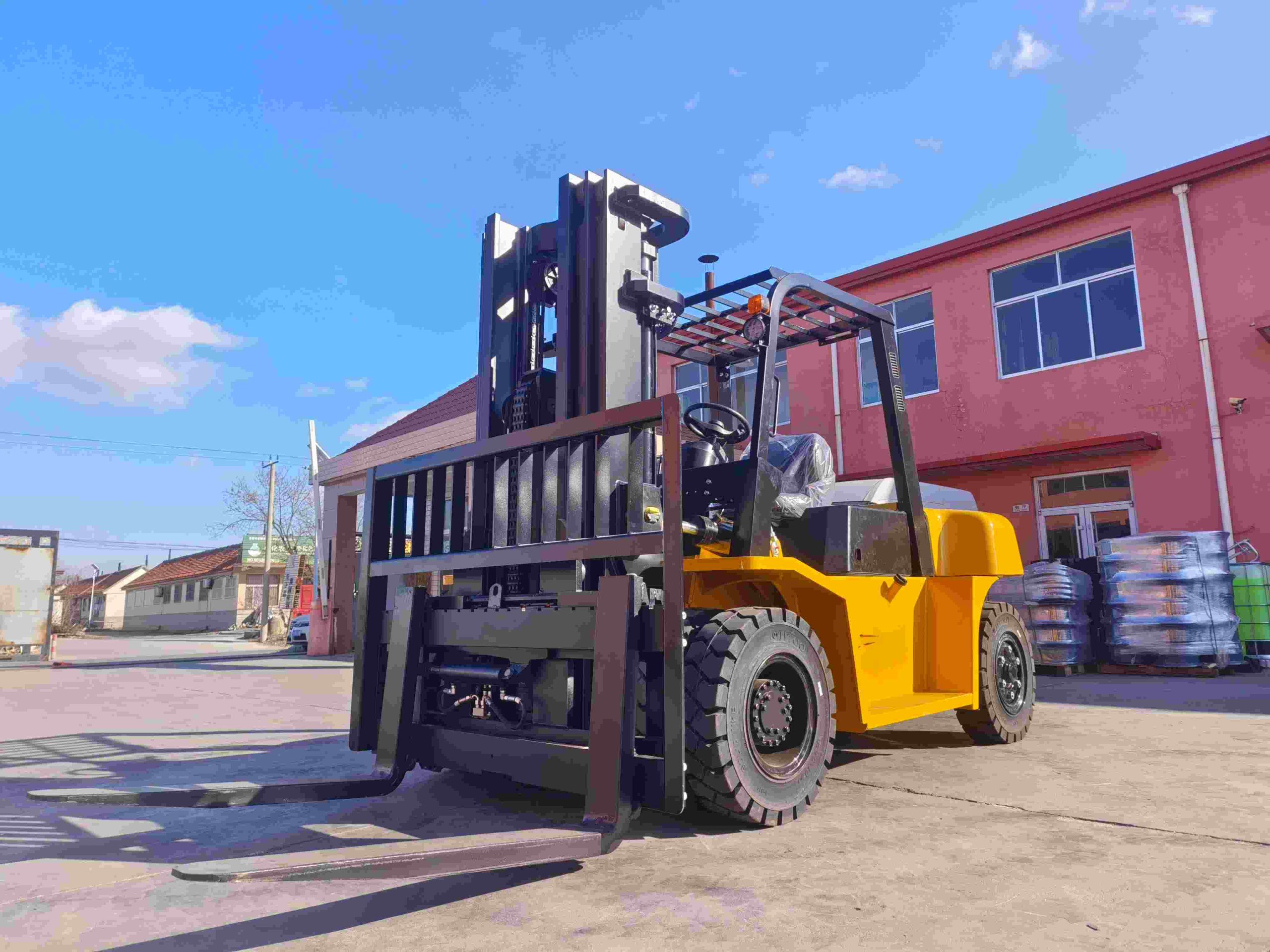
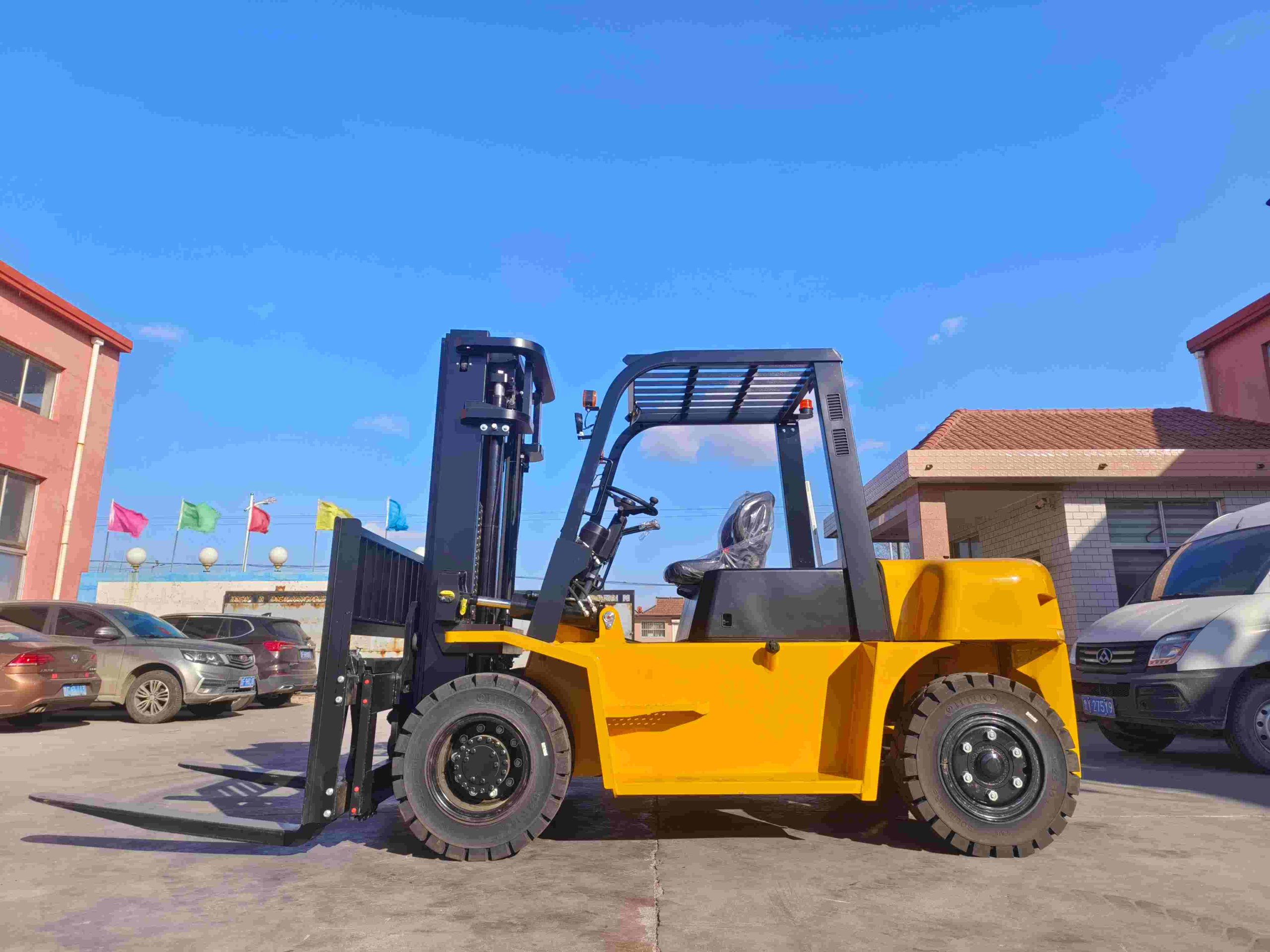
A seven-ton forklift is often selected for steel bundles, molds, machinery, stone, and other dense industrial cargo. Yet the weight printed on a packing list does not tell a buyer whether a truck can handle the load safely. Cargo depth, an offset center of gravity, fork length, lift height, and attachments all change the load moment. The CPCD-70 diesel forklift is positioned for demanding work in warehouses, manufacturing plants, construction sites, and logistics centers. Before ordering this heavy forklift truck, buyers should translate every recurring load into a clear technical brief and obtain confirmation for the complete configuration.
Why Is a Seven-Ton Rating Only the Starting Point?
Rated capacity provides a useful class label, but it applies under defined test conditions. Real cargo rarely matches every assumption behind that rating, so procurement teams must compare the nameplate condition with the actual job.
How Does Load Center Change the Required Capacity?
The load center is the horizontal distance from the fork face to the load’s center of gravity. A deep crate or a load positioned away from the fork face produces greater forward leverage than a compact load of the same weight. As this distance grows, the forklift may have less residual capacity available. Buyers should provide cargo length, width, height, weight distribution, and the proposed fork-entry direction instead of reporting weight alone.
Why Are Offset Loads More Difficult?
Machinery, coils, fabricated assemblies, and stone products may have a center of gravity that is not located at the geometric center. An offset can create both forward and sideways forces. Guessing from the outer dimensions is not enough. Mark the verified center of gravity on the drawing or packaging and explain whether the load can shift during travel. The supplier can then assess fork spacing, carriage width, attachment needs, and the approved operating envelope.
What Information Should Be Included in a Heavy-Load Review?
A useful review combines cargo data, lift requirements, and site conditions. This allows the supplier to assess the machine as a complete handling system rather than as an isolated capacity number.
Which Cargo Measurements Matter Most?
Record the maximum and typical weight, overall dimensions, center-of-gravity location, support points, fork pockets, and packaging strength. State whether the load is rigid, flexible, liquid-filled, or capable of rolling. Long steel or timber bundles may need wider fork spacing or longer forks, while round loads require an approved restraint method. Include photographs and engineering drawings whenever the cargo is unusual.
Which Lift and Route Details Must Be Verified?
State the pickup height, maximum placement height, required free lift, doorway height, aisle width, turning areas, floor condition, slopes, and travel distance. A tall mast, long forks, or an attachment can alter stability and maneuvering clearance. The final capacity must be confirmed at the highest required lift point, not only near ground level. Route checks should also cover floor loading, overhead obstacles, pedestrian zones, and safe stopping space.
How Should Forks and Attachments Be Selected?
The load-contact equipment is part of the capacity calculation. It should be chosen for the actual load and reflected on the final data plate.
When Are Longer Forks Necessary?
Forks should support the load adequately without creating avoidable projection or leverage. Extra-long forks may be necessary for deep crates, but they add weight and can move the effective load center forward. They also increase the space required to turn. Buyers should specify fork length, section, spacing range, and load-entry direction, then request written confirmation that the proposed forks suit the intended cargo.
Can a Fork Positioner or Side Shifter Affect Capacity?
Attachments can improve positioning and reduce manual adjustments, but they add their own mass and may move the load farther forward. A fork positioner is useful when load widths change frequently, while a side shifter can help final placement. Neither should be treated as a free addition. The supplier must calculate the approved residual capacity with the exact attachment, mast, forks, and carriage installed.
How Can Buyers Compare a Seven-Ton Diesel Forklift with Other Options?
A seven-ton machine should be selected because it fits the recurring workflow, not simply because a larger truck appears safer.
When Might a Smaller Forklift Be More Efficient?
If most loads are far below seven tons and only one rare item is heavier, renting specialist equipment for that exceptional lift may be more economical. A smaller forklift can use less space and may reduce acquisition and operating costs. Compare the full load profile, frequency, route, and downtime risk before choosing a permanently oversized truck.
When Does the CPCD-70 Make Practical Sense?
The CPCD-70 is a stronger fit when dense loads repeatedly exceed the range of medium diesel forklift trucks and the site supports a larger counterbalance machine. Typical settings include heavy manufacturing, construction-material yards, logistics centers, and outdoor industrial handling. Buyers should also compare fuel, planned maintenance, tire wear, and utilization. HZZG’s diesel forklift TCO guide provides a framework for evaluating costs beyond the purchase price.
Why Is QINGDAO HEZHONG MACHINERY MANUFCTURING CO., LTD a Reliable Heavy Forklift Supplier?
Heavy-load projects need direct technical communication because the correct configuration depends on cargo geometry and site constraints.
QINGDAO HEZHONG MACHINERY MANUFCTURING CO., LTD manufactures forklifts, wheel loaders, and attachments at its Qingdao production base. Buyers can send load drawings, center-of-gravity data, route measurements, mast requirements, and attachment details for configuration review. This process helps convert a broad request for a seven-ton forklift into a machine specification tied to the actual work.
Conclusion: How Should a CPCD-70 Purchase Be Approved?
Approve the purchase only after the heaviest recurring load has been checked at its real center of gravity, maximum lift height, and final attachment configuration. The CPCD-70 offers a relevant platform for heavy industrial handling, but its model rating cannot replace a load chart and site review. Give the supplier complete cargo drawings and route information, request the approved residual capacity in writing, and ensure the final data plate matches the delivered configuration.
Questions fréquentes
These questions summarize the main technical checks for buyers dealing with long, bulky, or offset loads.
Can a CPCD-70 Lift Any Load That Weighs Less Than Seven Tons?
No. Permitted capacity depends on load center, lift height, mast, fork length, attachment, and cargo stability. The approved load chart and final data plate determine what the configured truck can safely handle.
What Should We Send with a Quotation Request?
Send typical and maximum weights, cargo dimensions, center-of-gravity location, fork-entry details, lift heights, route measurements, surface conditions, attachments, operating hours, climate, and destination market. Photographs and drawings are especially valuable for irregular loads.
Does Adding Longer Forks Automatically Solve a Deep-Load Problem?
No. Longer forks may improve support, but they add weight, increase turning space, and can move the effective load center forward. The supplier must verify residual capacity and stability for the exact forks and cargo.